Gloria Steinem, feminist icon and Ms. Magazine co-founder, dies at 92
Pioneering journalist and activist Gloria Steinem has passed away at 92, leaving behind a legacy of challenging gender inequality and empowering women.
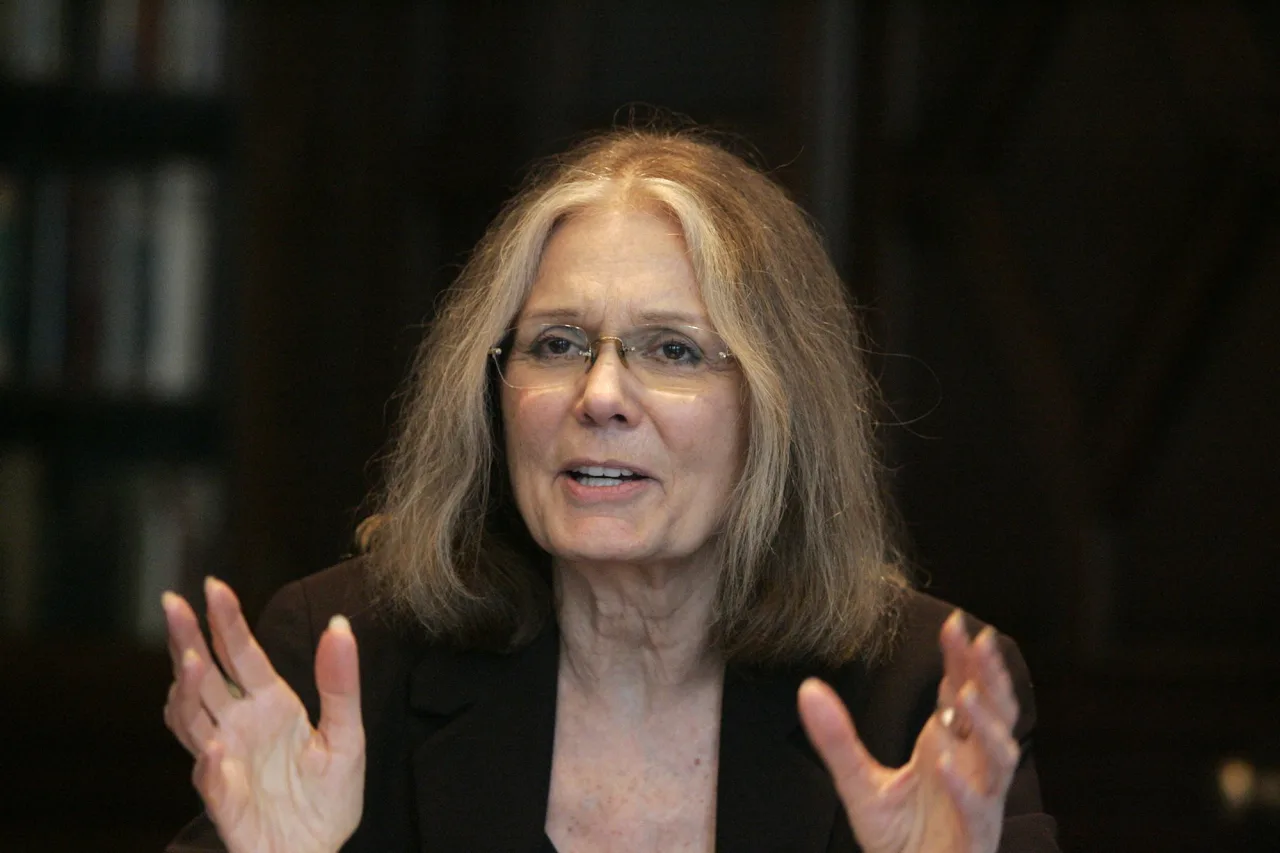
Gloria Steinem, the pioneering journalist, activist, and co-founder of *Ms. Magazine*, died on Wednesday at her home in New York City at the age of 92, according to a statement shared on her verified social media accounts. Her passing marks the end of a life dedicated to challenging gender inequality, amplifying marginalized voices, and redefining the role of women in public and political spheres. The statement described her death as “peaceful,” though no cause was specified.
Steinem’s career began in the 1960s, a time when women were often confined to domestic roles and underrepresented in journalism. She broke barriers by exposing systemic sexism through investigative reporting, most notably her 1963 undercover work at the Playboy Club, where she documented the exploitative conditions faced by “bunnies” — a term she later described as dehumanizing. Her exposé, “A Bunny’s Tale,” published in *Show* magazine, drew national attention and laid the groundwork for her lifelong advocacy for women’s rights. “We need a reporter, not a pretty girl,” an editor once told her, a sentiment she later recounted as emblematic of the era’s dismissive attitudes toward women in media.
The daughter of a traveling antique dealer, Steinem grew up in a family that moved frequently, limiting her formal education until her early teens. Her mother’s mental health struggles and the instability of her childhood shaped her early views on social justice. After graduating from Smith College in 1956, she spent two years in India on a fellowship, immersing herself in anti-caste activism and writing for Indian publications. This experience, she later said, deepened her commitment to fighting oppression in all its forms.
Steinem’s work in the 1970s solidified her as a central figure in the second-wave feminist movement. In 1972, she co-founded *Ms. Magazine*, a publication that challenged the prevailing norms of women’s media by addressing issues like abortion, reproductive rights, and workplace inequality. The magazine’s 1977 cover story on sexual harassment helped bring the issue into the national spotlight, later inspiring the 1980 film *9 to 5*. “There really was nothing for women to read that was controlled by women,” she explained in a 2015 interview, underscoring the need for media that reflected the full spectrum of women’s experiences.
Her activism extended beyond journalism. In 1971, she co-founded the National Women’s Political Caucus, which aimed to increase women’s representation in politics. At a time when only 15 women served in Congress, Steinem championed the idea that political power must be decentralized to empower grassroots movements. “Trees grow from the bottom,” she often said, emphasizing the importance of community-led change over top-down policy.
Steinem’s advocacy for reproductive rights was deeply personal. She had an illegal abortion at age 22, an experience she later described as pivotal to her understanding of bodily autonomy. “Either our control over our own bodies is equal, regardless of sex or race, or we’re not living in a democracy,” she wrote in 2022, reflecting on the overturning of *Roe v. Wade*. Her work with *Ms. Magazine* and her public speaking engagements made her a vocal opponent of policies that restricted access to reproductive care, even as she faced criticism for her views on issues like the 1998 Monica Lewinsky scandal.
Throughout her life, Steinem navigated the tension between her public persona and the labels imposed on her. She often chafed at being reduced to her appearance, noting that “nobody ever called me beautiful until I was publicly a feminist.” Despite this, she embraced her visibility as a tool for advocacy, using her platform to highlight the intersection of race, class, and gender. “I learned feminism largely from Black women. Women of color basically invented feminism,” she told *The New Yorker* in 2015.
Even in her later years, Steinem remained active. At 83, she attended a fashion show as a guest of designer Prabal Gurung; at 85, she led a “talking circle” at an off-Broadway play celebrating her life. In 2020, she collaborated on a children’s book with Liberian peace activist Leymah Gbowee, and her 2015 memoir, *My Life on the Road*, and the 2020 film *The Glorias* cemented her legacy as a cultural icon.
Steinem’s influence extended beyond the U.S. She spoke out against global issues, from genital mutilation to Korean reconciliation, and mentored activists worldwide. Her 2013 receipt of the Presidential Medal of Freedom, awarded by President Barack Obama, recognized her decades of work in advancing civil rights. Yet, she often downplayed her own role, stating, “There is no one torch — there are many torches, and I’m using my torch to light other torches.”
Steinem’s Ohio roots remained a defining part of her identity. Born in Toledo in 1934, she often referenced her Midwestern upbringing as shaping her “no pretense” approach to life. Her mother, a journalist who wrote under a man’s name to be published, introduced her to the world of reporting. Steinem’s paternal grandmother, Pauline Perlmutter Steinem, was a trailblazer in Toledo’s women’s rights movement, serving as the first woman elected to the Toledo Board of Education and advocating for voting rights. These influences, she said, “brought out of the Toledo in me, no pretense. Let’s just do the real thing.”
Steinem’s final years were marked by a focus on legacy and connection. She hosted “talking circles” in her New York home, fostering spaces for women to share stories and build solidarity. Friends and colleagues described her as “just as funny and sharp as ever,” even as her physical health declined. Abigail Disney, a close friend, recalled visiting her a week before her death and noting, “Everything Gloria did was rooted in kindness.”
As her foundation works to preserve her New York City home and archives, Steinem’s impact endures. Her life’s work, spanning journalism, politics, and cultural commentary, remains a touchstone for movements advocating for equality. “We are talking about a society in which there will be no roles other than those chosen, or those earned,” she once said, a vision that continues to inspire. In a world still grappling with gender inequality, her voice, though silenced, remains a guiding light.
Dateline Wire is dedicated to independent, evidence-backed reporting. This briefing was synthesized from primary source reporting, corroborated across independent newsrooms, and verified against our Editorial Standards.