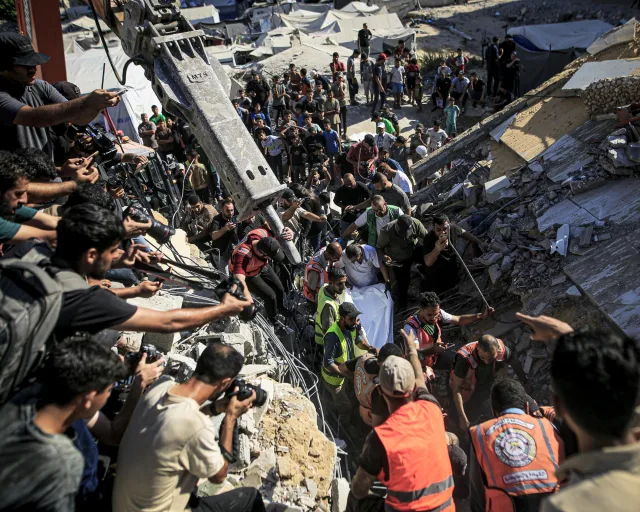
At least 12 killed after building in Gaza City damaged by Israeli strike…
A building housing displaced families collapsed in Gaza City, trapping people inside. Rescue operations are being hindered by a lack of heavy machinery.
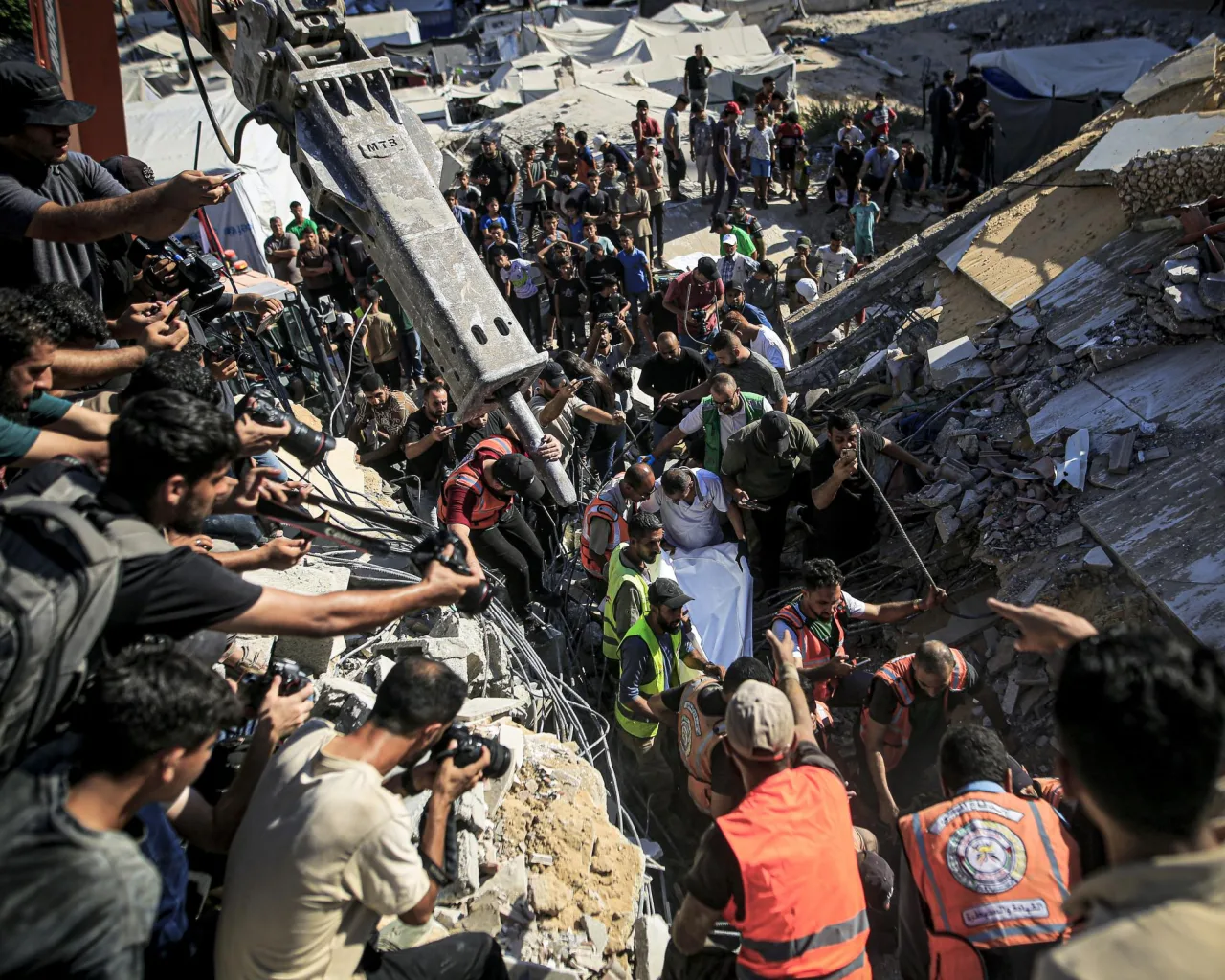
A war-damaged building housing displaced Palestinian families collapsed in Gaza City on Wednesday, killing at least 12 people and injuring 14, according to multiple reports. Rescue teams continued searching for about 100 individuals, including 50 children, trapped in the rubble, though the death toll varied across sources, with some citing 14 or 20 fatalities. The incident underscored the ongoing risks faced by Palestinians living in structurally compromised buildings amid the protracted conflict.
Building collapse traps displaced families
The multi-storey structure, which had been hit by Israeli strikes during the war, collapsed in the Tal al-Hawa area of Gaza City, crushing tents housing displaced families nearby. A rescue team from Gaza’s civil defense reported recovering the bodies of five children among the victims, while 14 injured individuals were hospitalized. Medical sources described hearing voices from survivors trapped beneath the debris, though search operations were hampered by a lack of heavy machinery.
“Search and rescue operations are being carried out under extremely difficult conditions due to a lack of the necessary equipment and resources,” said Mohammed Abu Dan, a supervisor with the civil defense team. The building, which had four apartments per floor, had previously been deemed unsafe, but residents had no alternative shelter. “We are still hearing voices from under the rubble, so there is still hope to find people,” said Raed al-Dahshan, director of Gaza City’s civil defense service.
UN and Egyptian agencies assist in rescue efforts
The United Nations Development Programme (UNDP) and Egypt’s relief agency joined local rescuers in the operation, though officials warned of dire conditions. Alessandro Mrakic, head of the UNDP’s Gaza office, stated that between 70 and 100 people were believed to be trapped, emphasizing that “there are actually people digging with their bare hands.” He called for urgent international support, noting that 400 other war-damaged buildings across Gaza were at risk of collapse, particularly as winter approached.
Palestinian and UN officials attributed the equipment shortage to Israeli restrictions on aid deliveries, which Israel claims are necessary to prevent militant groups from accessing machinery. The Gaza Health Ministry reported 1,369 Palestinian deaths and 4,627 injuries since the fragile ceasefire took effect in October 2025, with Israeli strikes continuing to target populated areas.
Context of ongoing conflict and displacement
The collapse occurred amid a broader humanitarian crisis, with over 1.9 million Palestinians displaced and 1.2 million living in tents or makeshift shelters. Many have returned to damaged homes or abandoned buildings, despite the risks, due to soaring rents and limited options. The Israeli government’s 2023 offensive, launched in response to the Hamas-led attack on southern Israel, has left more than 73,783 Palestinians dead, according to the Hamas-run health ministry.
Israel’s defense minister, Israel Katz, warned that a full-scale war in Gaza was “only a matter of time,” citing the need to “finish the job” of displacing the population. Meanwhile, the UN has accused Israel of continuing to target Palestinian children, with an independent inquiry in 2026 concluding that the country has committed genocide.
| Detail | Information |
|---|---|
| Confirmed deaths | 12 (aol.co.uk, The Guardian), 14 (CBS News), 20 (BBC, CBS News) |
| Children among victims | 5 (aol.co.uk, The Guardian), 8 (CBS News) |
| Injured | 14 (aol.co.uk, The Guardian), 15 (CBS News) |
| Trapped individuals | ~100 (aol.co.uk, The Guardian), 70–100 (BBC) |
| UNDP estimate of at-risk buildings | 400 (BBC) |
Political tensions and humanitarian appeals
The incident occurred amid heightened political tensions, with Israeli Prime Minister Benjamin Netanyahu’s government facing scrutiny over its policies. The U.S.-brokered ceasefire, which has seen sporadic violence, has failed to halt Israeli strikes, which have killed at least five Palestinians in recent days. Meanwhile, U.S. envoy Jared Kushner has linked stalled progress on Gaza’s recovery to Israel’s domestic elections, which are set for October 2026.
Rescue efforts were further complicated by the lack of heavy machinery, with Mrakic urging Israel to approve aid deliveries. “We need support, most importantly with machinery, equipment, among others,” he said. The situation has drawn international attention, with the UN condemning the humanitarian crisis and calling for urgent action to prevent further loss of life.
Frequently Asked Questions
Why do reports cite different death tolls?
Multiple outlets reported varying numbers due to the evolving nature of the crisis. For example, aol.co.uk and The Guardian cited 12 deaths, while BBC and CBS News reported 20 and 14, respectively. These discrepancies reflect the challenges of verifying casualties in real-time amid ongoing rescue operations.
What role is the UN playing in the rescue?
The UN Development Programme (UNDP) and Egypt’s relief agency are assisting local civil defense teams, providing machinery and resources. However, officials have emphasized the urgent need for additional support, including heavy equipment and supplies, to address the scale of the disaster.
How has the ceasefire impacted the situation?
The fragile ceasefire, which took effect in October 2025, has not halted Israeli strikes, which have continued to target populated areas. Despite the agreement, violence persists, with at least 1,369 Palestinians killed and 4,627 injured since its implementation, according to the Gaza Health Ministry.
The collapse of the building in Gaza City highlights the fragile existence of displaced Palestinians, who face daily risks from both conflict and infrastructure failures. As rescue teams work under dire conditions, the international community remains divided on how to address the humanitarian crisis, with calls for increased aid and accountability growing louder. The next critical development will be the outcome of ongoing negotiations and the potential for further collapses in the region’s war-torn buildings.
Dateline Wire is dedicated to independent, evidence-backed reporting. This briefing was synthesized from primary source reporting, corroborated across independent newsrooms, and verified against our Editorial Standards.