Riot police deployed to Poland’s constitutional court after judge suspended
Riot police and protesters converged on Poland's Constitutional Tribunal in Warsaw after judges suspended the court's president.
- Headline: Riot police deployed to Poland’s constitutional court after judge suspended
- Dispatch Summary: Riot police and protesters converged on Poland's Constitutional Tribunal in Warsaw after judges suspended the court's president.
- Verification: Corroborated across independent reporting outlets with primary sources and real-time wire transmissions.
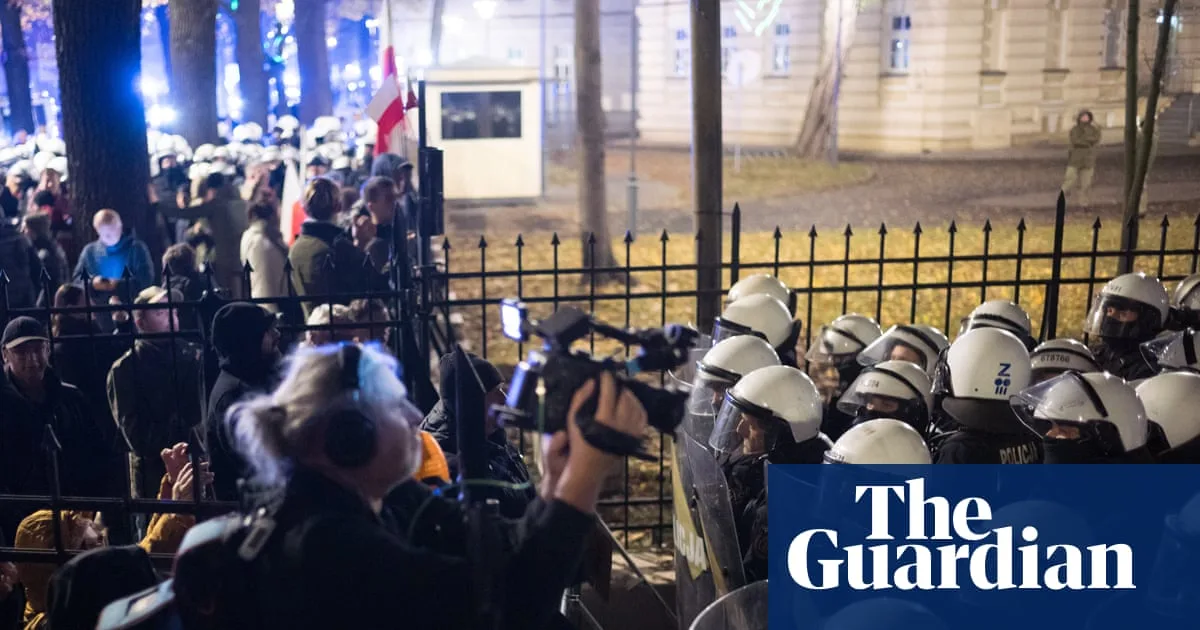
Riot police deployed to Poland’s constitutional court after judge suspended
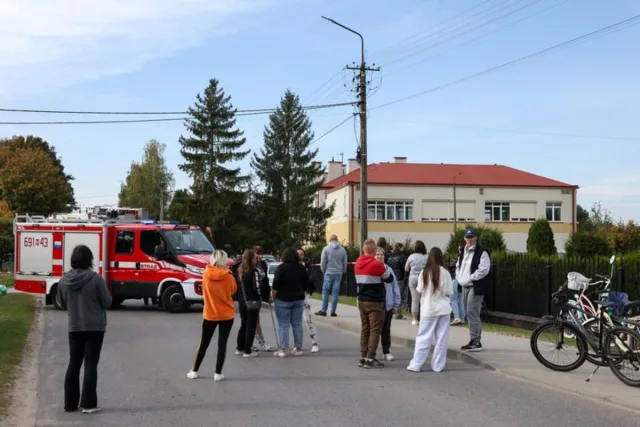
Three people were arrested outside Poland’s highest court on Friday night as hundreds of protesters, riot police, and opposition politicians converged on the Constitutional Tribunal in Warsaw. The immediate catalyst was a controversial decision by a group of government-appointed judges to suspend the court’s president, Bogdan Święczkowski, and his deputy, Bartłomiej Sochański. The move marks a dramatic escalation in a decade-long constitutional struggle that has paralyzed the country’s judiciary and now threatens to boil over ahead of next year’s parliamentary election, where the populist-right hopes to return to power.
Prime Minister Donald Tusk’s pro-European government defended the suspension as an essential step to restore judicial independence after years of rule by the nationalist Law and Justice (PiS) party, which governed from 2015 to 2023. Justice Minister Adam Bodnar asked that Święczkowski and Sochański be stripped of their legal immunity to face criminal prosecution for obstructing the court’s work, specifically by blocking judges elected by the current parliamentary majority from taking up their posts. Restoring the rule of law is our duty,
Prime Minister Donald Tusk wrote on X. After years of PiS’s lawlessness, this is a difficult process, sometimes painful, and it requires decisive action. There is no other way.
From 2015 Deadlock to Midnight Showdown
The institutional crisis dates back to 2015, when outgoing centrist and incoming rightwing governments moved in quick succession with legally questionable moves to stack the bench with their appointees. The European Union’s top court ruled in 2021 that the tribunal was not independent and impartial, and Brussels previously imposed fines on Poland over the disputed reforms. Tusk’s coalition returned to power in 2023 pledging to reverse those changes, but faced roadblocks from opposition-aligned presidents wielding vetoes. The friction intensified after Karol Nawrocki won last year’s presidential election, defeating Tusk’s candidate and subsequently refusing to swear in several judges elected by the current parliament.
The confrontation reached a boiling point on Friday after Anna Korwin-Piotrowska, one of the judges Nawrocki did not accept, assumed the top position at the tribunal by virtue of being the longest-serving judge in the judiciary. The information regarding Święczkowski's suspension was published on the court's website around 6 p.m. local time. The response from the nationalist opposition was immediate and fierce.
Timeline of the Constitutional Crisis
- 2015: The dispute begins as successive governments make controversial appointments to the court.
- 2021: The European Union’s top court rules that Poland's Constitutional Tribunal is not independent and impartial.
- 2023: Donald Tusk’s pro-European coalition takes office, pledging to restore judicial independence and reverse PiS-era reforms.
- 2025: Karol Nawrocki wins the presidential election and subsequently refuses to swear in judges nominated by the current parliament.
- Earlier in October 2026: The Venice Commission states that the president's refusal to swear in judges should not prevent them from taking up their posts; Tusk appoints Maciej Berek to the tribunal in September.
- October 31, 2026: Judges suspend tribunal president Bogdan Święczkowski, triggering protests, riot police deployment, and Nawrocki's abrupt return from a trip to Senegal.
Upon hearing of the suspension, President Nawrocki abruptly turned his plane around while en route to a state visit in Senegal. At a moment like this, the President must be in Poland. I am cutting short my flight to Senegal. I am returning,
Nawrocki wrote on X. By shortly before 1 a.m. on Saturday, Nawrocki had arrived at the tribunal building and forced his entry past security and rival judges. In a statement read outside the court at 5 a.m., he denounced a violation of Poland’s constitutional order and claimed a constitutional body was seized by force. He also insisted the government appointees were not judges of the constitutional court.
Political Fallout and Divided Legal Experts
The opposing factions view the events through entirely incompatible lenses. PiS party leader Jarosław Kaczyński condemned the move as an assault and warned that This is the first case of its kind in the world. Starting today, Poland is becoming a police state, and from there it’s a straight path to authoritarianism.
Former Justice Minister Zbigniew Ziobro characterized the suspension on X as a blatant, criminal attack on the constitutional order, calling for loud and fearless resistance.
| Actor | Stance on Suspension | Stated Action or Response |
|---|---|---|
| Prime Minister Donald Tusk | Supports intervention | Argues action is necessary to restore rule of law and unblock the judiciary. |
| President Karol Nawrocki | Condemns as illegal seizure | Turned back flight from Senegal, forced entry into the court building, called for security forces to leave. |
| Jarosław Kaczyński (PiS Leader) | Denounces as coup and police state | Protested outside the tribunal, claiming democratic order is under assault. |
| Justice Minister Adam Bodnar | Backs removal | Requested removal of immunity for Święczkowski and Sochański to face criminal charges. |
| Anna Korwin-Piotrowska | Enforces removal | Longest-serving judge who assumed top position and executed the suspension. |
Outside Poland, reactions showed the volatility of the situation. Foreign Minister Radosław Sikorski, speaking on the margins of a G20 meeting in Atlanta, maintained that the constitutional tribunal was politicised under the previous government and that the actions were intended to allow duly elected judges to make the institution function again. Meanwhile, US Ambassador to Poland Tom Rose posted on X that the unfolding events were very serious, warning that Both sides offer sharply different accounts of what happened and why,
and Whatever the facts ultimately establish, thousands gathering outside the tribunal make an already dangerous situation more combustible.
Even legal scholars find themselves fractured over the maneuver. Marcin Matczak, a prominent law expert and outspoken critic of PiS, admitted he did not think he would ever end up defending Święczkowski, yet concluded that the legal basis for the suspension was non-existent. As hundreds of demonstrators continued to crowd the cordoned-off streets of Warsaw on October 31, 2026, the path forward remains dependent on whether the executive branch can consolidate control over a court designed to be the ultimate gatekeeper of the nation's laws.
Updated 1 time since publication; last update 31 October 2026, 07:23.