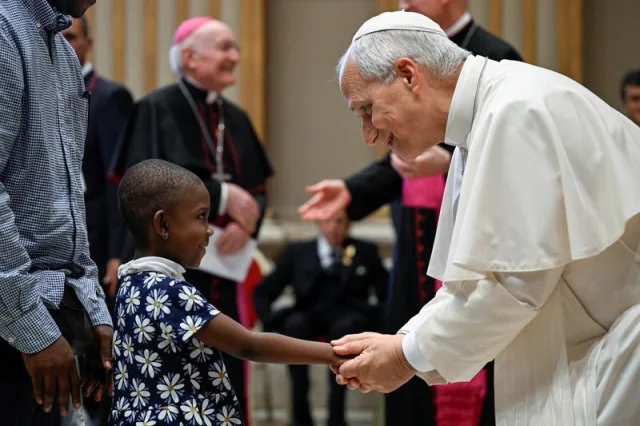
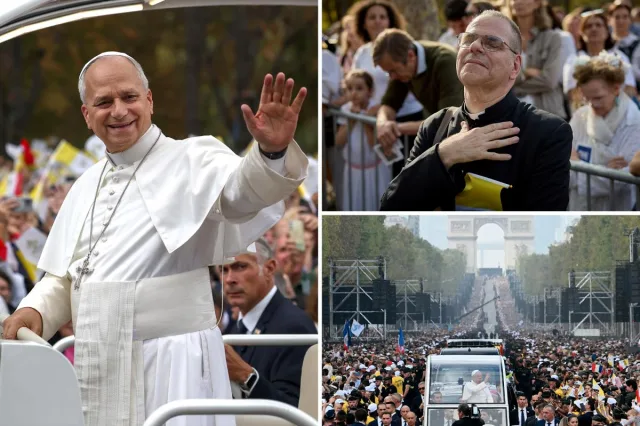
Pope Leo XIV becomes first pontiff to vote in a U.S. election
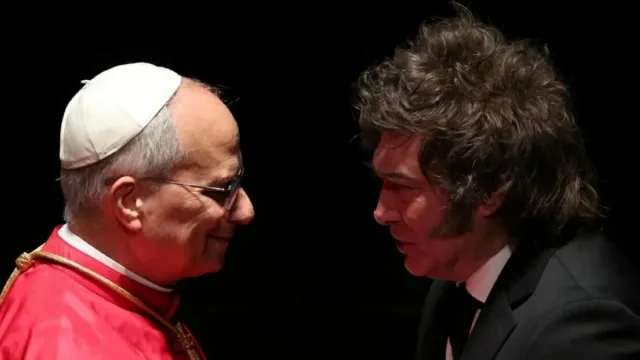
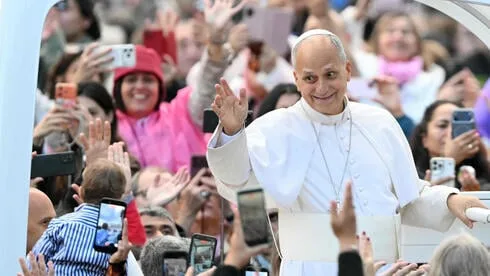
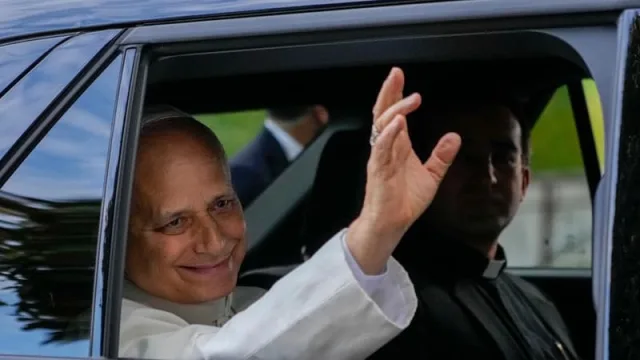
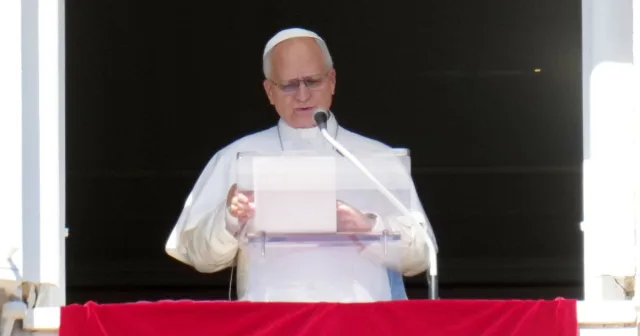
Pope Leo XIV has become the first pontiff in history to cast a ballot in a U.S. general election, submitting a mail-in vote from the Vatican ahead of the midterms.
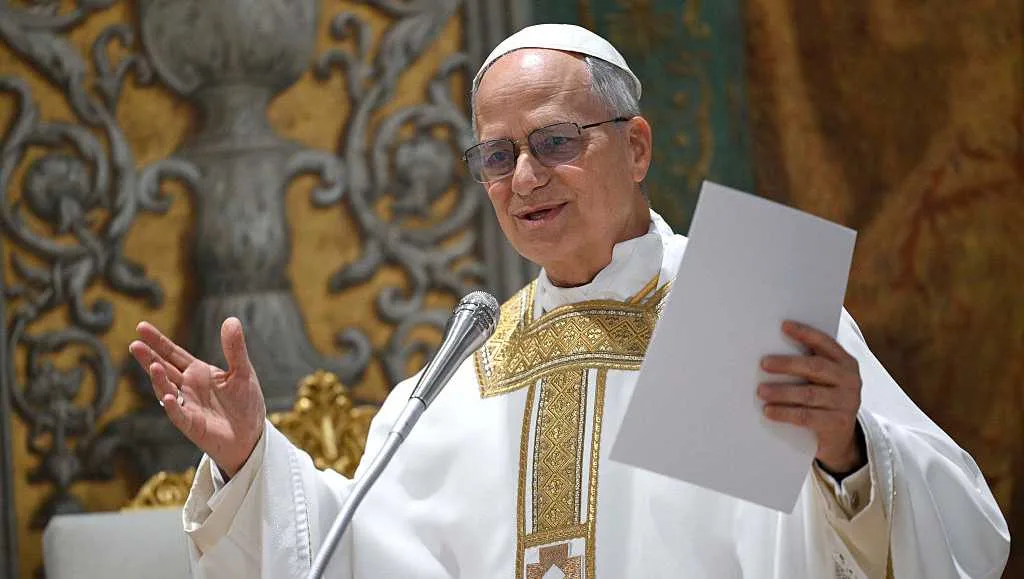
Canadian Prime Minister Mark Carney announced Friday he expects to conclude negotiations with the European Union in June on an unprecedented partnership that would make Canada the bloc’s first associate member. Carney stated he would attend a meeting of European leaders in June to conclude negotiations on the proposed relationship, which would stop short of full EU membership. In parallel, Carney said, In parallel, we are working towards the deepest possible partnership, short of accession — with Canada becoming the European Union’s first Associate Member.
The joint declaration issued at the end of a two-day summit in Montreal made no mention of associate membership, agreeing instead to define an ever-closer association
by the next summit in 2027.
The alliance follows U.S. President Donald Trump's trade war straining relations with traditional allies. U.S. President Donald Trump has suggested Canada’s proposed EU arrangement could be a hostile act
and threatened tariffs on Europe if he considered it unfriendly. The United States accounted for 71.7% of Canada’s merchandise exports in 2025, showing the challenge Carney faces as he seeks to double exports to other countries over the next decade.
Carney, European Commission President Ursula von der Leyen and European Council President António Costa launched the Alliance for the Future
during the summit, announcing progress on digital trade, European investment in Canadian critical minerals and artificial intelligence. Canadian Cabinet ministers and European commissioners will meet in March to advance negotiations before Carney attends European Council meetings in June.
Pope Leo XIV becomes first pontiff to vote in a U.S. election
Pope Leo XIV has made history by becoming the first known sitting pontiff to cast a ballot in a United States general election, submitting a mail-in vote ahead of the November 3 midterms. The Vatican confirmed on Friday, October 30, that the American-born pope exercised his civic duty, cementing a lifelong pattern of electoral participation that dates back decades. British historian and papal expert Michael Walsh told CNN, I don't think popes have ever voted in a democratic election before,
noting the unprecedented nature of the act. The development bridges the highest office in the Catholic Church with the mechanics of American democracy, bringing a striking new chapter to the relationship between the Holy See and U.S. politics at a moment when tensions between the Vatican and President Trump run high.
The head of the world's 1.4 billion Catholics, born Robert Francis Prevost in Chicago, Illinois, has exercised his right to vote as a United States citizen whenever eligible. In keeping with this long-standing practice of civic participation, he submitted his mail-in ballot in Chicago, the Holy See Press Office said in a statement, noting that the pontiff believes in the right and the duty of citizens to participate in democratic processes. The Vatican added that during his years of residence in Peru, where he spent nearly two decades as a missionary priest and bishop, he also exercised his right to vote whenever he was eligible to do so.
The vote itself was first reported by the Chicago Sun-Times, which cited Kim Fladhammer, chief of staff at the Will County clerk's office, confirming that the pope requested a mail-in ballot on Oct. 3 using a New Lenox address in suburban Illinois. Robert Francis Prevost is on the list of individuals who requested a vote by mail ballot for the upcoming election, Fladhammer told the newspaper. Illinois State Board of Elections spokesman Matt Dietrich explained the mechanics to the Chicago Sun-Times, noting, There is no such thing as an absentee ballot in Illinois law anymore. So anyone can vote by mail if they so choose. There is also a law called UOCAVA, The Uniformed and Overseas Citizens Absentee Voting Act that is mostly for the military, but it’s also for U.S. citizens who are overseas... Any Illinois registered voter can vote by mail.
Video: Pope Leo XIV Could Make History! First Sitting Pope to Vote in US Midterm Elections? #shorts — USA News Prime (YouTube)
Electoral footprint and political background in Illinois
State records held by the Illinois State Board of Elections reveal a detailed political footprint for the man who was elected to lead the church in May 2025 following the death of Pope Francis. Since 2000, Robert Prevost has voted in five primary elections and submitted ballots in every general election except those in 2020 and 2022, including the 2024 general election. While registered in heavily Democratic Cook County, he requested Democratic primary ballots in 2008 and 2010. After relocating to the more conservative suburban Will County, he requested Republican primary ballots in 2012, 2014 and 2016, according to state and local records cited by the New York Times. Illinois voters must declare a party preference to receive a ballot in a primary, but no such declaration is required in general elections, and the state records do not show which specific candidates he supported. Among the races on Illinois' ballot is the contest for governor, where incumbent Democrat J.B. Pritzker is seeking a third term against Republican Darren Bailey and independent candidate Collin Corbett, alongside the U.S. Senate seat being vacated by Democratic Sen. Dick Durbin.
This unprecedented electoral act occurs against a backdrop of open friction between the pontiff and the Trump administration. Leo and Trump repeatedly clashed over papal criticism of the harsh crackdown on immigration in the United States and of the war on Iran, with Trump calling the pontiff weak on crime and terrible on foreign policy. After Leo wrote on X, Anyone who is a disciple of Christ, the Prince of Peace, is never on the side of those who once wielded the sword and today drop bombs,
Trump later attacked the pope again over Iran, asserting that he was endangering a lot of Catholics by opposing efforts to obtain a nuclear weapon. In April, after Trump's threat to destroy Iran, Leo called on everyone to do their part for peace, urging them to contact the authorities -- political leaders, congressmen -- to ask them, to tell them, to work for peace and to reject war and violence. Vice President JD Vance, a fairly recent Catholic convert, also waded into the disputes by advising Leo to be careful when discussing theology. More recently, Leo addressed a general audience at the Vatican on Sept. 2, urging the faithful to leave behind all passivity and indifference toward current events. We cannot remain as unengaged spectators; rather, we must listen with our hearts, allow ourselves to be challenged, and become involved,
the pope said in St. Peter's Square, according to the Catholic News Service.
Federal court hearings challenge Trump administration over Washington landscape projects
As midterms near, hearings in lawsuits against two separate administration-backed projects were unfolding in a single federal court building Friday, revealing the breadth of President Donald Trump’s attempts to mold parts of the District of Columbia as he wishes — and the underlying executive authority claims that lie beneath them. The cases involved are an impending shutdown and reconfiguration of a historic public golf course and the construction of the monumental arch that, at 250 feet (75 meters), would be 100 feet taller than the Statue of Liberty is from its base to the top of the torch. The two projects are barely three miles or five kilometers apart.
The hearing on the proposed golf course change began as other recent ones have: U.S. District Judge Ana Reyes grilled Associate Attorney General Stanley Woodward Jr. over how Trump’s desires to turn the golf course, near the National Mall, into a world-class facility have become urgent plans that match his public pronouncements. At one point, Reyes read the code of conduct to government attorneys on presenting erroneous or false information during a hearing. Reyes ordered Friday’s hearing after multiple Truth Social posts by Trump indicated that there were plans for the golf course and construction was expected to begin Nov. 15. Trump said the park would be closed 15 months while work goes on. The presidential posts, which began Oct. 18, created a tense dynamic in multiple court hearings afterward when officials from the Interior Department, Justice and National Park Service could not confirm the existence of the plans under questioning from Reyes. She eventually asked whom she should trust. The Justice Department filed notice Wednesday night that the plans were real. On Friday, October 30, 2026, the National Park Service will submit to the National Capital Planning Commission for review a rendering designed by Tom Fazio for a World Class, championship-level golf course that is capable of hosting major events,
the notice said.
Reyes locked in on the filing and Trump’s multiple Truth Social announcements as she questioned Woodward. At one point, as they talked about plans that Woodward said only came about this week, he slipped and included tree cutting as part of the preparation for the closure. Reyes responded immediately: News flash.
She allowed him to correct himself that the tree cutting, which occurred earlier this month, was not part of the plan to close the East Potomac Golf Links. She said she intended to appoint a special master to investigate the administration’s statements to the court.
Three courtrooms away, U.S. District Judge Tanya Chutkan was to hold a hearing on a motion asking that she call a temporary halt to plans to begin construction as early as Nov. 5 on the memorial arch. The arch is opposed by a small group of veterans and an architectural historian who sued in federal court in Washington, saying Congress must endorse the project. The public interest leans heavily against allowing defendants to blaze ahead,
the plaintiffs said in seeking the injunction. This court should enter a preliminary injunction blocking defendants from beginning construction on Memorial Circle in the hope that they can render the arch a fait accompli before this Court has made a final determination.
David Super, law professor at the Georgetown University Law Center, said, What we’re seeing here now is that if you think the federal courts can't stop you, you can do things there indisputably illegal,
adding that it's going to do long-term damage to the country.
Midterm threats and campaign trail conditioning of federal aid
As voters prepare to head to the polls on November 3, President Trump has injected partisanship into the distribution of federal aid and administrative perks during his campaign rallies across the country. In Perry, Georgia, Trump discussed Georgia GOP Senate candidate Mike Collins and contrasted him with Democratic Sen. Jon Ossoff, using the derisive nickname Pee-wee Herman to describe Ossoff. Acting out a hypothetical scenario where Ossoff called to ask for money for his state, Trump said, I don't give a damn what he wants.
White House spokesman Davis Ingle defended the president's remarks by stating that Trump is committed to keeping a Republican majority in Congress so he can continue to deliver on his winning, commonsense agenda, adding that Democrats have made it clear they have no agenda to improve lives.
In Greenville, North Carolina, Trump announced that $1 billion in cash settlements had been delivered to veterans and family members affected by water contamination at Camp Lejeune under a 2022 law signed by then-President Joe Biden. Trump stated he would direct the Justice Department to settle all remaining legitimate claims expeditiously if we win the House and the Senate. So, if we don’t win, there’s no money. If we do win, you’re getting it, he said. Questioned afterward at the White House, Trump said, If we’re not there, then somebody else is going to have to settle,
and he can't speak for another administration, although his own Justice Department handles the claims. Jill Steen Dilgard, whose relatives served at Camp Lejeune and who advocates for victims, called the condition totally unacceptable and said it made her physically sick, and it infuriated me.
Similar conditional warnings accompanied announcements in other states:
- During a September rally in Gastonia, North Carolina, Trump said the state was still waiting on more Hurricane Helene recovery money and added,
Now, if Michael loses, I’m not sending it,
though he immediately said he was kidding. - In Kansas, while backing GOP Sen. Roger Marshall, Trump noted he granted a waiver allowing year-round sales of E15, an ethanol-blended gas, stating,
With Roger Marshall in the Senate, we will make year-round E15 permanent. But if Adam Hamilton is in, I’m not doing it. That’s it. I’m only doing it for him.
- In Vandalia, Ohio, discussing disaster relief, Trump noted that if Democratic gubernatorial candidate Amy Acton won,
She’s never gonna call me. I’m never probably gonna work the same way. You just can’t. It’s just human nature. But I’m not gonna help her probably.
In response, Jon Ossoff told The Associated Press that Trump's comments constituted a losing strategy for the failed president to insult and threaten voters while he’s in town reminding them he made everything more expensive. Former North Carolina Governor Roy Cooper described the Camp Lejeune threats as insulting and frustrating. Tyson Brody, a spokesman for Adam Hamilton's campaign in Kansas, said, Kansans are tired of our broken politics that treats public service like it’s all about opposing teams.
Addie Bullock, a spokesperson for Amy Acton's campaign, stated that Acton is committed to working with anyone, Democrat or Republican, to make life better for working Ohioans. At the Perry, Georgia rally, Trump acknowledged the controversy over his approach, stating, People don’t realize what a big difference it makes. And probably I shouldn’t say that because they’ll say, ‘This is not appropriate,’
explaining that having allies in office makes a difference.
Health recovery and upcoming Vatican travel
The logistics of the pontiff's voting method remain partially opaque. While the Will County clerk's office confirmed the mail-in ballot request, it remains unclear how Leo ultimately returned the document to Illinois. His brother, John Prevost, lives in New Lenox and was in Rome this week accompanying parishioners from St. Jude's, an Augustinian-run parish where the elder Prevost attends Mass and where Leo gave a talk in 2024 while still a cardinal.
The timing of the historic ballot coincides with a demanding personal and professional schedule for the pontiff. Leo underwent a procedure at Agostino Gemelli University Hospital in Rome on October 13 to remove a small tumor on his right lung. Leo’s doctors later confirmed on October 21 that no further cancer treatment is necessary after the tumor was removed. Despite the operation, he has recovered sufficiently to press forward with a 12-day tour of Argentina, Uruguay and Peru beginning on November 6, three days after U.S. voters go to the polls.
Meanwhile, the broader U.S. midterms are widely interpreted as a referendum on Trump's record in office, determining control of the House of Representatives and the Senate, with current polling suggesting opposition Democrats are on course to win back the majority in the House and possibly the Senate. The U.S. goes to the polls on November 3.
Updated 3 times since publication; last update 11 November 2026, 01:16.