Iran says 3 tankers strike mines and catch fire in Strait of Hormuz
Iran's Revolutionary Guard reported that oil tankers exploded after hitting sea mines in the Strait of Hormuz, contradicting U.S. military assertions.
- Headline: Iran says 3 tankers strike mines and catch fire in Strait of Hormuz
- Dispatch Summary: Iran's Revolutionary Guard reported that oil tankers exploded after hitting sea mines in the Strait of Hormuz, contradicting U.S. military assertions.
- Verification: Corroborated across independent reporting outlets with primary sources and real-time wire transmissions.
Prove your Hormuz mine-clearing claim with independent evidence, not statements!
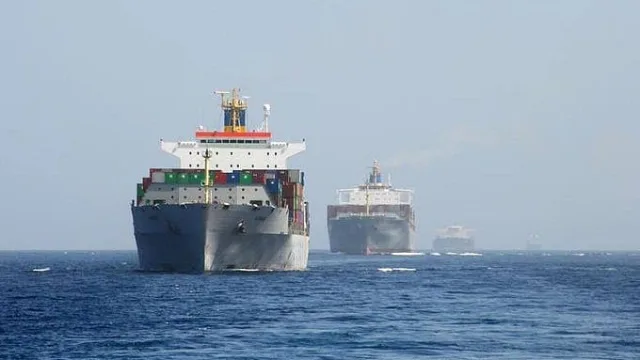
That direct challenge, issued on X by Islamic Revolutionary Guard Corps spokesperson Hossein Mohebi, cuts straight to the fierce information war now dominating the Strait of Hormuz. As military tensions escalate, Iran’s Revolutionary Guard reported that three oil tankers, including a supertanker carrying more than two million barrels of crude oil, exploded and caught fire after striking sea mines while navigating unauthorized routes. The dramatic announcements on Friday underscore a high-stakes standoff over control of a critical global waterway where about one-fifth of the world's oil consumption is normally transported, even as Qatari mediators push for a diplomatic breakthrough in Tehran.
Dueling Claims and Navigational Disputes in the Strategic Waterway
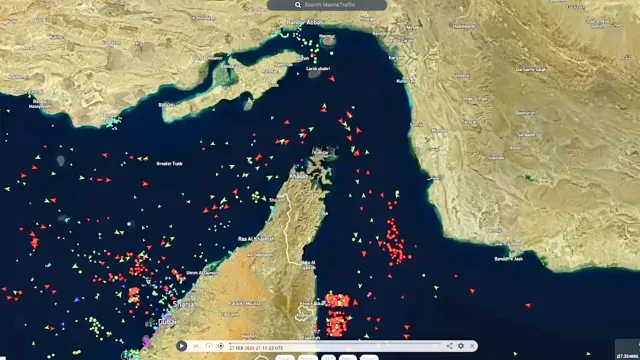
The latest maritime crisis centers on a sharp disagreement over safety and route control. According to Iranian state media citing the IRGC Navy, the affected vessels had switched off their radar, navigation, and positioning systems and ignored repeated radio warnings before hitting mines in prohibited areas. Iran has asserted control over much of the waterway since the U.S. and Israel launched the war on Feb. 28, repeatedly warning that vessels attempting to pass without Tehran's permission would face destruction. The IRGC reported that one supertanker laden with crude was among the three vessels that struck mines on Friday, following similar incidents reported Thursday involving a total of four tankers across the eastern and southern sections of the strait.
By contrast, the United States military flatly denies the mine claims. Adm. Brad Cooper, commander of U.S. Central Command, insisted that all internationally recognized, primary transit routes through the waterway have been cleared of sea mines by U.S. forces, declaring that the strait's main shipping lanes are open and safe for commercial vessels. Furthermore, CENTCOM rejected a claim made by the Revolutionary Guard that it had taken control of an American MQM-170 Outlaw drone in the western Strait of Hormuz, stating that all U.S. military unmanned surface vessels in the Middle East are accounted for, including an advanced sea drone squadron on patrol.
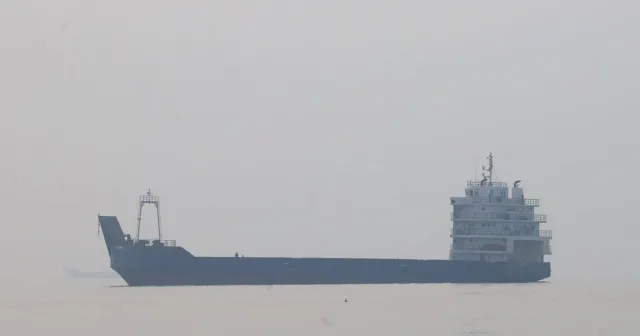
Independent maritime monitoring agencies have offered fragmented details of the violence unfolding at sea. The United Kingdom Maritime Trade Operations Centre reported multiple incidents, including a small boat approaching an oil tanker Thursday evening and attaching two explosive devices to its hull above the waterline. The subsequent blasts sparked a fire in the engine room and temporarily disabled the vessel about 25 nautical miles, or 46 kilometers, northeast of Khasab, Oman, though UKMTO later confirmed the fire was extinguished and the crew was safe. Separately, Oman's Maritime Security Center announced that the Royal Navy of Oman had evacuated 25 crew members from a Panama-flagged commercial vessel that came under attack and caught fire 1.6 nautical miles off the coast of Musandam Governorate.
Diplomatic Push in Tehran and Warnings of Renewed Conflict
Away from the combat zone, diplomatic efforts intensified on Friday as a Qatari delegation headed by the country's foreign minister and senior adviser to the prime minister returned to Tehran to meet with senior Iranian officials. The diplomatic outreach follows a letter sent last week by U.S. Vice President JD Vance to Maj. Gen. Mohsen Rezaei, secretary of Iran's Supreme National Security Council. While multiple outlets reported the letter was an attempt by the U.S. to restart peace negotiations, President Donald Trump asserted Wednesday that the outreach was intended strictly to help deliver medical supplies into Iran.
At the same time, regional allies have been placed on high alert. Two diplomats briefed on the matter told the Associated Press that U.S. officials have warned Middle Eastern countries to prepare for potential renewed military action against Iran after the Nov. 3 U.S. midterm elections, alongside the risk that Tehran's proxy groups might retaliate against regional energy facilities. President Trump has repeatedly stated that he is weighing new military strikes while noting that the war could end soon, though no formal ceasefire agreement has been reached. Iran's hard-line stance remains firm, with Tasnim News reporting that Tehran is unprepared to drop core demands including the lifting of American port blockades, sanctions relief, and access to frozen foreign financial assets.
That leaves regional shipping operators, energy markets, and allied governments facing acute uncertainty as the U.S. midterm elections approach. Shippers navigating the Persian Gulf must weigh contradictory operational directives from Washington and Tehran, balancing U.S. assurances of demined transit lanes against Iranian threats of destruction along unauthorized routes. For energy analysts and international observers, the coming days will test whether Qatari-led mediation can bridge deep divides over nuclear inspections and sanctions before military escalation resumes.
To track the trajectory of this crisis, readers and market participants should monitor several concrete indicators over the coming week:
- Official post-election announcements from Washington concerning military posture and potential new strikes in the Persian Gulf.
- Verified updates from UKMTO and regional maritime centers regarding the identities and crew conditions of the disabled tankers.
- Any independent verification of mine-clearing operations or further incidents along the southern transit corridor of the Strait of Hormuz.