Canadian military base fire in Alberta kills 4 and injures dozens
A destructive fire at Canadian Forces Base Wainwright during training exercises has left four military personnel dead and dozens seriously injured.
- Headline: Canadian military base fire in Alberta kills 4 and injures dozens
- Dispatch Summary: A destructive fire at Canadian Forces Base Wainwright during training exercises has left four military personnel dead and dozens seriously injured.
- Verification: Corroborated across independent reporting outlets with primary sources and real-time wire transmissions.
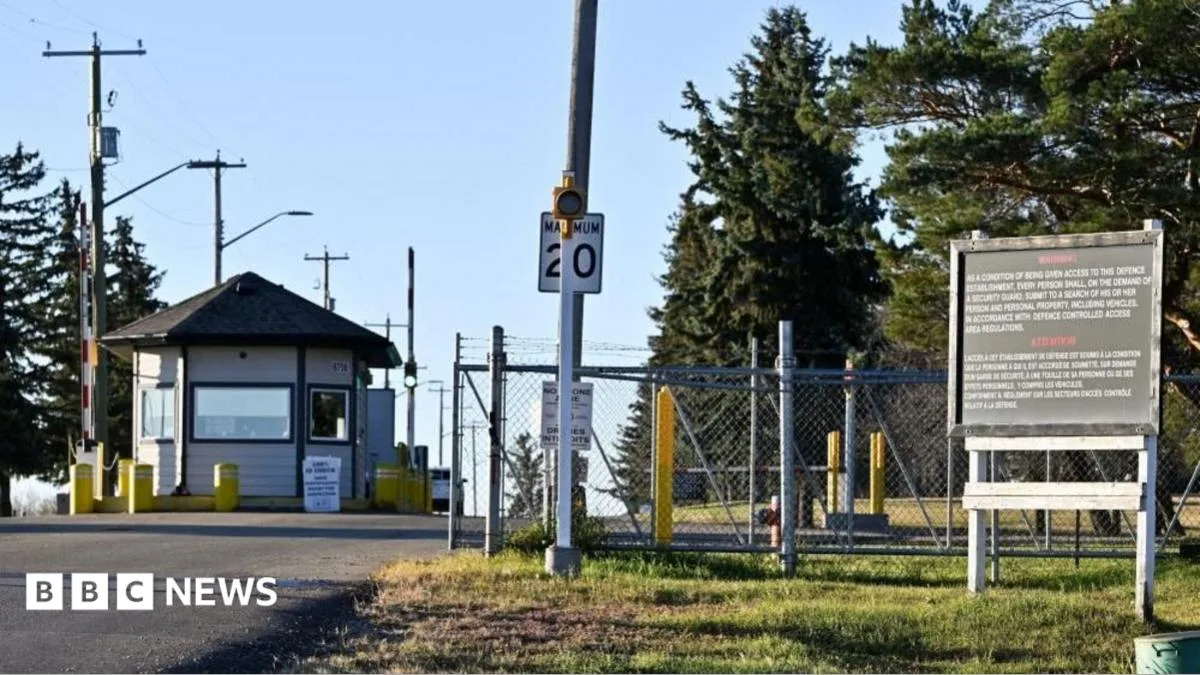
A fast-moving, destructive fire swept through Canadian Forces Base Wainwright in rural Alberta on Saturday afternoon, leaving four military personnel dead and dozens seriously injured. Prime Minister Mark Carney confirmed the casualties in a televised address on Sunday, calling the event one of the worst peacetime tragedies for the country's armed forces on domestic soil. The disaster struck while reservists and soldiers, including members of Princess Patricia’s Canadian Light Infantry, were participating in military training exercises on the sprawling base grounds.
The tragedy unfolded under punishing weather conditions as a severe windstorm battered the province with gusts reaching up to 100 kph (62 mph). While local media reported that the fire may have started when a gas main was struck during a live firing exercise, defense authorities have maintained that the official cause remains under active investigation by the Royal Canadian Mounted Police. Officials have explicitly stated there are no indications that the incident resulted from terrorist activity.
Rapid Spread and Emergency Response Across Alberta
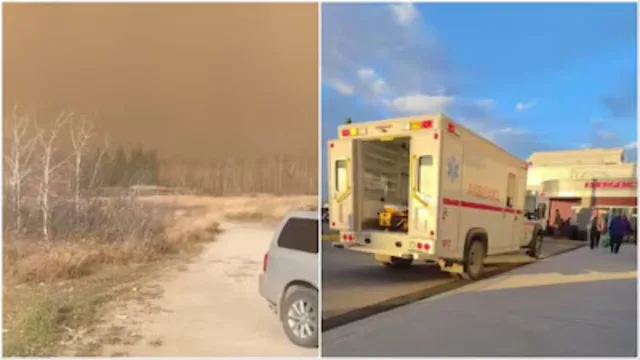
The fire broke out shortly after 4 p.m. local time on Saturday in a training area of the base, before fierce winds whipped the flames beyond the perimeter and into the surrounding rural district. First responders faced extreme volatility as falling trees and flying debris hampered early containment efforts. By 11 p.m., the Municipal District of Wainwright announced via social media that the fire was being held and critical infrastructure had been protected, with no evacuation orders issued for local residents.
Medical infrastructure across the province was immediately pushed to its absolute limits. Hospitals activated disaster response protocols, and the Royal Alexandra Hospital in Edmonton declared a code orange for a high-casualty incident. Emergency department physician Dr. Warren Thirsk told CBC News that the facility had been completely overwhelmed by incoming patients. This number of patients would overwhelm the city of Edmonton,
Dr. Warren Thirsk, an emergency department physician at the Royal Alexandra Hospital, told CBC News, describing the event as a one in every 15- to 25-year disaster.
Acute Care Alberta reported that emergency medical resources were stretched so thin that extremely few ambulances remained available in the Edmonton area, prompting public warnings to avoid the University of Alberta Hospital emergency department.
- Saturday, shortly after 4 p.m. local time: The Royal Canadian Mounted Police received reports of a fire breaking out in a training area at Canadian Forces Base Wainwright.
- Saturday evening: Royal Alexandra Hospital in Edmonton declared a code orange disaster response protocol as a stream of ambulances arrived carrying severely injured personnel.
- Saturday, 11 p.m.: The Municipal District of Wainwright announced on social media that the rapid fire was being held and property and critical infrastructure were successfully protected.
- Sunday: Prime Minister Mark Carney held a televised press conference confirming that four service members had died and dozens more were seriously wounded.
The Human Toll and National Repercussions
The human cost of the disaster rippled far beyond the military gates of Wainwright, an installation located roughly 120 miles (193km) from Edmonton and 180 miles (290km) from Calgary that frequently hosts more than 1,000 personnel. Among the wounded was the eldest son of Cathy Keane, an Ontario mayoral candidate who announced on Facebook that she was traveling urgently to Alberta. As a mother, right now I need to be with my son and family,
Cathy Keane, a mayoral candidate in Ontario, wrote on Facebook.
Prime Minister Carney stated that the next of kin for all four deceased service members had been notified, though authorities withheld the victims' names. In a symbolic response to the disaster, flags on federal buildings across the country were ordered to fly at half-staff. The crisis also interrupted democratic processes, forcing Elections Alberta to shut down advance polling locations at the Wainwright Communiplex, Lloydminster, and Vermilion ahead of Monday’s independence referendum, with ballots and election materials securely transported elsewhere.
Political Alignment and Investigation Next Steps
Federal and provincial leaders moved quickly to pledge resources and coordinate relief efforts as the situation developed. Defense Minister David McGuinty traveled to Edmonton to be briefed on the ground, describing the situation as very active and delicate. Saskatchewan Premier Scott Moe dispatched provincial assistance to neighboring Alberta, while Alberta Premier Danielle Smith characterized the event as significant and tragic.
Opposition figures also united in offering support during the national crisis. Canadian Conservative opposition leader Pierre Poilievre urged citizens to follow emergency instructions and keep roadways clear for responding emergency vehicles. Pray for Wainwright, everyone,
Pierre Poilievre said in a social media post.