British Airways Flight BA295 returns to Heathrow after cabin pressure issue
A Boeing 777-200ER bound for Chicago was forced to make a rapid descent to 9,000 feet over the Irish Sea following a sudden loss of cabin pressure.
- Headline: British Airways Flight BA295 returns to Heathrow after cabin pressure issue
- Dispatch Summary: A Boeing 777-200ER bound for Chicago was forced to make a rapid descent to 9,000 feet over the Irish Sea following a sudden loss of cabin pressure.
- Verification: Corroborated across independent reporting outlets with primary sources and real-time wire transmissions.
British Airways Flight BA295 returned to London Heathrow on 5 October 2026 after a sudden cabin pressure issue triggered an emergency descent over the Irish Sea. The Boeing 777-200ER, en route from London to Chicago, experienced a rapid loss of cabin pressure approximately one hour into its journey, prompting the crew to initiate a controlled descent to 9,000 feet. The aircraft, which had departed Heathrow at 11:50 a.m. local time, circled over the Bristol Channel for several hours before landing safely at 5:00 p.m., nearly five hours after takeoff.
Emergency Descent and Technical Issue
The incident unfolded as the flight climbed to its cruising altitude of 37,000 feet before encountering an unspecified technical problem. Flight tracking data revealed the aircraft descended to 9,000 feet within seven minutes, a rate of approximately 3,800 feet per minute. This rapid descent triggered the deployment of oxygen masks for passengers and crew, according to reports from the mirror.co.uk. The crew also activated the emergency transponder code 7700, a standard procedure for general emergencies.
The airline attributed the event to a “technical issue,” though no specific cause was disclosed. The aviation hub theaviationhub.co.uk noted that the aircraft, registered as G-VIIA, likely dumped fuel over the Irish Sea to reduce its weight before landing. This maneuver is common for long-haul flights returning early, as the Boeing 777 was initially carrying enough fuel for a transatlantic journey. The flight’s return to Heathrow, its home base, allowed for easier access to maintenance and onward travel arrangements for passengers.
Passenger Accounts and Safety Measures
Passenger Tom Nicholls, speaking to mirror.co.uk, described the experience as “a sudden bit of turbulence” that did not feel extreme. He praised the pilots for their handling of the situation, noting that oxygen masks deployed shortly after the descent. “The couple in front couldn’t get to theirs but by the time they’d found a spare seat with a mask, the captain announced we were below 10,000ft so they were not needed,” he said. No injuries were reported among the 235 passengers and crew aboard.
The incident aligns with standard emergency protocols for cabin pressure loss. At high altitudes, the pressurization system ensures breathable air for passengers. When this fails, pilots must descend to lower altitudes where oxygen is naturally available. The crew of BA295 followed this procedure, leveling off just below 10,000 feet while planning the return to London.
Historical Context and Past Incidents
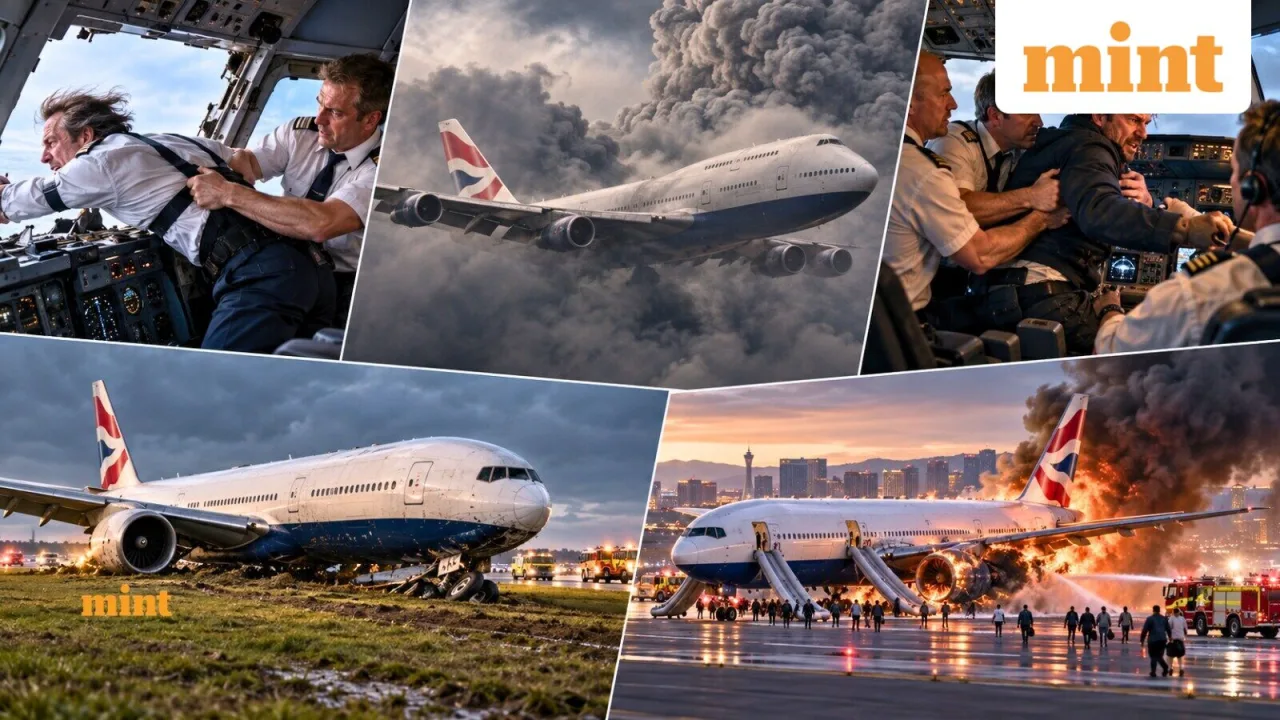
The event echoes past emergencies involving British Airways, as highlighted in livemint.com. The article referenced five notable incidents, including a 1990 windscreen failure that left a pilot partially ejected, a 1982 volcanic ash encounter that disabled all engines, and a 2000 cockpit intrusion that led to a steep descent. While these cases involved distinct causes, they underscore the airline’s historical preparedness for unexpected challenges.
Despite the urgency of the situation, the airline emphasized that safety systems functioned as designed. A spokesperson stated, “The safety of our passengers and crew remains our top priority.” The UK Air Accidents Investigation Branch may conduct a review, though no immediate findings have been released.
| Detail | Information |
|---|---|
| Flight Number | BA295 |
| Aircraft Type | Boeing 777-200ER |
| Departure | Heathrow, 11:50 a.m. (UTC) |
| Altitude at Incident | 36,000 feet (initial) to 9,000 feet |
| Descent Rate | ~3,800 feet per minute |
| Return to Heathrow | 5:00 p.m., 4 hours and 47 minutes after takeoff |
Frequently Asked Questions
What caused the cabin pressure issue on BA295?
British Airways has not confirmed the exact cause of the pressure loss. Engineers are investigating the pressurization system, including outflow valves, door seals, and air conditioning packs. No technical failure has been publicly disclosed.
Were passengers and crew injured?
No injuries were reported. All 235 passengers and crew disembarked safely, with no serious incidents recorded during the emergency descent or landing.
How does cabin pressure loss affect flight operations?
Cabin pressure loss requires immediate descent to 10,000 feet or lower to ensure breathable air. Pilots follow strict protocols, including deploying oxygen masks and communicating with air traffic control. The crew of BA295 adhered to these procedures, ensuring a safe return to Heathrow.
The incident highlights the critical role of emergency protocols in commercial aviation. While the cause of the pressure loss remains under investigation, the swift actions of the crew and the aircraft’s design ensured a safe outcome. British Airways has since confirmed that the aircraft is undergoing inspections, with no immediate impact on its operational schedule. The next steps will depend on the findings of the ongoing inquiry, which may provide further clarity on the event’s root cause.
How significant is this wire dispatch?
Cast your anonymous vote to register reader consensus across journalism and intelligence sectors.
Dateline Wire is dedicated to independent, evidence-backed reporting. This briefing was synthesized from primary source reporting, corroborated across independent newsrooms, and verified against our Editorial Standards.