FAA Lifts Nationwide Ground Stop Following Major US Air Traffic Outage
The Federal Aviation Administration lifted a nationwide ground stop after a communications failure caused the worst US air traffic crisis since 9/11, stranding 1.5 million passengers.
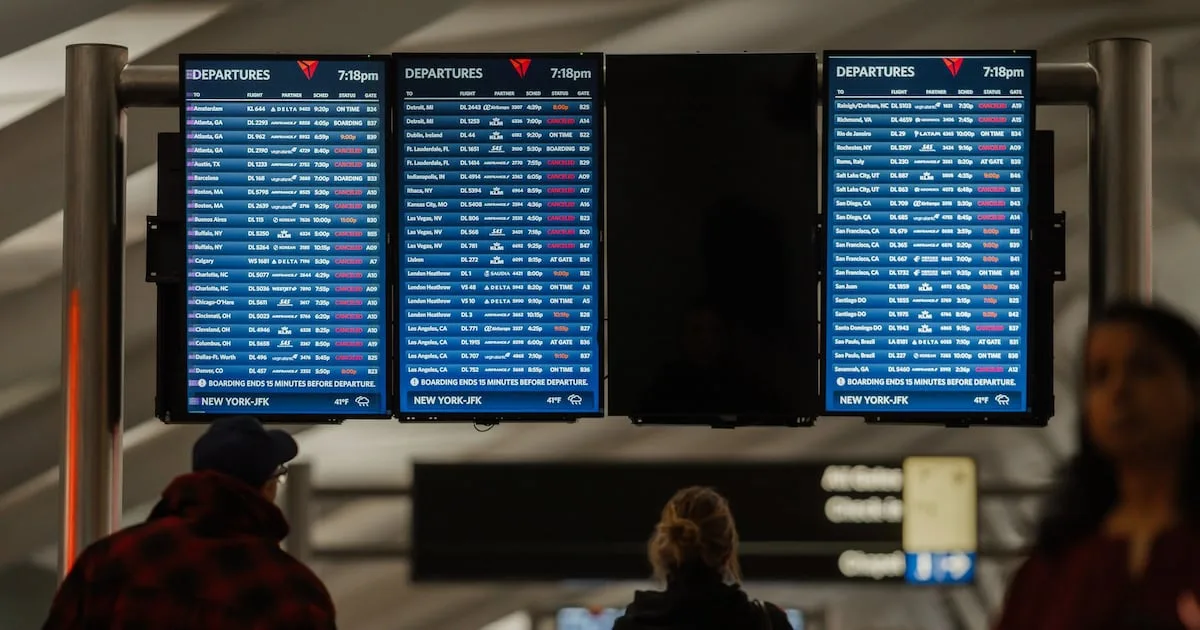
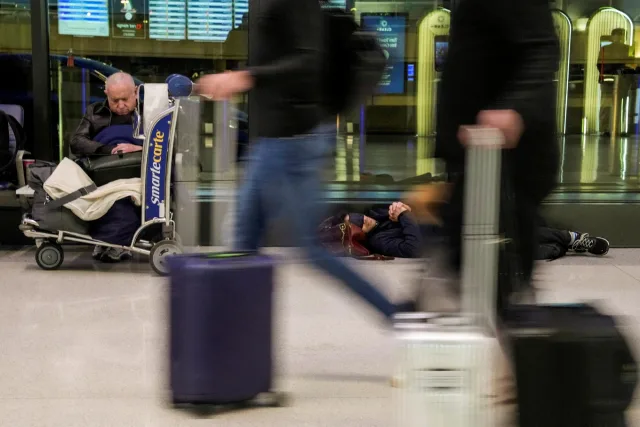
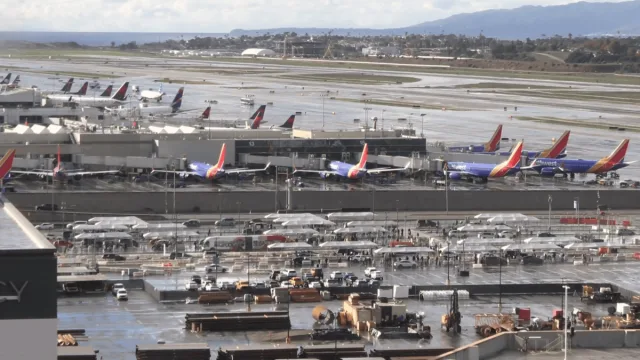
Travelers stepping up to airline ticket counters across the United States found themselves staring at blank departure boards and empty boarding gates on Friday, caught in the grip of the worst airport crisis since 9/11 that left 1.5 million stranded. The Federal Aviation Administration ordered a total nationwide ground stop after a communications failure at air traffic control centers. That extraordinary four-hour shutdown brought the country to a virtual standstill, forcing airborne planes to circle or divert and stranding millions before transportation officials managed to restart the fractured network.
The emergency began to lift late Friday night when Transportation Secretary Sean Duffy announced that US airspace reopened at 8.15pm ET (1:15am GMT). Yet the decision to restart departures offered little immediate relief to the crowds massing in terminal lounges, as airlines warned that getting bruised flight schedules back on track would take days. What started as an isolated communications glitch at a regional facility in Chicago cascaded across the country within minutes, laying bare the brittle infrastructure supporting the world's busiest airspace and instantly disrupting travel plans for millions of passengers on both sides of the Atlantic.
What caused the communications failure and subsequent ground stop?
Federal officials traced the breakdown to a technical failure involving an update to the private communications network connecting America's air traffic control system, which triggered a system reboot and a communications failure. Transportation Secretary Sean Duffy explained that the network routers got overloaded with data, and they started to give us inconsistency in the data from those routers, leading to severe data inconsistencies across regional air traffic control centers. The trouble reportedly began around 3:30pm on Friday when Chicago Center lost all frequencies and automation for handoff and strips, forcing operators to act before the glitch rippled across the entire national airspace.
The system crash forced the FAA to take drastic action. The agency announced the nationwide ground stop, citing extraordinary circumstances and reasons of safety. At that exact moment, according to tracking data from Flightradar24, there were 3,100 airborne aircraft bound for US airports. Controllers advised all airborne flights to circle instead of landing due to equipment outages, telling pilots to circle along predetermined routes instead of landing, while planes sitting at departure gates were ordered to remain stationary. Law enforcement and homeland security officials moved quickly to squelch rumors of a larger security breach. Three senior officials confirmed that the incident bore no connection to Microsoft's widespread global outage, and Homeland Security Secretary Markwayne Mullin reassured reporters that preliminary investigations showed no indication of a nefarious attack.
Which travelers and flights bore the brunt of the chaos?
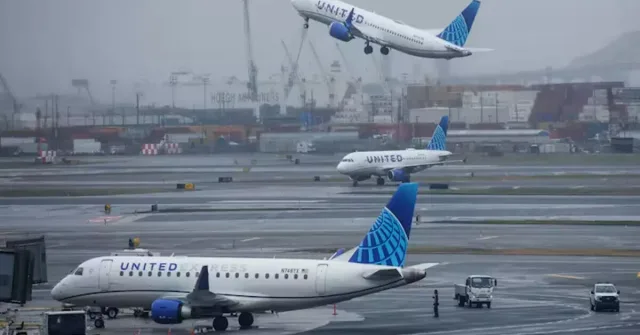
The numbers attached to the shutdown convey the sheer scale of the disruption. Data from Flightradar24 and analysis firm Cirium showed that more than 6,600 flights were cancelled and 8,600 delayed (with news reports noting nearly 11,000 flights hit overall), leaving an estimated 1.5 million passengers stranded in airport terminals nationwide. Major carriers including American Airlines, United Airlines, Delta Air Lines, and JetBlue scrambled to activate emergency operations centers as departure boards turned red.
The sudden suspension touched virtually every corner of domestic and international travel.
- Passengers attempting to fly domestically found themselves deplaning aircraft after sitting on the tarmac for hours.
- Transatlantic services suffered immediate casualties, including a British Airways flight from Heathrow to New York that was cancelled outright.
- European air traffic management agency Eurocontrol suspended all flights departing the European Civil Aviation Conference area bound for US airports.
- Professional sports leagues felt the pinch as multiple NBA, NHL, and college teams were left stranded on the ground, throwing a busy sports weekend into immediate disarray.
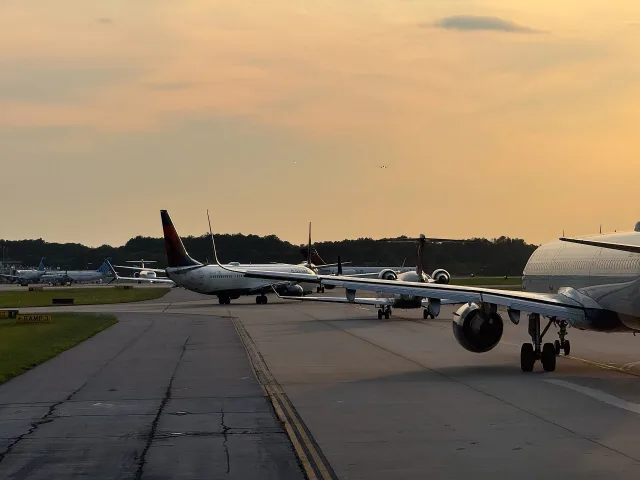
- Regional airports like Chicago O'Hare and Ronald Reagan Washington National Airport neared physical capacity for parked aircraft as dozens of flights diverted back to their origins.
How does this shutdown compare to historical precedents?
Aviation analysts confirmed that the four-hour shutdown was the longest flight shutdown since the attacks of September 11th, 2001. Until Friday, the only other groundstop of all departures in the US since the September 11th, 2001, attacks happened in January 2023, when the FAA paused all domestic departures for less than two hours. Friday's crisis eclipsed that 2023 event both in duration and in the sheer volume of air traffic caught in the net.
The rarity of a nationwide stop underscores how fiercely the FAA guards against the absolute worst-case scenario: a total loss of radar and voice communication between controllers and pilots in midair. Aviation safety expert Steve Arroyo, a former United Airlines pilot, noted that stopping planes on the ground remains the only responsible option when the infrastructure loses its ability to communicate reliably with aircraft aloft. The decision to halt departures entirely was designed to prevent airborne collisions, but it created an immense logistical logjam that ripple-effected across international borders from Canada to Mexico and the United Kingdom.
What is the chronological sequence of the emergency?
The hours surrounding the ground stop unfolded in a rapid succession of operational failures, official announcements, and international restrictions:
- Around 3:30pm on Friday, Chicago Center experienced a catastrophic loss of frequencies and automation, signaling the start of the router overload.
- The FAA formally announced the nationwide ground stop, citing extraordinary circumstances while 3,100 airborne aircraft remained airborne.
- Shortly after 5:00 pm ET, New York's John F. Kennedy International Airport advised travelers via social media to confirm flight statuses before arriving.
- At 10:00 pm GMT, Eurocontrol enacted a sweeping suspension of all flights departing European civil aviation airports bound for the United States at the request of the FAA.
- At 8:15 pm ET, Transportation Secretary Sean Duffy announced that US airspace had officially reopened following extensive system testing.
Who pays for the fix and what happens next?
The political fallout from the crisis materialized within hours, transforming an operational failure into a fierce debate over federal spending. Transportation Secretary Sean Duffy and White House Office of Management and Budget director Russell Vought placed direct blame on Congress for chronically underfunding civil aviation infrastructure. Duffy asserted that the system relies on incredibly old analog equipment and outdated routers, noting that the federal government needs $50 billion to modernise it.
That push builds upon $12.5 billion approved by lawmakers last year, which has already funded the replacement of miles of old copper wire with fibre optic lines at airports nationwide. Administration officials formalized the pressure by asking Congress for an additional $30 billion to deliver a resilient telecommunications backbone, modern hardware and software, state-of-the-art control towers, and world-class airport infrastructure. While the immediate danger has passed, airlines warn that residual cancellations will persist through the weekend. The central question is whether lawmakers will approve the multibillion-dollar modernization package before another aging router gives way under the weight of data.