Riyadh airport suspends operations after attack leaves several injured
A missile strike at Riyadh's main airport injured multiple people and forced the immediate suspension of all flight operations amid escalating regional conflict.
- Headline: Riyadh airport suspends operations after attack leaves several injured
- Dispatch Summary: A missile strike at Riyadh's main airport injured multiple people and forced the immediate suspension of all flight operations amid escalating regional conflict.
- Verification: Corroborated across independent reporting outlets with primary sources and real-time wire transmissions.
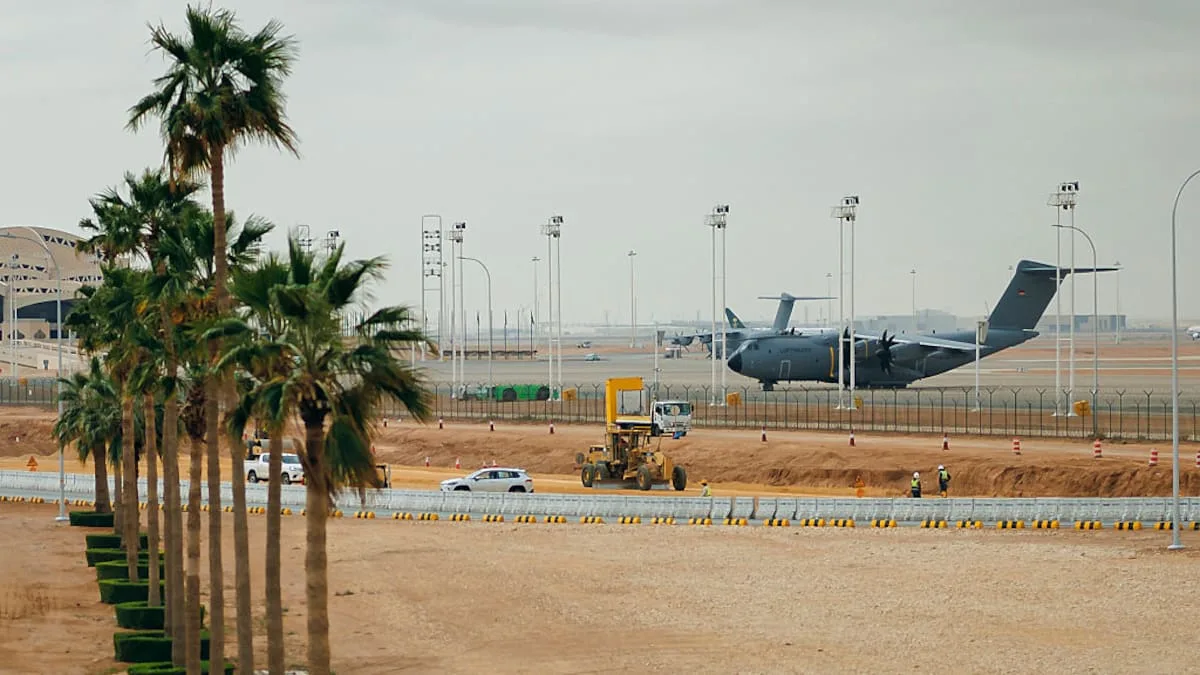
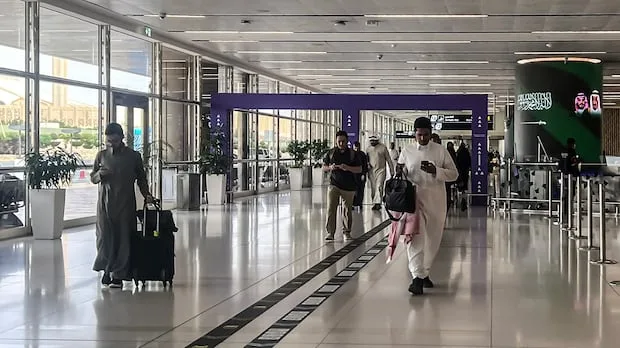
Passengers and staff at Riyadh's King Khalid International Airport faced sudden pandemonium on Saturday after a missile strike hit the facility, leaving multiple people wounded and forcing Saudi authorities to suspend all operations. The afternoon attack, which witnesses described as sending people fleeing in panic and shattering terminal glass, prompted a rare mass call-up of emergency doctors across the capital as hospitals rushed to treat the casualties.
The sudden closure of the Saudi capital's main aviation hub follows an intensive week of cross-border strikes that have claimed lives, damaged aircraft, and triggered widespread flight cancellations across the Middle East. While Yemen's Iran-backed Houthi movement had claimed responsibility for a series of attacks earlier in the week, the group did not announce any new attacks on Saturday, leaving authorities and diplomats scrambling to assess both the human toll and the widening strategic fallout.
How the strike on Gate 401 unfolded
The missile hit the airport at around 3pm local time, according to a diplomatic source briefed on the matter. Witnesses inside the terminal recounted scenes of immediate terror as the impact tore through the facility. One witness waiting to board a flight at Gate 403 reported seeing Gate 401 struck directly, stating: I was on Gate 403. I saw 401 hit, I saw injured in front of my eyes. Everyone was running.
Relatives of those caught in the blast reported victims suffering arm and shoulder wounds from flying glass.
Medical infrastructure in the Saudi capital shifted rapidly to crisis footing. A medical source told AFP that the health ministry ordered ER doctors to report to hospitals across the capital on Saturday to treat the wounded. Local hospital sources confirmed that dozens of people were injured, with at least five patients admitted directly to intensive care units. Among the wounded were several pilgrims headed to Mecca waiting to board their flight, alongside local citizens and residents.
The Saudi General Authority of Civil Aviation confirmed that the attack injured several people at the sprawling King Khalid International Airport, stating that operational activities were temporarily suspended pending a complete assessment of the damage and verification of facility safety. Flight monitoring website Flightradar24 reported that more than 40 per cent of all flights on Saturday from Riyadh's King Khalid International Airport were cancelled, compounding days of severe disruption.
The chronology of this week's escalating violence underscores how quickly regional skies have transformed into a conflict zone:
- Monday, October 5: King Abdullah bin Abdulaziz International Airport in Jizan and Najran International Airport close to the Yemeni border are attacked, causing “minor injuries” and damage.
- Tuesday, October 6: Houthi-claimed missile and drone campaigns continue across multiple Saudi locations, prompting fresh international travel advisories.
- Wednesday, October 7: Intermittent strikes hit Saudi airports, leading to temporary flight halts and mounting schedule adjustments.
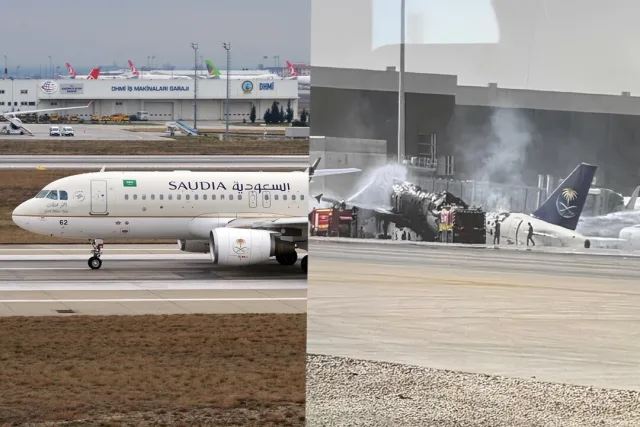
- Thursday, October 8: A major attack on Riyadh's King Khalid International Airport kills three people, and badly damages a plane.
- Saturday, October 10: A fresh missile strike hits the Riyadh airport terminal during the afternoon, injuring multiple people, sparking a mass medical call-up, and shutting down all airport operations.
What does this mean for travelers across the Middle East?
The suspension of operations at Riyadh has sent shockwaves through international aviation networks, leaving travelers facing canceled connections, extended transit times, and shifting airline policies. Major carriers have reacted swiftly to the deteriorating security environment. Lufthansa suspended its flights to Riyadh until 16 October, Air India cancelled its flights to Riyadh until Saturday, 10 October, and British Airways, Cathay Pacific, and KLM enacted extended suspensions on their regional routes.
Travelers attempting to navigate the Gulf aviation network are being urged to verify their flight statuses directly with airlines before heading to any airport. For those holding tickets on affected routes, carriers have introduced varying flexibility measures:
| Airline | Status and Route Adjustments | Customer Flexibility Policy |
|---|---|---|
| Emirates | Operating reduced network (93% capacity); flights to Saudi Arabia face fluidity. | Free ticket date changes as needed; complimentary conflict travel insurance. |
| Etihad Airways | Riyadh-Abu Dhabi flights facing delays; checking updates advised. | One free rebooking for tickets issued on or after March 6 for travel up to March 31, 2027. |
| Qatar Airways | Operating to over 160 destinations with delays on Saudi routes. | Complimentary date changes for confirmed travel up to October 31, 2026. |
| British Airways | Suspended several Middle East routes; London-Jeddah permanently dropped. | Full refund or date change for bookings issued before April 1 for travel through October 31. |
| Cathay Pacific | Cancelled all flights to and from Dubai and Riyadh until January 31, 2027. | Full rebooking, rerouting, or ticket refund options per waiver policy. |
At the same time, the European Union Aviation Safety Agency (EASA) renewed its conflict zone advisory for the Gulf, urging airlines to avoid airspace over the waters of the UAE, Bahrain, Kuwait, Oman and Qatar until Monday, 16 November. The agency warned that the possible use of missiles, drones, combat aircraft and air-defence systems creates a high risk to civil flights at all altitudes and flight levels within the concerned airspace.
How are foreign governments responding?
Western embassies in Riyadh moved rapidly to isolate their personnel and warn citizens away from the stricken aviation hub. The US Embassy in Saudi Arabia said it was “aware of attacks” on Riyadh airport on Saturday and called on American citizens to avoid the area. The US, meanwhile, updated its earlier warning of potential disruption in Riyadh, now specifying that all US government employees require special authorisation to use Riyadh's King Khalid International Airport.
Britain's Foreign, Commonwealth & Development Office updated its travel guidance, advising British nationals to steer clear of the Riyadh airport entirely. This followed broader FCDO warnings issued a day prior advising against all but essential travel to Aseer, Riyadh, Najran, Jizan, Taif city and Taif International Airport, as well as anywhere within 10 kilometres of the border with Yemen. Embassies representing Canada, Germany, and Spain issued similar alerts, with Spain’s embassy, in a message on X, alerted nationals to a new attack... by the Houthis
. A senior Western diplomat told AFP that several embassies indicated that they had decided to prohibit their staff’s travel to/from Riyadh Airport over the next week as a prudential step
.
The diplomatic warnings reflect a deeper anxiety in Washington and European capitals over the trajectory of the conflict. In Washington, Donald Trump told reporters he was evaluating whether the US should join Saudi strikes against the Iran-backed Houthi rebels in neighbouring Yemen. We may. We’re going to look at it,
Trump said. We just found out about the recent attack. So we’ll make a decision. We move very quickly.
What is happening on the ground in Yemen?
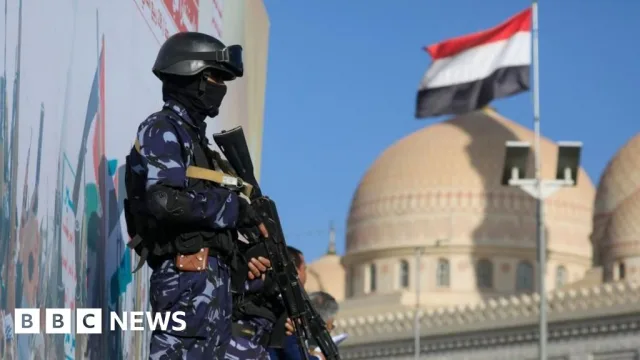
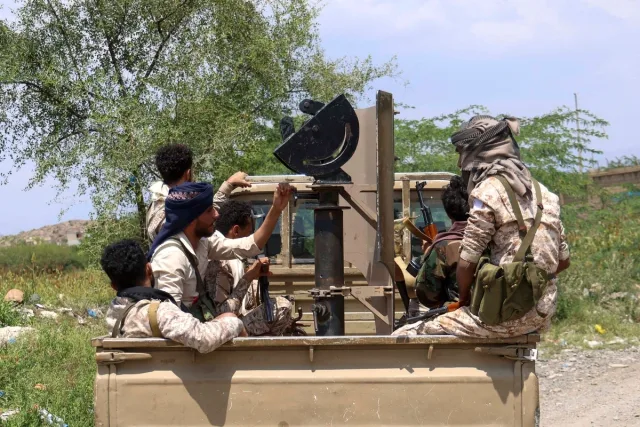
The aerial escalation over Riyadh is directly tied to a renewed ground war inside Yemen, where a four-year, UN-brokered truce collapsed in July. Saudi Arabia leads an international coalition that supports Yemen’s government militarily and has found itself drawn deeper into its impoverished neighbour’s civil war, which launched a major counter-offensive this week aimed at retaking all areas held by the Houthis, after the group seized the country’s entire western coastline in a lightning offensive.
Conflicting military accounts surround the push to secure the vital maritime chokepoint. Saudi Arabia's ambassador to Yemen, Mohammed al-Jaber, declared on social media: Blessed Friday and victory for every Yemeni and Arab. Bab al-Mandab has been cleared of the remnants of the Houthi terrorist militia.
Aidarous al-Zubaidi, the president of the Southern Transitional Council (STC), one of the main political forces in the south of Yemen, claimed the island and coastal area had been recaptured from Houthi hands.
However, an official military spokesperson for the UN-recognised government forces qualified the claim, saying only half the area had been recaptured so far. Waddah al-Dabish said newly established Houthi defensive lines had been broken on the land next to the strait, leading to the death of thousands of Houthi fighters. Meanwhile, a Houthi spokesperson claimed that forces from the Saudi-backed government based in Aden “were targeted with a large number of ballistic missiles, artillery support and heavy weapons, resulting in the destruction of more than 22 armoured vehicles and the killing and wounding of dozens, including a number of commanders.
United Nations’ special envoy to Yemen, Hans Grundberg, admitted to the UN security council in New York that Yemen – the poorest country in the world – had lapsed back into full-scale war and said the first victims would be women and children. With both Riyadh and the Houthis signalled a willingness to keep fighting rather than pursue diplomacy, travelers, residents, and energy markets across the region face a protracted period of acute vulnerability.