FAA Orders Nationwide Ground Stop Over Telecommunications Outage
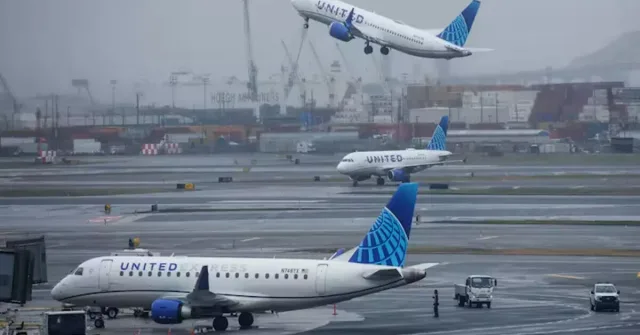
A widespread telecommunications outage forced the FAA to order a rare nationwide ground stop on Friday, halting all departing flights across U.S. commercial airports.
FAA Lifts Nationwide Ground Stop After Four-Hour Communications Halt
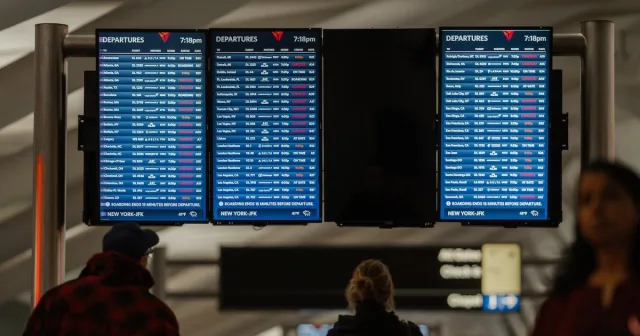
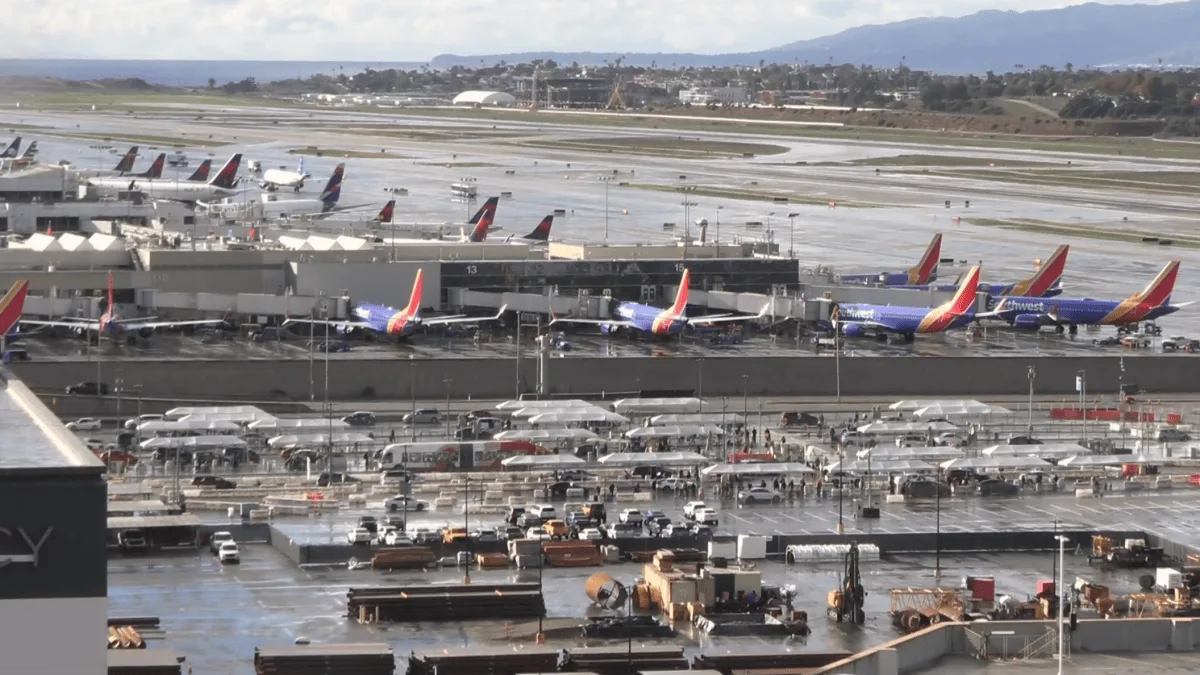
Air traffic across the United States began returning to normal on Friday evening after the Federal Aviation Administration lifted a nationwide emergency ground stop that halted departing flights for more than four hours. The FAA announced at 8:15 p.m. Eastern time that it had lifted the order, which took effect earlier at 3:54 p.m. ET due to a temporary telecommunications outage affecting all 22 air route traffic control centers.
Transportation Secretary Sean Duffy confirmed that the communications issue impacted every regional facility responsible for coordinating aircraft moving through high-altitude national airspace. As airlines scrambled to respond, flight tracking data from FlightAware recorded more than 10,000 delays and over 4,000 cancellations by the evening. Flightradar24 reported that some 4,042 flights were airborne and heading to U.S. airports when the ground stop was ordered.
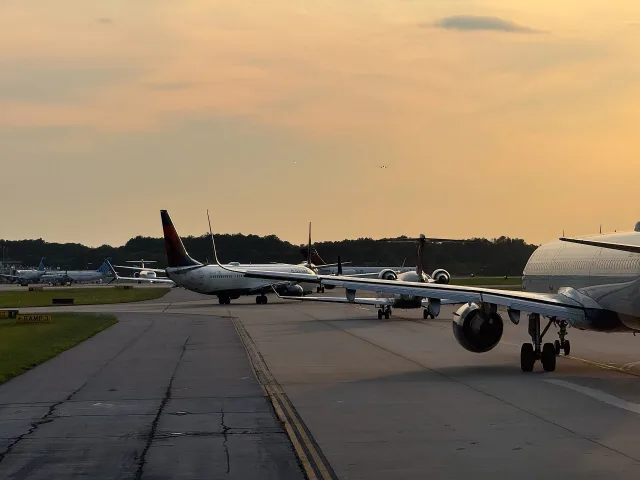
The emergency directive instructed all departing aircraft to remain on the ground at airports nationwide pending a resolution. Aircraft already airborne were not automatically required to land immediately, while inbound international flights were handled on a case-by-case basis. Homeland Security Secretary Markwayne Mullin told reporters at the White House that everybody was safe and that every flight had been accounted for, emphasizing, This is not another 9/11.
That analysis shows the fragility of the aviation network: while federal officials successfully prevented any midair catastrophe, the sheer speed at which a regional voice and data failure cascaded into a total national shutdown exposed the profound vulnerability of the country's transit infrastructure. When a single technical glitch can immobilize the entire continent's airspace for hours, the debate over modernization shifts from a routine budget discussion to an urgent national security priority.
Official Responses and the Search for a Root Cause
Federal officials stressed that no evidence linked the incident to malicious activity. Mullin stated there was no indication that the ground stop was triggered by a threat to the U.S. An official familiar with the matter told Bloomberg that the FBI does not believe a cyberattack or criminal activity caused the failure, noting that investigators were examining whether a software update could have been responsible, though the official cause remained undetermined.
President Donald Trump did not address the situation publicly following the announcement of the ground stop. When asked during a White House news conference why the president had not spoken publicly about the disruption, Mullin replied, I don’t run the president’s comms,
adding that Trump had been fully engaged,
in regular contact with senior officials, and briefed on developments multiple times throughout the crisis. Mullin also defended Trump by saying the president had been pushing for an overhaul of the country's ageing air traffic control infrastructure.
Democratic Senator Tammy Duckworth called for a thorough and complete investigation, writing on X, The safety of our skies is built on redundancies. Whatever led to the nationwide ground stop will warrant a thorough and complete investigation. As Aviation Subcommittee Ranking Member, I’ll be demanding answers from the FAA.
Questions also surrounded the FAA's recent rollout of a new artificial intelligence tool meant to help manage airspace congestion. Air Space Intelligence (ASI), the company behind the system, stated that its technology was not responsible for the disruption. In a post on X, the company stated, The current ground stop is not based on or a result of the SMART system, any product of ASI or our integration with FAA and ATC.
The FAA had awarded ASI an $875m contract in June to develop and deploy the SMART system and announced an expansion across its 22 air traffic control centers on November 10, just days before the suspension. When asked if the tool could be to blame, Mullin said officials had not ruled it out, stating, You just can’t rule out anything at this point. We are going through that process.
Pilot and former FAA safety team representative Kyle Bailey told Al Jazeera, Whether you are an expert or not, the bottom line is we’re still trying to piece the puzzle together, and it would be impossible to have an answer to the issue quickly, in a few hours at least. But it is very alarming what we saw, and possibly rail operator Amtrak is being affected too.
Bailey added that halting flights was the safest course of action, noting, If anybody says they think they know what’s causing this problem at such an early stage, they’re not being honest.
The ripple effects of the aviation shutdown quickly spread to other modes of transportation. Amtrak announced that its website and app were showing error messages and that customers faced difficulty reaching representatives due to higher-than-normal call volumes stemming from the nationwide air travel disruption.
| Date | Incident Description | Operational Impact |
|---|---|---|
| Nov. 13, 2026 | Air traffic control communications problems; root cause unconfirmed | Nationwide ground stop temporarily halted departing flights for over four hours |
| Sept. 21, 2026 | Primary communications circuit problems and damaged backup fiber optic line | Temporary arrival restrictions at several East Coast airports |
| Jan. 11, 2023 | FAA Notice to Air Missions system malfunction | Nationwide ground stop halted domestic departures |
The disruption stands as only the second time since the September 11, 2001, terrorist attacks that the FAA ordered all departures halted nationwide, following the January 11, 2023, Notice to Air Missions system failure. Friday's incident differed fundamentally because it involved live voice and data communications at the en route control centers rather than a standalone database.
Infrastructure Strain and the Ongoing Modernization Challenge
Friday's emergency highlights long-standing vulnerabilities in the technology supporting U.S. aviation. A September 2026 Government Accountability Office report noted that 51 of the FAA's 138 air traffic control systems were classified as unsustainable, with another 54 considered potentially unsustainable. The agency has been working to replace aging copper lines with fiber optic infrastructure, replacing 2,560 of its 5,170 older copper lines as of May 2026, with a target completion date of December 2028.
Congress approved $12.5bn for the overhaul last year, and the Department of Transportation and the White House asked lawmakers on Friday for another $30.1bn. That request builds on a September 28 proposal by Duffy and Senator Eric Schmitt for the Modern Skies Act, a $30 billion request to modernize air traffic control, improve airports, and overhaul outdated infrastructure.
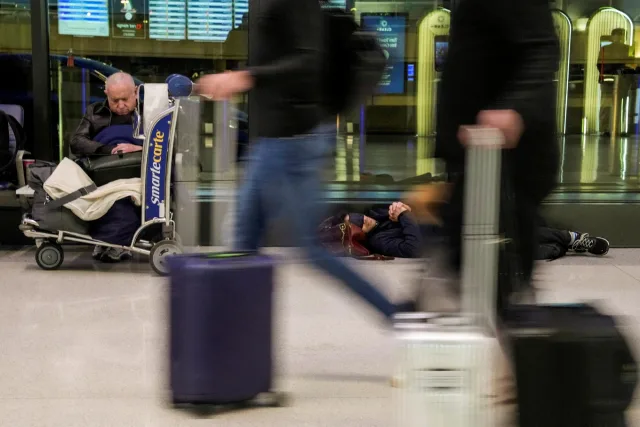
Travelers attempting to navigate the aftermath face significant schedule adjustments. Because a halt of this scale leaves aircraft and flight crews out of position, delays and cancellations are projected to persist as airlines work to restore normal operations. Passengers are advised to check directly with their airlines and consult the official FAA website for operational updates before heading to the airport.
Updated 1 time since publication; last update 15 November 2026, 09:26.