FAA grounds all US departing flights due to communication outage
The Federal Aviation Administration grounded all US departing flights nationwide due to a major communications failure, stranding passengers.
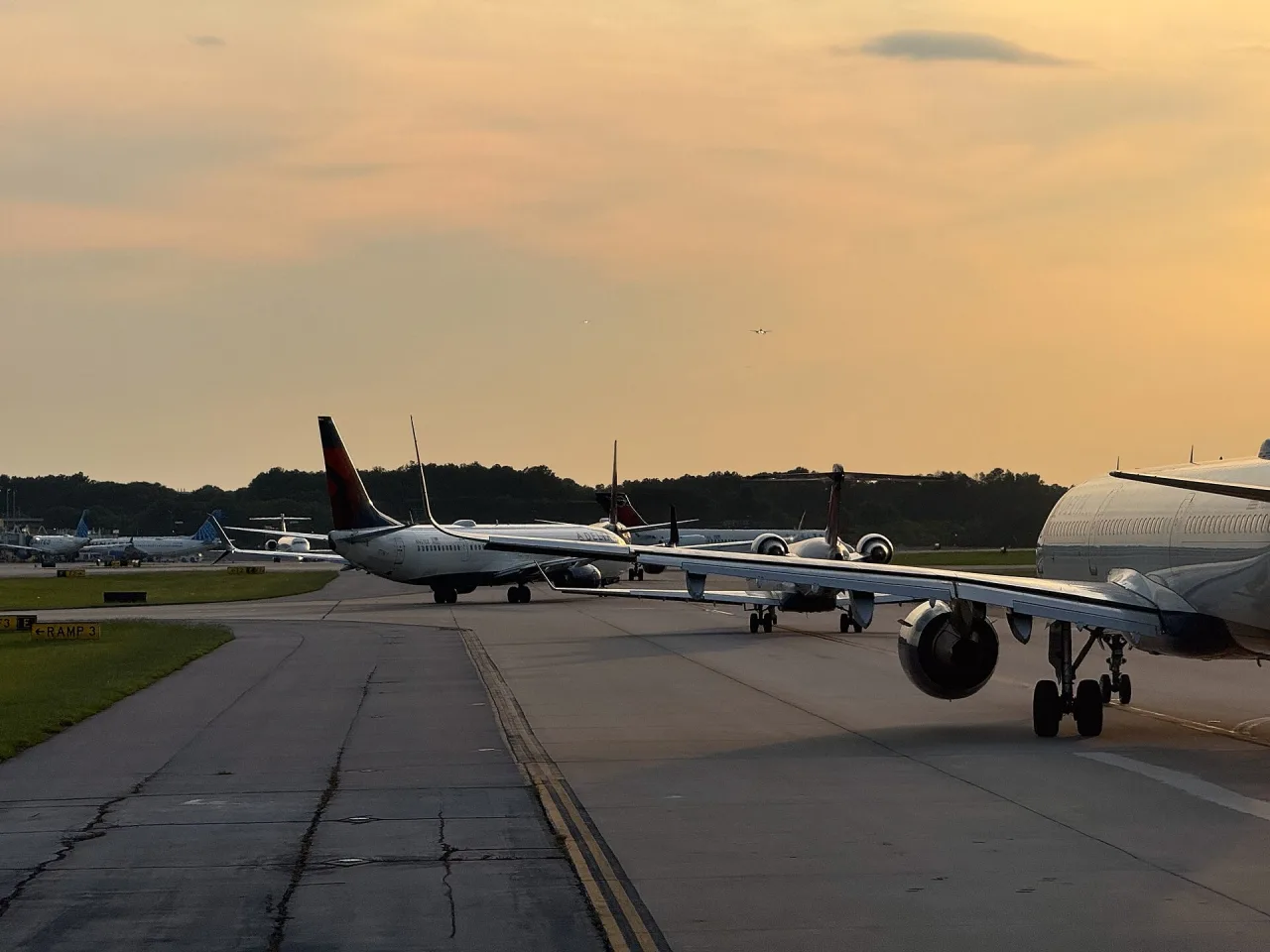
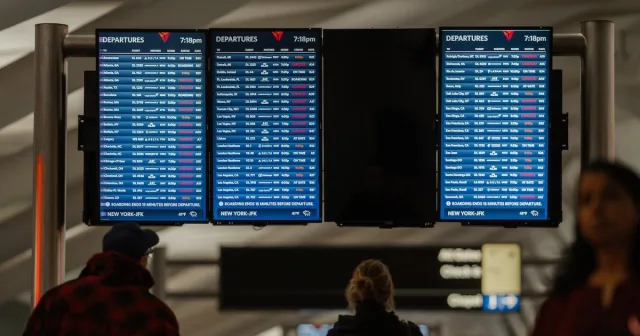
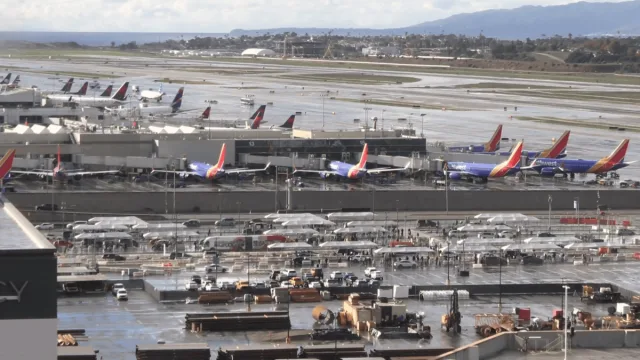
Passengers across the United States found themselves stranded on Friday afternoon after the Federal Aviation Administration ordered an unprecedented nationwide ground stop of all departing flights due to a sudden communications failure. While aviation authorities insisted that every airborne aircraft was accounted for and safe, the disruption paralyzed the world's busiest airspace, shuttering operations at major hubs including Atlanta, Miami, Houston, Los Angeles, and New York.
The stark divide between federal reassurances and traveler reality defined the hours following the announcement. The FAA stated that the sweeping halt was ordered due to extraordinary circumstances and for reasons of safety,
while officials scrambled to diagnose the telecommunications outage affecting regional air traffic control centers.
Who is affected and how are travelers handling the standstill?
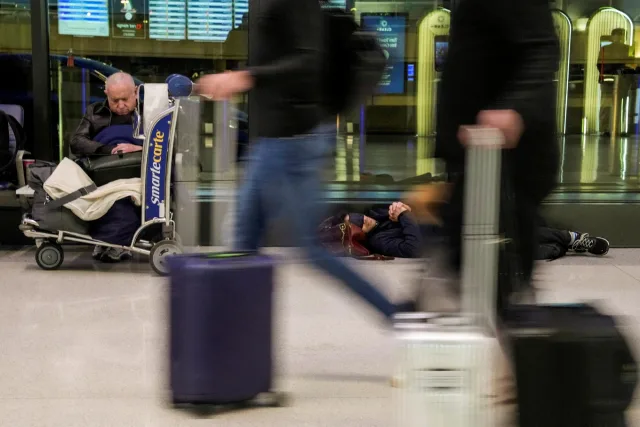
The stoppage rippled immediately through terminals nationwide, trapping passengers either inside aircraft waiting on tarmacs or in crowded departure halls. Jeff Dubner, a Washington, D.C., attorney, was still waiting to disembark his plane an hour and a half after leaving the gate at Los Angeles International Airport. His Alaska Airlines flight to Washington was already half an hour late and taxiing toward the runway when the aircraft came to a halt. It's frustrating. This certainly sounds like it's going to be more than the usual run of the mill delay. I look forward to finding out why,
Dubner said by phone from the tarmac, noting that passengers nearby were taking the disruption in stride.
Other travelers faced similar bottlenecks as landing planes found themselves unable to reach arrival gates because departing aircraft were forbidden from leaving. At Chicago O'Hare Airport, Sean Carey was waiting for a flight to Las Vegas to attend a family wedding when relatives began calling and texting him about the ground stop. If he misses the ceremony on Saturday, Carey said he only hoped for a refund and plans to visit another time, wishing that everyone gets home safely.
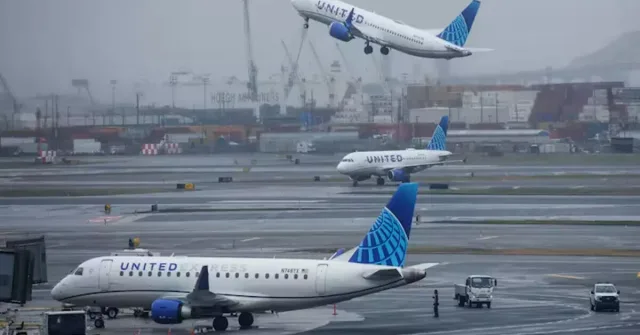
Major carriers scrambled to adjust operations while warning customers to expect cascading delays. United Airlines announced that new domestic flights would not depart, though international departures were managed case by case in consultation with the FAA. American Airlines stated that flights already airborne would continue to their destinations, but warned of lingering schedule disruptions for the remainder of the day.
What do federal officials and aviation experts say caused the failure?
At a White House briefing, Homeland Security Secretary Markwayne Mullin sought to calm public anxiety while confirming the scale of the failure. This is a telecommunication outage,
Mullin told reporters, adding that the president had taken immediate command of the response by making federal resources available to coordinate across agencies. Mullin repeatedly rejected comparisons to the September 11, 2001, terrorist attacks, stating plainly, This isn't another 9/11.
Transportation Secretary Sean Duffy detailed that the communication issue impacted the FAA's Air Route Traffic Control Centers, the regional facilities responsible for guiding aircraft between airports away from runways. While officials investigated, aviation experts pointed to systemic vulnerabilities within America's aging aviation architecture. Former United Airlines pilot and aviation expert Steve Arroyo noted that the event mirrored a regional communication outage in September that snarled flights across the Northeast, albeit on a nationwide scale. Arroyo explained that when communication links degrade, regulators have no choice because if you don't have that ability, whether it's because the old wires that they have are just run down or for whatever reason, you've got to stop airplanes on the ground,
rather than risking midair blind spots.
University of Nebraska at Omaha aviation professor Skip Bailey emphasized that midair safety protocols remained intact because pilots retain alternative methods, including backup radio frequencies to communicate with one another and onboard radar systems. It's not mass chaos out there. There's plenty of ways to try to communicate,
Bailey said. But not letting anybody take off again obviously is extremely important because we don't want to put more aircraft into a system that's already having an issue.
How does this compare to past disruptions and infrastructure overhauls?
Friday's order marks only the second nationwide ground stop in the United States since the 2001 terrorist attacks, following a previous system-wide halt in January 2023 caused by a malfunction in the Notice to Air Missions system. The recurrence of such massive failures has intensified scrutiny over long-standing technological deficits within the FAA. Industry observers noted that certain air traffic control operations still depend on legacy equipment, including floppy disks, though Congress approved $12.5 billion last year to fund infrastructure modernization.
Mullin stressed that authorities were not ruling anything out while investigations continued. When asked if there was a connection to recent technological strains like the Microsoft outage, Mullin said officials were not ruling anything out.
How did the hours unfold on Friday?
- Friday afternoon: The FAA issues a nationwide ground stop for all departing US flights, citing extraordinary circumstances and safety concerns.
- Late afternoon: Flight-tracking data from Flightradar24 shows about 3,100 aircraft airborne and heading toward US destinations while all departures remain frozen.
- Friday, 6:37 p.m. ET: Polymarket prediction contracts reflect active trading on when the halt will lift, pricing a 30.5% probability that restrictions will end by 10 p.m. ET.
- Friday evening: Homeland Security Secretary Markwayne Mullin and Transportation Secretary Sean Duffy brief reporters outside the White House, confirming that every flight is accounted for and that international arrivals will be handled case by case.
What are prediction markets and financial observers betting on?
As federal agencies worked to restore normal operations, financial markets and risk traders turned to real-time prediction platforms to gauge the duration of the crisis. On Polymarket, a crypto-based prediction market, traders had poured approximately US$364,000 into contracts tracking when the nationwide ground stop would officially lift. As of 6:37 p.m. ET, traders priced a 30.5% chance that the halt would end by 10 p.m. ET, rising to 50.5% by midnight, 78.5% by 6 a.m. Saturday, and 93.6% by midnight at the close of Saturday, November 14.
The central question remaining for millions of stranded travelers and aviation authorities is precisely how long the telecommunications outage will persist before normal operations resume safely across all regional control centers, and whether the federal government can accelerate its infrastructure overhaul to prevent a third nationwide shutdown.