Trump’s Whirlwind Asia Trip Begins in the Philippines
President Donald Trump arrived in Manila to begin a high-stakes Asian tour defined by protests over U.S. AI initiatives and widespread trade uncertainty.
Protests and Promises in Manila
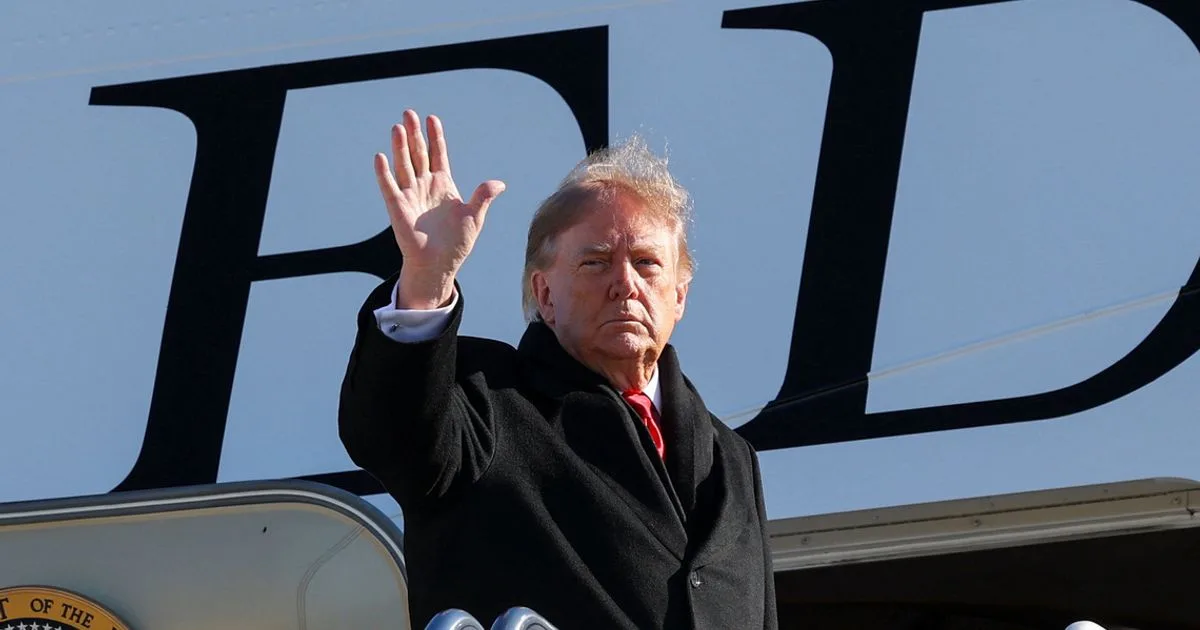
President Donald Trump touched down in the Philippines on Tuesday, initiating a high-stakes, 48-hour Asian tour defined by a profound friction between his administration's outward goals and the regional reality on the ground. Arriving at Ninoy Aquino International Airport, Mr. Trump was greeted by a marching band playing Y.M.C.A.
and a choreographed reception, yet the atmosphere outside the diplomatic cordon remained volatile. Thousands of demonstrators gathered in central Manila to protest the president’s visit and the Pax Silica initiative, a U.S.-led consortium focused on artificial intelligence supply chains that activists argue compromises national sovereignty.
The trip comes at a moment of significant domestic political and corporate turbulence for the White House. Following midterm election losses and the departure of Nvidia’s former chief executive, Jensen Huang, amid a scandal involving an alleged Chinese intelligence agent, Mr. Trump faces a shifting landscape in the Indo-Pacific. While the president’s agenda officially centers on reaffirming security ties, his reliance on personal rapport — evidenced by his warm greeting for Philippine President Ferdinand R. Marcos Jr. — masks a growing sense of instability among Asian allies who have weathered consecutive rounds of U.S. tariffs.
A Shift in Regional Alliances
The centerpiece of the visit is a resurgence of the Quadrilateral Security Dialogue, or Quad. The meeting, the first in two years for the U.S., Japan, Australia, and India, is being framed by Washington as a partnership of action,
according to White House spokesperson Olivia Wales. For the Biden-era signature initiative, the revival marks an attempt to regain traction that former Deputy Secretary of State Kurt Campbell suggested had lost ambition
under Mr. Trump. The Quad’s focus remains maritime security, critical minerals, and emerging technology, even as members grapple with the economic fallout of the Iran war, which has sent energy prices soaring.
This attempt to project unity contrasts sharply with the reception in Manila. Local activists, such as 18-year-old student Cinna Sison, have rejected the Pax Silica initiative as a symbolic return to a colonial-era military footprint. The tension is mirrored in the Philippine provinces; in the municipality of Capas, Mayor Roseller Rodriguez reported being excluded from discussions regarding an AI hub slated for his jurisdiction. The discrepancy between the administration's claims of an open Indo-Pacific
and the local concerns over resources and sovereignty reveals a widening gap in the U.S. approach to its traditional allies.
Trade Uncertainty and Economic Weaponization
Economic diplomacy during the trip has thus far been marked by dissonance. While the administration touted a trade deal with Thailand to be signed during the visit, the Thai Ministry of Foreign Affairs clarified that the event would merely mark a joint statement marking progress in negotiations.
This follows a tumultuous period where Thai trade relations were battered by a 36 percent tariff, later reduced, and then replaced by a 12.5 percent levy imposed by the U.S. administration. As economist Pavida Pananond of Thammasat Business School noted, The level of trust Thailand has in the U.S. is not at the same level as before all this economic weaponization of tariffs.
The following timeline traces the progression of recent diplomatic and economic developments involving the U.S. and its regional partners:
- February 2026: U.S. Supreme Court strikes down initial tariffs on Thai goods; the U.S. and India sign an interim framework for a trade deal.
- July 2026: The U.S. administration levies a 12.5% tax on imports from Thailand citing forced labor concerns.
- November 17, 2026: President Trump arrives in Manila for meetings with Quad leaders and ASEAN counterparts.
The Road to Shenzhen
The Manila stop serves as a prelude to the APEC summit in Shenzhen, China, where the president is expected to engage in a trilateral meeting with Chinese President Xi Jinping and Russian President Vladimir Putin. This would be the first meeting of its kind, an event Mr. Trump has indicated will address the complexities of denuclearization, the war in Ukraine, and the future of the trade truce currently limiting tariffs on Chinese goods. Chinese officials have maintained they are not interested in nuclear talks until their arsenal matches American capabilities, leaving the prospects for substantive progress unclear.
Furthermore, the potential for North Korean leader Kim Jong-un to attend the Shenzhen summit has raised the possibility of a direct reunion with Mr. Trump. The Kremlin has confirmed that President Putin may meet with Mr. Kim if he attends, showing the deepening military ties between Moscow and Pyongyang, exemplified by the planned monument in Russia’s Kursk region honoring North Korean troops. Whether this gathering results in a significant shift in regional policy or remains a showcase of Russia’s influence among major powers remains the central uncertainty.
As the president prepares to move from the streets of Manila to the summits in Shenzhen, the overarching question remains whether his preference for personal diplomacy and high-level bilateralism can address the underlying erosion of trust within the ASEAN bloc and the Quad. With the trade truce with China nearing expiration and geopolitical stakes regarding AI and military support reaching a new height, the outcome of these meetings will determine whether the U.S. can stabilize its position as a reliable partner or if it will continue to prioritize commercial maneuvers that isolate its closest allies. The next 48 hours will reveal if these high-level talks yield tangible shifts or merely provide the optics of a statecraft that struggles to contain the reality of regional friction.