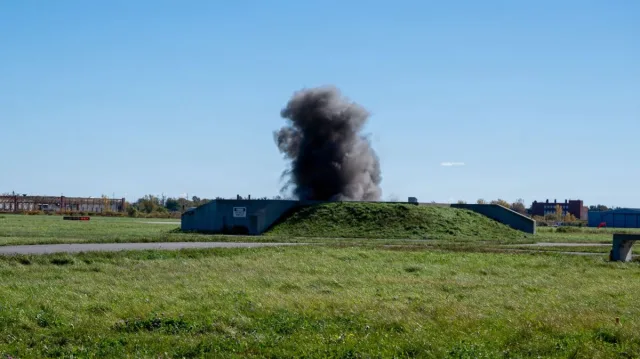
U.S. Army cleared by court to detonate lead explosives in Iowa
A federal appeals court has cleared the U.S. Army to detonate degraded explosives at an Iowa ammunition plant, amid political friction and environmental concerns.
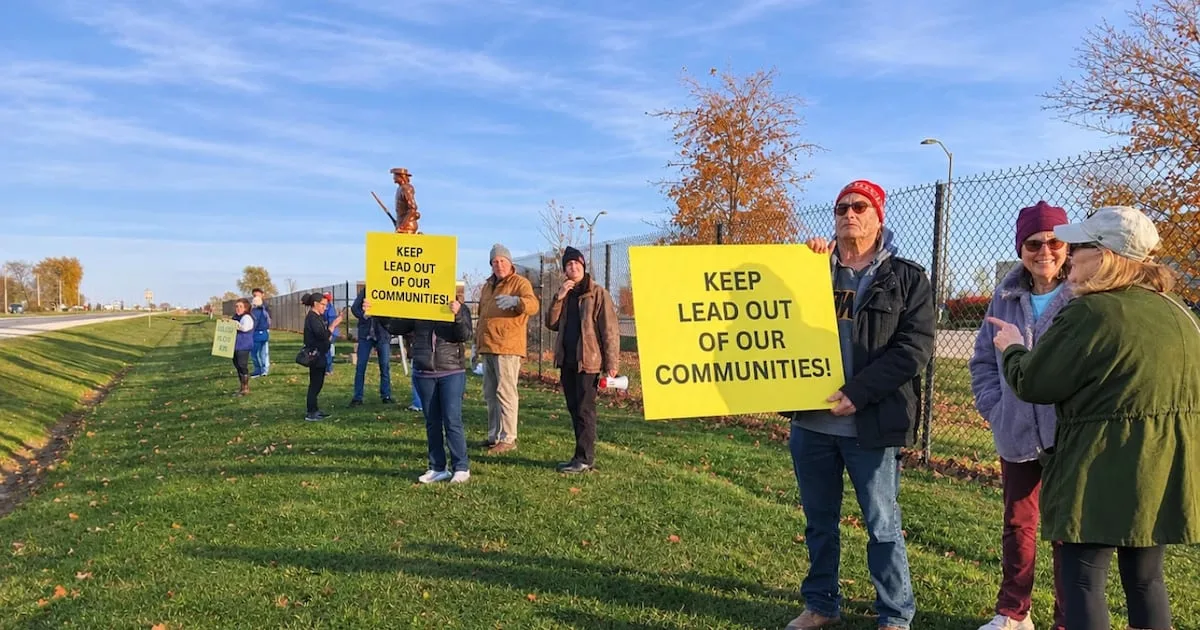
Court ruling clears path as political friction mounts over Middletown detonation
A federal appeals court cleared the way on Monday for the U.S. Army to detonate several tons of degraded bomb-making material at an Iowa ammunition plant, finding that the plan should adequately limit the dispersal of lead dust into the atmosphere. The order by the 8th Circuit U.S. Court of Appeals removes the last formal judicial roadblock standing between the military and a contested plan to destroy 68 barrels of lead azide stored at the Iowa Army Ammunition Plant in Middletown, Iowa. Yet the decision arrives amid a thicket of conflicting political directives, intense public anxiety across multiple states, and warnings from environmental advocates who argue the operation poses an unacceptable public health risk.
The legal battle centers on the validity of an emergency permit issued by the U.S. Environmental Protection Agency, which environmental groups sued to stop last week. In its ruling, a three-judge panel concluded that the EPA adequately incorporated safeguards into the emergency permit to minimize dust dispersal, pointing specifically to barriers erected around the storage area, strict weather restrictions, requirements for advance public notification, updated air modeling, and ongoing environmental monitoring and sampling. The court acknowledged the gravity of the situation in its ruling, stating that the degraded explosives present a risk of an uncontrolled and unplanned explosion that would occur without the benefit of the safety measures put in place by the permit.
That judicial green light collided directly with executive intervention earlier in the day when President Donald Trump announced he had ordered the Army not to detonate the chemicals without court approval and the consent of incoming Iowa Gov.-elect Rob Sand. In a Truth Social post, the president called the plan a military clean-up operation necessary to avert a dangerous situation, yet added that he would hold the incoming Democratic governor responsible for any and all death or destruction caused by the long-term situation if the operation failed to proceed. Sand pushed back publicly against that condition, stating on social media that the administration should make the decision based on information from the experts they brought in months ago and have had on the ground in Middletown for weeks. Sand questioned why a previous contract to remove the explosive risk was canceled, why nothing was done sooner, and why officials are rushing to demolition in late November.
The operational timeline for the destruction has shifted repeatedly under the weight of public scrutiny. The detonation was initially scheduled for last Friday before being changed three times by the Army, with a Wednesday detonation favored due to optimal weather conditions. Following the appeals court ruling, a new timeline remained unclear.
| Official / Body | Stance on Detonation | Key Concern Cited |
|---|---|---|
| U.S. Army / Col. Aaron Teller | Proceed immediately via emergency provisions | Crystallized material is sensitive to freezing and friction, threatening spontaneous explosion |
| President Donald Trump | Conditional on court clearance and Gov.-elect Sand's sign-off | Long-term danger versus liability for potential destruction |
| Gov.-elect Rob Sand | Refuses to shoulder unilateral decision-making authority | Lack of answers on canceled removal contracts and rushed late-November timeline |
| Illinois Gov. JB Pritzker | Opposes plan, labeling it an environmental disaster | Potential exposure zones reaching into western Illinois and lack of straight answers |
That leaves the military pressing for immediate action against a wall of regional political resistance. Army officials argue that time is running out because dropping temperatures threaten to destabilize the aging chemicals further. In court filings over the weekend, Army Col. Aaron Teller explained that lower liquid levels inside the barrels make the remaining solution more susceptible to freezing, which increases the sensitivity of crystals forming around the inside rims and lids. Even a small amount of friction can break those crystal formations and trigger an explosive chain reaction, according to the military. John Goodpaster, a chemistry professor at Indiana University, Indianapolis, noted that lead azide is very sensitive to heat, freezing, shock, and friction, and that explosives grow increasingly unstable as they age. He added that while it is impossible to predict when the material might explode on its own, the longer officials wait, the greater the accumulated risk of an accidental detonation becomes.
Weighing immediate catastrophe against airborne toxic fallout
Behind the urgency of the military's detonation plan lies a cascade of disputed alternatives and severe regional fallout. According to EPA documents, officials evaluated a full range of alternatives, including neutralizing and decomposing the drum contents with other chemicals and thermal treatment. Yet the Army concluded that handling the degraded drums to apply those alternative treatments would dramatically increase the probability of an accidental, fatal explosion. Environmental groups and legal representatives disagreed, arguing that alternatives were not fully evaluated and that federal officials failed to maintain transparent communication with the public. Rachel Rintelmann, an attorney with Earthjustice representing the environmental challengers, argued that if the Army truly believes an emergency exists, it should act transparently in the public interest, noting that conflicting political statements from the administration only deepened confusion for anxious residents.
Residents near Middletown have taken precautionary measures into their own hands, sealing windows and doors to keep out potential lead dust while monitoring changing wind patterns on social media. Public health agencies emphasize that lead is a toxic heavy metal that can cause serious health risks when inhaled or swallowed, with the Illinois Department of Public Health stressing that
there is no safe amount of lead in the body
especially for young children and pregnant people. Although the Army's predictive models suggest the resulting lead plume will expose the surrounding area to levels well below EPA safety thresholds, neighboring state leaders remain deeply critical of how the operation has been coordinated.Elected officials outside Iowa voiced sharp frustration over their lack of formal authority in a federal operation that threatens their constituents. Missouri Gov. Mike Kehoe stated that while authorities do not anticipate significant health effects for people or livestock, state agencies are establishing additional air and water monitoring, while emphasizing that neighboring states have no say in when the detonation occurs. Illinois Gov. JB Pritzker condemned the handling of the crisis as a looming environmental disaster, pointing out that parts of western Illinois fall directly within the Army's projected exposure maps. U.S. Sen. Tammy Duckworth echoed those criticisms, stating that the Army has failed to explain why the detonation must be executed in this manner while families fear for their health and safety. Meanwhile, Middletown Mayor Rodney Johnson urged that the operation must move forward so residents can return to their lives, arguing that improper storage and disposal are where things ultimately go wrong.
The central question now facing federal authorities is precisely how and when the military will execute the blast under the newly restored court order, and whether the incoming Iowa leadership will accept any political responsibility for an operation that neighboring states continue to challenge.