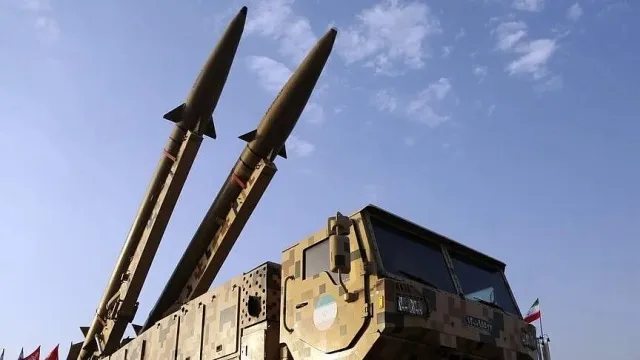
Two Italian technicians killed in drone strike on Kuwait defence site
Two European civilian technicians were killed in a drone strike on a military installation in Kuwait, sparking conflicting claims over responsibility.
Two European civilian technicians were killed on Thursday in a drone strike on a military installation in Kuwait, marking a grim expansion of the regional conflict triggered by the United States-Israel war on Iran. The deaths have exposed deep divisions over responsibility, with Iranian officials issuing unusual denials that run counter to months of acknowledged military actions across the Gulf.
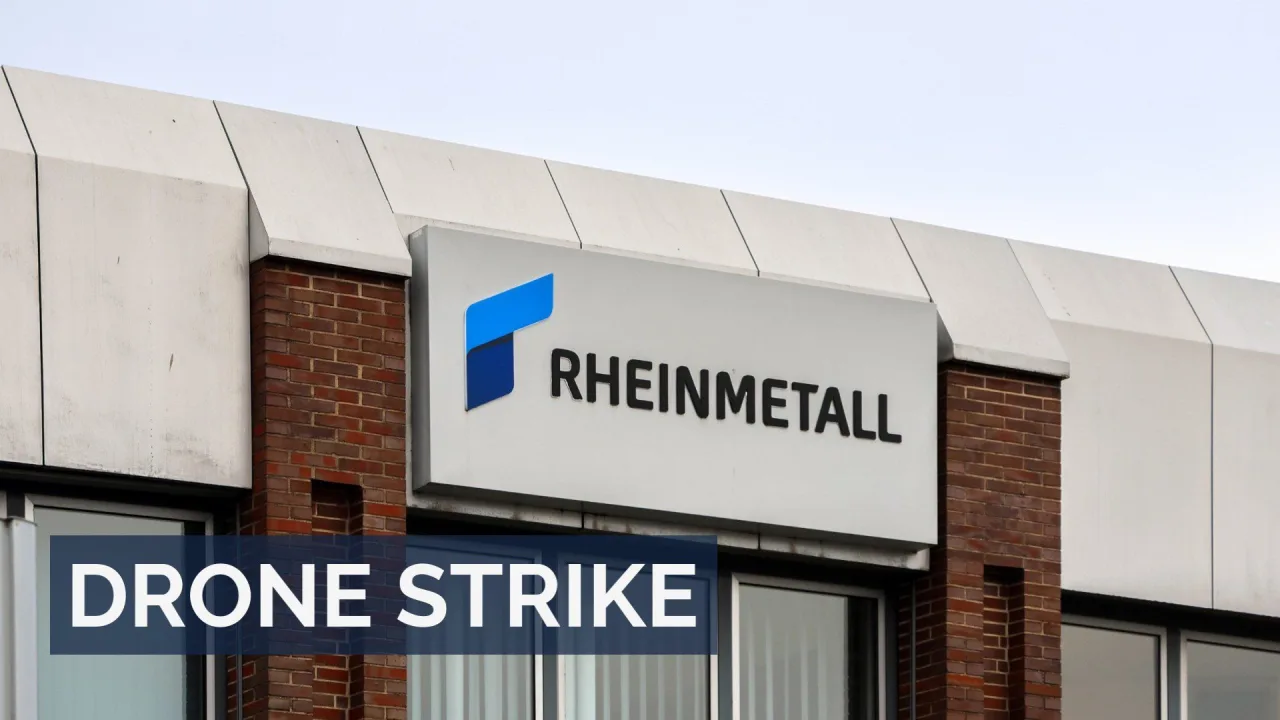
The victims were identified by Italian media as Antonio Saccoccio, 65, and Emanuele Lo Russo, 36, who were working as technicians for Rheinmetall Italia, the Italian arm of German defence manufacturer Rheinmetall. According to statements from Italy's foreign ministry and Kuwait's army, the pair were performing maintenance on detection antennae for the Skyguard air-defence system at an air-defence detection station when several incoming drones were intercepted, causing lethal shrapnel to fall.
Who was behind the drone strike and why is Iran denying responsibility?
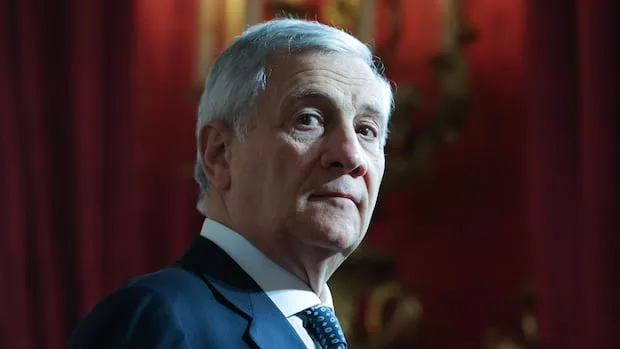
Kuwait and Italy both blamed Tehran for the attack, pointing to the Iranian origin of the drones. Italian Foreign Minister Antonio Tajani told the Italian Senate that the weapons were manufactured in Iran, while Kuwait's army condemned the incident as a heinous Iranian aggression
on a vital site. However, Iranian Foreign Minister Abbas Araghchi denied involvement in calls with his Italian and Kuwaiti counterparts, describing the incident as suspicious
and a pre-cooked recipe for war.
Abolfazl Shekarchi, speaking as an armed forces spokesperson for both the Islamic Revolutionary Guard Corps and the regular army, stated that Iranian forces had conducted no military or offensive operations in the area, calling the incident a false flag
operation. The Iranian embassy in Rome also rejected the allegations, suggesting the strike could have been staged to draw Europe into the conflict.
This denial stands out because Iran has rarely disowned its strikes since the war began in late February. In November alone, Tehran issued five statements claiming strikes on neighbouring states, including four on Bahrain and Kuwait, usually justifying them as self-defence against US military assets. Analysts offered divergent views on the sudden shift:
| Analyst | Affiliation | Assessment of Iran's Denial |
|---|---|---|
| Hassan Ahmadian | University of Tehran | Believes Iran would normally claim its strikes, suggesting other actors like Israel, Ukraine, or the US might be seeking to complicate the situation. |
| Muhanad Seloom | Middle East Council on Global Affairs | Notes that the attack hit a non-US site and killed Europeans, meaning Iran may either have not ordered it or could not afford to own the backlash. |
| Abdullah al-Shayji | Kuwait University | Rejects the denial as irrational, noting that Iran fired 925 missiles and drones at Kuwait since the war began and did not deny an attack on Ali Al Salem airbase just eight days prior. |
Seloom also suggested that because the drone was Iranian-built—a type also used by proxy forces—an Iraqi armed faction could be the leading alternative suspect, while dismissing Yemen's Houthis as a distant second.
What were the victims doing in Kuwait and how have European leaders responded?
The two killed technicians were providing technical support for air defence systems used by the Kuwait Armed Forces. Rheinmetall issued a statement confirming that two highly valued employees lost their lives while carrying out their professional duties. The incident also left a Kuwaiti army captain and a Pakistani national injured from falling shrapnel.
The deaths mark the first time European civilians have been killed as a result of the war, drawing immediate condemnation from European capitals. Italian Prime Minister Giorgia Meloni expressed her deepest sympathy and condolences to the victims' families in a post on X. European Commission President Ursula von der Leyen urged increased pressure on Tehran, writing on social media, We must step up pressure on Iran to end these unacceptable attacks against its neighbours and our partners in the Gulf.
Seloom noted that the casualties demonstrate how deeply Europe is already entangled in the conflict as a military supplier, though he expects the reaction to centre on sanctions and defensive support rather than direct European military strikes.
How does this attack affect the wider Gulf conflict and stalled diplomacy?
The strike on Kuwait arrives at a delicate juncture for regional diplomacy. Indirect channels between Washington and Tehran are operating via mediators in Qatar and Pakistan, even as talks remain deadlocked over Iran's nuclear programme and the lifting of US sanctions. Al-Shayji warned that attacks on Gulf civilian infrastructure and non-US personnel risk creating lasting enmity across a whole generation in the region, noting that Kuwait is documenting every attack and will likely seek compensation.
Meanwhile, the broader conflict has severely strained regional infrastructure. Kuwait has borne the brunt of recent Iranian strikes alongside Bahrain, with previous attacks hitting oil facilities, power infrastructure, and Kuwait international airport, where an Indian traveller was killed and 63 people were injured on June 3. With US President Donald Trump having said he will not consider returning to military action until early next year, the latest casualties narrow the track for diplomacy without closing it entirely, even as Washington weighs responses to mounting regional escalation.
Investigations into the debris, radar tracks, and launch points remain ongoing, with Italian and Kuwaiti officials coordinating closely to identify the perpetrators of the strike that killed two Italian technicians.