Where And When To Livestream Today’s Total Solar Eclipse
Find out where and when to livestream the August 12, 2026 total solar eclipse, with broadcast schedules from NASA, ESA, and Timeanddate.
- Headline: Where And When To Livestream Today’s Total Solar Eclipse
- Dispatch Summary: Find out where and when to livestream the August 12, 2026 total solar eclipse, with broadcast schedules from NASA, ESA, and Timeanddate.
- Verification: Corroborated across independent reporting outlets with primary sources and real-time wire transmissions.
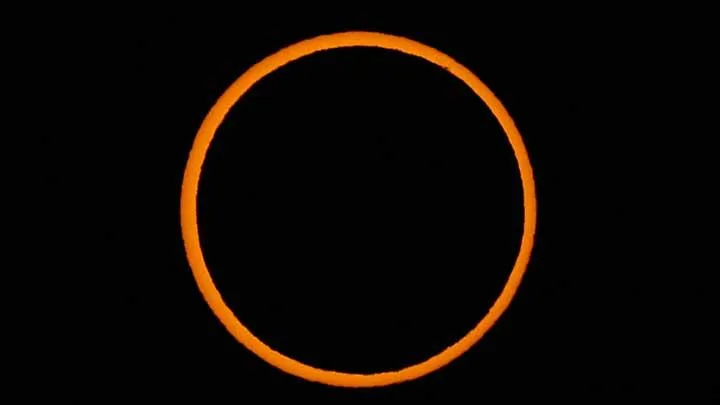
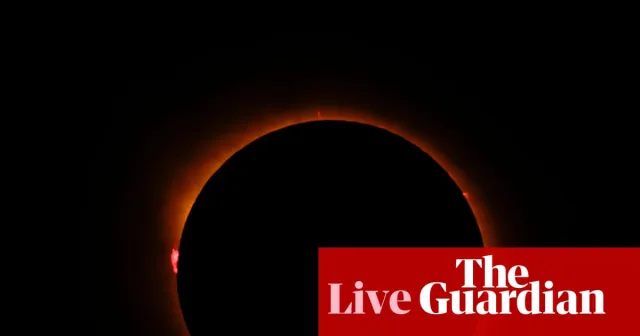
The total solar eclipse of August 12, 2026, will cast a shadow across parts of the Northern Hemisphere, offering a rare celestial spectacle for those within its narrow path of totality. The event, which will darken skies from northern Russia through Greenland, Iceland, and northern Spain, will be visible as a partial eclipse across much of Europe, North America, and northwest Africa. For those unable to view it in person, multiple livestreams will provide access to the phenomenon, while safety guidelines emphasize the risks of direct solar observation.
Livestream Options for Global Viewers
Several organizations will broadcast the eclipse live, offering perspectives from within the path of totality. Timeanddate.com will host a broadcast featuring live telescope images and expert commentary, with feeds from near León, Spain, and Mallorca. The European Space Agency (ESA) will air an English-language program from the Observatorio Astrofísico de Javalambre in Spain, while NASA will provide coverage from Iceland and Spain, highlighting scientific research such as a high-altitude aircraft study of the solar corona. The Exploratorium in San Francisco will stream telescope views from northern Spain, and Slooh will host a public "Star Party" with astronomical analysis. The California Academy of Sciences and SETI Institute will also broadcast from San Francisco, combining eclipse views with live performances and scientific discussions.
For viewers in the U.S., NASA TV and online platforms will begin coverage at 1:15 p.m. EDT, while the Exploratorium’s livestream will start at 10:30 a.m. PDT. These broadcasts will include interviews with scientists and footage from key observation sites, ensuring accessibility for those outside the path of totality.
Timelines and Regional Visibility
The eclipse’s path of totality will begin in northern Russia at 17:00 UTC (1 p.m. Eastern Time) and move westward. In Iceland, totality will reach Reykjavik at 5:48 p.m. local time, while in Spain, Valencia will experience it at 8:32 p.m. local time. The event will peak near sunset, with Spain’s totality lasting between 8:26 p.m. and 8:33 p.m. local time. In western Europe, the Sun’s low horizon position will create a dramatic visual effect, with Cornwall, England, seeing 96% coverage and London experiencing 92% at peak.
Partial eclipses will be visible across Europe, with Madrid, Paris, and other cities witnessing over 90% coverage. In North America, Alaska’s Fairbanks will see 37% coverage, while New York City and Boston will experience 9% and 16%, respectively. Scotland will face up to 95% obscuration, with the eclipse beginning at 18:01 BST and peaking an hour later. The event will conclude before 20:00 BST, with the Sun setting shortly after.
Safety Guidelines for Eclipse Viewing
Direct observation of the Sun, even during an eclipse, risks permanent eye damage. Certified solar eclipse glasses, meeting ISO 12312-2 standards, are essential for viewing partial phases. During totality, when the Sun is fully obscured, glasses may be removed briefly but must be worn otherwise. Alternative methods include pinhole projectors or colanders, which project indirect images of the eclipse. The Royal Observatory Greenwich warns against looking through binoculars or cameras, as concentrated sunlight can damage equipment and eyes.
Community events in Scotland will distribute eclipse glasses, while experts like Prof. Catherine Heymans emphasize the dangers of prolonged viewing. “Even if you don’t feel pain, it’s still damaging to the retina,” she said. The Royal College of Ophthalmologists reported cases of vision loss following the 1999 eclipse, underscoring the need for caution.
Scientific and Cultural Significance
The eclipse provides a unique opportunity for scientific study, particularly of the Sun’s corona. Historically, eclipses have advanced understanding of celestial mechanics, such as Einstein’s 1919 verification of general relativity. This event coincides with the Perseid meteor shower’s peak, offering a rare chance to observe both phenomena. Under clear skies, the Perseids could produce up to 50 meteors per hour, with the new moon’s absence ensuring minimal light pollution.
For many, the eclipse is a cultural milestone. Spain will witness its first total eclipse since 1905, while the UK, though outside the path of totality, will see 95% coverage. The next total eclipse visible from mainland Europe is not expected until 2090, making this event a once-in-a-lifetime occurrence for many.
What’s Next for Eclipse Observers
After the eclipse, the Perseid meteor shower will continue through August 13, with optimal viewing conditions in the Northern Hemisphere. For those who missed the event, the next total solar eclipse visible from Europe will not occur until 2090. Meanwhile, the 2026 eclipse’s scientific data will contribute to ongoing research on solar activity and atmospheric changes. As NASA and other organizations emphasize, the event serves as both a public spectacle and a critical moment for astronomical study.
How significant is this wire dispatch?
Cast your anonymous vote to register reader consensus across journalism and intelligence sectors.
Dateline Wire is dedicated to independent, evidence-backed reporting. This briefing was synthesized from primary source reporting, corroborated across independent newsrooms, and verified against our Editorial Standards.