Trump questions midterm election integrity after Republican losses
President Trump has pivoted from initially accepting election night outcomes to questioning vote counts and voting machines following a major Democratic midterm sweep.
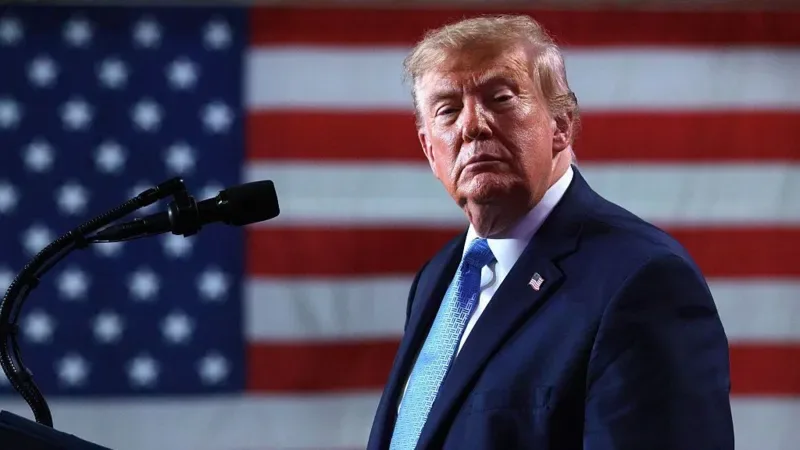
That post marks a sharp departure from what Trump told The New York Times on election night, when he stated he was absolutely willing
to accept the outcome and looked forward to working with Democrats. In last week's vote, Democrats swept both chambers of Congress, winning 54 US Senate seats and 254 US House seats, with key races in Alaska and Mississippi yet to be called. Trump's renewed skepticism targets voting machines, early voting dumps, and polling accuracy, even though state and local election officials across the United States reported a mostly smooth voting process free of widespread irregularities.
That leaves the administration facing a divided legislative branch with very little room to maneuver, while setting up an immediate clash over congressional oversight and cabinet appointments. The sudden pivot from accepting defeat to questioning vote counts demonstrates how quickly the White House is moving to counter a historic blue wave that threatens to paralyze the final two years of Trump's presidency.
Why Did the Polls Miss the Democratic Wave?
Pre-election polling showed that Democrats were poised to take the House and make the Senate competitive, but the surveys severely underestimated the final magnitude of the blue wave. RealClearPolitics' generic ballot average showed Democrats up 8.8 points, but Democrats ultimately won the national vote by 13 points, according to data from The New York Times. Major polling misses included Texas, where Democratic Senator-elect James Talarico won by 12.1 points despite a projected 2.6-point lead in the average, and Georgia, where Senator Jon Ossoff was on track to win by 18 points after leading by an average of 8.4 points.
Grant Davis Reeher, a professor of political science at Syracuse University, told Newsweek that polling error likely stemmed from changing definitions of likely voters and late-breaking turnout. In defense of the polls, they did correctly show and predict that races one would have thought would not be particularly competitive were in fact extremely competitive,
Reeher said, adding that pollsters underestimated magnitude but got the vector right.
Before the midterms, House Speaker Mike Johnson blamed what he called partisan nonresponse bias on Fox News' The Ingraham Angle, arguing that Republicans were increasingly unwilling to participate in telephone surveys. Nate Silver also noted in an October 20 Substack post that pollsters use demographic matching and past vote anchoring to combat these gaps, though errors naturally fluctuate across cycles.
That reading suggests that polling imperfections are a standard statistical hurdle rather than evidence of malfeasance. Yet the sheer scale of the miss provided an opening for Trump to amplify doubts about the mechanical integrity of the vote.
What Do Election Experts Say About Vote Counting and Machines?
In his Monday Truth Social statement, Trump complained that some early voting dumps were impossibly large and claimed, It’s all about the machines, which are far more important than the voter!
He offered no specific evidence of machine tampering or erroneous vote tallies. Independent experts immediately pushed back against these assertions, confirming that the collection and reporting of ballots followed routine, lawful procedures across every jurisdiction.
Charles Stewart III, a political scientist at the Massachusetts Institute of Technology, told reporters that the reporting of vote counts on election night proceeded normally. We saw across the nation the standard patterns we see in terms of when the votes are reported,
Stewart said, noting that states like Florida and Georgia report initial results quickly because they process early and mail ballots ahead of time. Ruth Greenwood, director of the Election Law Clinic at Harvard Law School, added context to the lingering counts in uncalled states: State laws and practicalities are such that some states will just take longer to count. That doesn't mean anything nefarious is occurring—we just need to trust local election officials to count every vote and tell us the results when they are done.
That consensus among academic experts leaves the president's allegations entirely unsupported by the operational reality on the ground. State and local officials reported only standard administrative hiccups, minor technical issues, and sporadic closures due to extreme weather, while rejecting any narrative of systemic failure.
How Did the White House and Allies Explain the Loss?
Before questioning the honesty of the vote, Trump and his top advisers pointed directly to foreign policy fallout as the primary driver behind the Republican defeat. Appearing on Fox News, Trump acknowledged that voters punished his party over the economic pain inflicted by the conflict in the Middle East. People agree with what I'm doing on Iran but they really probably weren't willing to do the short term consequences of paying more for gasoline - I understand that,
Trump said. Vice-President JD Vance similarly blamed the war with Iran, which began in February and disrupted global oil and gas supplies to send fuel costs soaring, for the electoral setback.
Privately and publicly, Trump also sought to isolate himself from the electoral wreckage by emphasizing that he was not personally on the ballot. We would have won easily if I was on the ballot,
Trump told CBS News. That argument attempts to shield his personal political brand from the devastating congressional losses while setting up a combative posture against the incoming Democratic majorities. Despite taking blame for gas prices on television, the administration's pivot back to unverified fraud claims underscores a reluctance to accept the legislative consequences of a public referendum on their governance.
What Are the Immediate Legislative and Investigative Flashpoints?
With Congress returning to Washington for its final legislative session of the year, the political battlefield is expanding well beyond election integrity debates. On Monday, Republican Representative Thomas Massie forced a House vote on eight articles of impeachment against Defense Secretary Pete Hegseth, alleging unauthorized military operations. Democratic House Leader Hakeem Jeffries confirmed his party's support for the measure, creating a rare bipartisan collision that could result in Hegseth's impeachment, though conviction would still require a two-thirds Senate majority.
Simultaneously, the executive branch is aggressively preempting incoming congressional oversight. Attorney General Todd Blanche warned Democratic legislators on CNN that they could face criminal investigations over alleged threats against administration officials. Blanche specifically targeted Representative Robert Garcia, the expected chair of the House Oversight Committee, who has outlined plans to investigate the business interests of Donald Trump Jr. and Jared Kushner, alongside a potential probe by Democrats into Elon Musk's Department of Government Efficiency. Stephen Miller's appointment as White House chief of staff further signals that the administration intends to aggressively block subpoenas and veto incoming legislation rather than moderate its policy agenda.
What Can Affected Voters and Citizens Do Now?
For citizens, voters, and local participants seeking clarity or wishing to engage with the electoral and legislative process following the midterms, the available official channels include:
- Check the status of uncalled local and federal contests, such as Senate races in Alaska and Mississippi, through official state division of elections websites.
- Review certified local vote tallies and county-level canvassing reports, which are published publicly by municipal election offices.
- Monitor congressional proceedings and scheduled committee hearings regarding upcoming legislative votes and executive branch oversight through official House and Senate web portals.
Those steps offer transparency into the ongoing counts and legislative maneuvers, cutting through the broader political rhetoric surrounding the vote.
Democratic leadership has meanwhile remained steadfast in preparing to assume control of both chambers when the new legislative session opens in January 2027. House Democratic Leader Hakeem Jeffries and incoming committee chairs are moving forward with their investigative agendas despite the Justice Department's warnings, setting the stage for protracted legal battles over congressional subpoenas and executive compliance.