Order of the Sinking Star burns bright on Switch 2 today
Jonathan Blow's decade-in-development puzzle adventure Order of the Sinking Star launches on the Nintendo Switch 2, offering over 1,000 grid-based challenges.
- Headline: Order of the Sinking Star burns bright on Switch 2 today
- Dispatch Summary: Jonathan Blow's decade-in-development puzzle adventure Order of the Sinking Star launches on the Nintendo Switch 2, offering over 1,000 grid-based challenges.
- Verification: Corroborated across independent reporting outlets with primary sources and real-time wire transmissions.
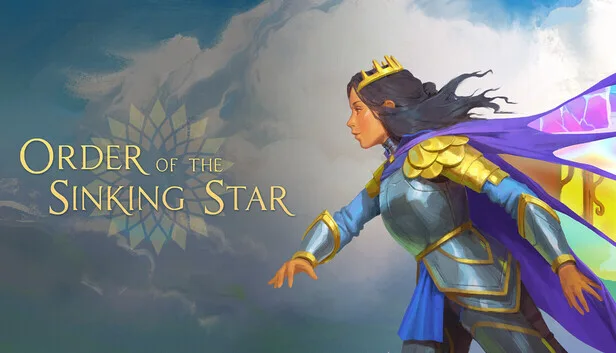
More than 1,000 hand-crafted puzzles await players in Order of the Sinking Star, the massive puzzle adventure launching on the Nintendo Switch 2 today by developer Thekla, Inc. And publisher Arc Games. Led by legendary game designer Jonathan Blow, known for The Witness and Braid, the game has been in development for 10 years and aims to establish itself as the premier puzzle adventure of this generation. It arrives with a sprawling scope that includes four expansive game worlds and hundreds of hours of gameplay.
For players diving into the release today, the central question is how such a massive undertaking holds up across its enormous runtime and whether its grid-based mechanics can sustain dozens or hundreds of hours of play. Reviewers report a polarized experience. While some praise its intricate mechanical design and clever intersecting rules, others find the sheer volume of push-block challenges testing their limits after dozens of hours in the labyrinth.
Building a Multiverse of Push-Block Mechanics
The game places players in the shoes of a character mysteriously transported to a strange realm. Starting from an interconnected overworld map inspired by 1987's The Legend of Zelda, players can head in four different directions to tackle distinct zones. Each zone introduces a unique set of mechanics built on top of a grid-based, top-down perspective where characters push, pull, or teleport objects to reach exit podiums. The north zone draws from the Heroes of Sokoban games, offering fantasy archetypes like a Warrior who can push multiple blocks at once, a Thief who drags objects behind her, and a Wizard who instantly swaps places with objects and characters when moving toward them. The east zone, inspired by Mirror Isles, utilizes mirrors that teleport objects at right angles. The south adapts Skipping Stones to Lonely Homes with water-skipping mechanics, while the west builds on Promesst, introducing special beams that let characters walk through walls and teleport long distances.
Design contributions came from Alan Hazelden, Sean Barrett, Jonah Ostroff, Zach Polansky, Patrick Traynor, Marc ten Bosch, and several others, alongside input from Twitch followers over the years. These mechanics initially run in parallel, but as players progress into areas where the zones meet, the rules begin to collide. Players must manage multiple characters simultaneously, combining teleporting beams with mirrors or synchronizing push-and-pull capabilities. Quality-of-life features like an instant undo button, a dedicated restart button, and adjustable game speed help mitigate frustration. However, critics point out that the sheer volume of rules can lead to confusion. Writing for GameSpot, Phil notes that players can spend hours stuck on a multi-step puzzle simply because they misremembered a past rule from puzzles completed hours earlier.
Navigating the Labyrinth and What to Check Today
- Access the game on the Nintendo Switch 2 on October 8, 2026.
- Begin in one of the designated starting zones in the overworld to learn the individual rules for the characters or the mirror-based puzzles.
- Utilize the non-linear map design by pivoting to a different realm whenever a puzzle creates a roadblock.
- Rely on the instant undo and restart buttons to test out variations of block placements without incurring loading times.
- Look out for audio logs and notes left behind by previous explorers to piece together the enigmatic mythos of the labyrinth.
Beyond the individual challenge rooms, the world itself operates as a grander puzzle. While the narrative elements told through tiny tidbits can feel obtuse or thin—leaving players with hanging plot threads after reaching the first ending—the primary drive stems from the mechanical satisfaction of discovery.
That leaves an open question for players deciding whether to commit to the journey today: When a puzzle game expands to span hundreds of hours and multiple intersecting logic systems, does the freedom of open-ended exploration sustain the experience, or does the repetition of its core block-pushing foundation eventually overwhelm the joy of the solution?