Europe solar eclipse live: millions watch rare spectacle across Spain, U…
Millions across Europe gathered to witness the rare August 12, 2026 total solar eclipse, which brought fleeting darkness and awe from Spain to Iceland.
- Headline: Europe solar eclipse live: millions watch rare spectacle across Spain, U…
- Dispatch Summary: Millions across Europe gathered to witness the rare August 12, 2026 total solar eclipse, which brought fleeting darkness and awe from Spain to Iceland.
- Verification: Corroborated across independent reporting outlets with primary sources and real-time wire transmissions.
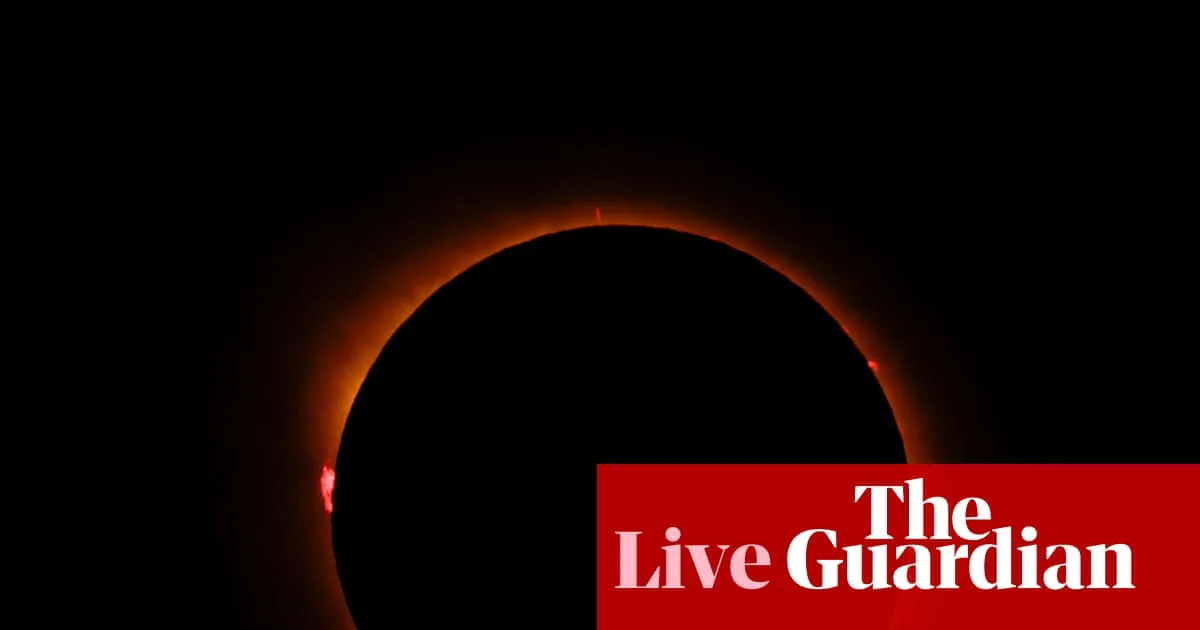
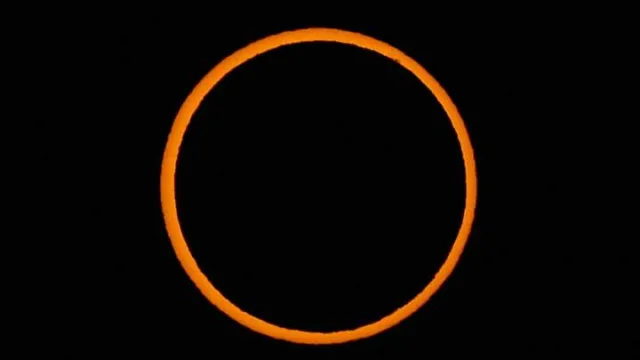
The rare total solar eclipse of August 12, 2026, captivated millions across Europe, drawing crowds to witness the celestial phenomenon as the moon’s shadow swept from the Arctic to Spain. The event, the first total eclipse visible over mainland Europe since 1999, transformed skies into twilight, sparking awe and communal wonder from Iceland to the UK and Spain. For Spain, it marked the first total eclipse since 1905, while the UK experienced a partial eclipse with over 90% of the sun obscured.
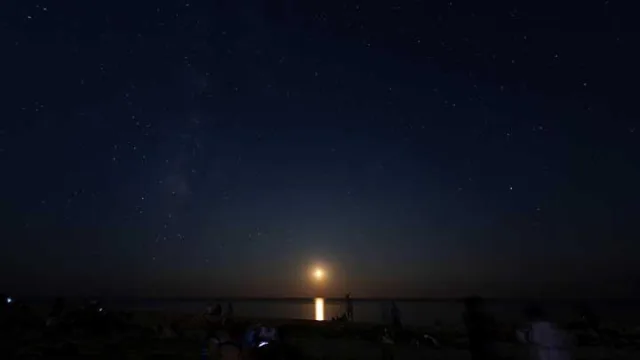
In Spain, the eclipse reached totality over regions like Berlanga de Duero and San Asensio, where the sun’s corona glowed like a fiery halo. Crowds gathered at beaches, stadiums, and observatories, with some using homemade viewers—colanders, cereal boxes, and volcanic rocks—to safely observe the spectacle. “It’s like a wonderful gift,” said Ludmila, a Ukrainian woman in her 70s, as she gazed through a telescope in London. In Madrid, the diamond ring effect, when the sun’s light re-emerges around the moon, marked the moment of totality, while in Palencia, families marveled at the sudden darkness. The next total solar eclipse visible in southern Spain, North Africa, Saudi Arabia, and Yemen will occur on August 2, 2027, according to NASA.
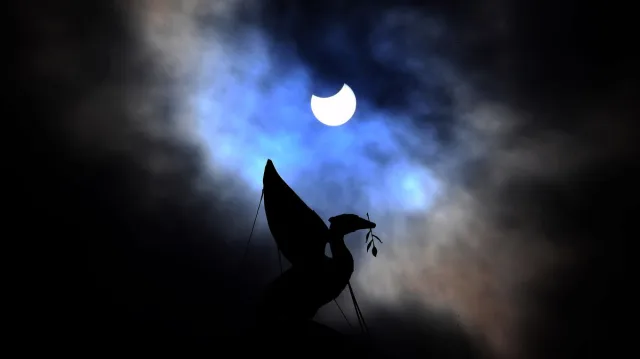
The UK experienced a partial eclipse, with over 90% of the sun obscured. In Liverpool, the eclipse peaked at 7:10pm, drawing thousands to Crosby Beach and Billinge Hill. In London, the event fostered unexpected camaraderie: strangers shared protective glasses, used colanders to project the eclipse onto paper, and gathered on picnic blankets to drink beer under the darkened sky. “I’ve actually felt quite emotional,” said Guardian journalist Alexandra Topping, reflecting on the shared experience. In Iceland, animals grew quiet during totality, with birds retreating to trees. Helena Gylfadóttir, a zookeeper in Reykjavík, noted the eerie stillness as animals adapted to the sudden shift in light. Meanwhile, in Spain, a couple from Detroit, Clint and Sheryl Evans, sailed on a cruise to witness the event, a promise Clint kept after Sheryl’s cancer battle prevented them from seeing the 2024 eclipse. “It’s going to be spectacular,” Sheryl said, as the moon’s shadow enveloped them.
Scientific interest was equally high. NASA and the European Space Agency researchers studied the sun’s corona, while amateur astronomers captured images of the eclipse from locations like the Javalambre Astrophysical Observatory. The event also highlighted safety concerns: Google Trends showed a spike in searches for “eyes hurt” during the eclipse, prompting reminders to use certified eclipse glasses. For the contiguous United States, the next total eclipse will not occur until August 22, 2044, over North Dakota and Montana. The next total eclipse visible from mainland Europe will not occur until 2090, leaving many to reflect on the rarity of such a phenomenon. As the sun re-emerged, observers reflected on the event’s profound impact, with some comparing the experience to the “overview effect” astronauts feel when viewing Earth from space.
How significant is this wire dispatch?
Cast your anonymous vote to register reader consensus across journalism and intelligence sectors.
Dateline Wire is dedicated to independent, evidence-backed reporting. This briefing was synthesized from primary source reporting, corroborated across independent newsrooms, and verified against our Editorial Standards.