Canada Prepares to View Solar Eclipse and Perseid Meteor Shower
Canadians experienced a rare celestial convergence on August 12, 2026, as a partial solar eclipse coincided with the peak of the Perseid meteor shower.
- Headline: Canada Prepares to View Solar Eclipse and Perseid Meteor Shower
- Dispatch Summary: Canadians experienced a rare celestial convergence on August 12, 2026, as a partial solar eclipse coincided with the peak of the Perseid meteor shower.
- Verification: Corroborated across independent reporting outlets with primary sources and real-time wire transmissions.
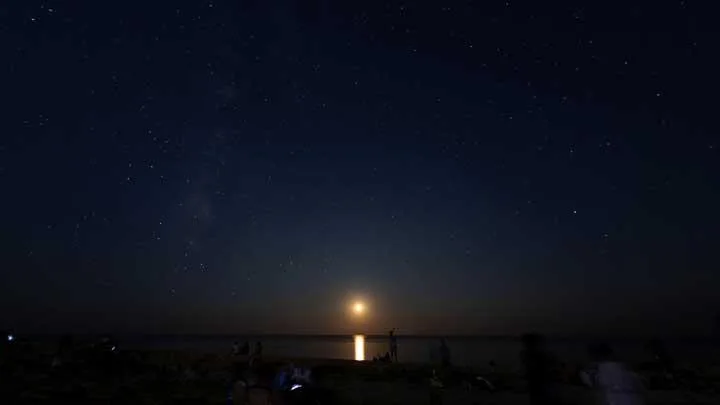
Canadians braced for a rare celestial convergence on Wednesday, August 12, 2026, as a partial solar eclipse coincided with the peak of the Perseid meteor shower, offering a dual spectacle for stargazers across the country. The event, which unfolded over the course of the day and into the night, required careful preparation to ensure safe viewing, with experts emphasizing protective measures and optimal vantage points.
The solar eclipse, visible across all Canadian provinces and territories, reached its maximum obscuration in western and northern regions, where the Moon blocked up to 90% of the Sun’s light. In Atlantic Canada, the event persisted until late afternoon, with Newfoundland and Labrador experiencing the eclipse’s end at 4:38 p.m. local time. However, southern parts of British Columbia, including Vancouver, missed the eclipse entirely. The path of totality, where the Sun would have been fully obscured, lay beyond Canada’s borders, with the closest totality occurring in northern Greenland, Iceland, and northern Spain.
As the eclipse waned, the Perseid meteor shower, one of the year’s most active, took center stage. Active from July 17 to August 24, the shower peaked overnight on August 12–13, with observers in dark-sky areas expected to see 60 to 100 meteors per hour. The timing aligned favorably, as the eclipse’s absence of lunar glare—unlike typical meteor shower conditions—enhanced visibility. “The moonlight acts like a natural light pollution that washes out dimmer shooting stars,” noted a report citing BBC Sky at Night Magazine. “The eclipse’s lack of lunar glare provides a clearer view.”
Viewing the eclipse safely remained a priority. Direct exposure to the Sun, even during partial phases, risked severe retinal damage. Certified eclipse glasses meeting ISO 12312-2 standards were recommended, though shortages prompted creative alternatives. DIY pinhole projectors, using materials like colanders, cardboard boxes, or tree leaves, allowed indirect observation. “The Royal Museums Green provides instructions on how to make natural 'pinhole projectors' using pieces of paper, a colander, or tree leaves,” according to one report. The UK Health Security Agency also warned against using sunglasses or 3D glasses, stressing that they failed to block harmful solar radiation.
For those capturing the event, smartphone photography required caution. While the Sun’s rays during a partial eclipse could damage camera sensors, experts advised using solar filters or eclipse glasses as makeshift lenses. Adjusting exposure settings on iPhones, for instance, involved tapping the Sun on the screen and reducing brightness to avoid overexposure. “Optical zoom, if available, allows better image quality when zooming in,” a guide noted. However, the focus remained on protecting both eyes and devices.
The Perseid meteor shower, visible to the naked eye, demanded patience and preparation. Designated Dark Sky Preserves across Canada, such as those in Alberta’s Rocky Mountains or Nova Scotia’s Cape Breton Highlands, offered ideal conditions. Viewers were urged to avoid light-polluted areas, dense forests, and obstructed horizons, opting instead for open fields, lakeshores, or hilltops. “Give your eyes 20 to 30 minutes to adjust to the natural darkness,” advised a source, emphasizing that the shower’s peak occurred after midnight, with activity building toward 2:00 a.m. local time.
Despite the event’s scientific significance, public engagement highlighted practical challenges. Retailers reported surges in demand for eclipse glasses, while astronomers and educators promoted community viewing events. The Royal Observatory Greenwich and the Astronomical Society of Edinburgh livestreamed the eclipse, offering alternatives for those unable to observe it directly. Meanwhile, the next total solar eclipse in Canada was slated for August 2044, though the path of totality would again bypass the country.
As the day drew to a close, the combined phenomena underscored the intersection of natural wonder and human ingenuity. From makeshift viewing tools to digital photography techniques, Canadians navigated the event with a blend of caution and curiosity, ensuring that the celestial dance of the Sun and stars remained both accessible and awe-inspiring.
How significant is this wire dispatch?
Cast your anonymous vote to register reader consensus across journalism and intelligence sectors.
Dateline Wire is dedicated to independent, evidence-backed reporting. This briefing was synthesized from primary source reporting, corroborated across independent newsrooms, and verified against our Editorial Standards.