Saudi Arabia extends airport closure and moves Riyadh schools online aft…
Saudi Arabia has extended airport closures and shifted Riyadh schools to online learning following a deadly Houthi missile attack that has pushed Washington to the edge of a wider conflict.
- Headline: Saudi Arabia extends airport closure and moves Riyadh schools online aft…
- Dispatch Summary: Saudi Arabia has extended airport closures and shifted Riyadh schools to online learning following a deadly Houthi missile attack that has pushed Washington to the edge of a wider conflict.
- Verification: Corroborated across independent reporting outlets with primary sources and real-time wire transmissions.
Why the Riyadh airport attack brings Washington to the edge of a new war
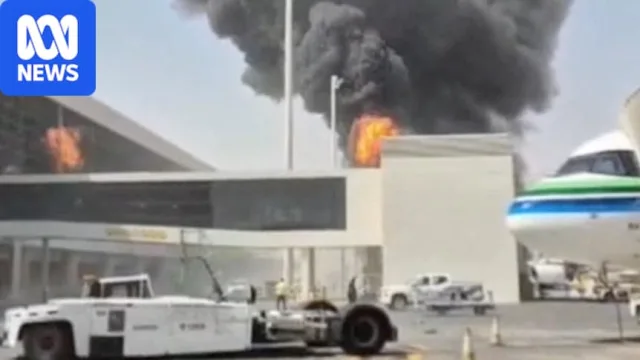
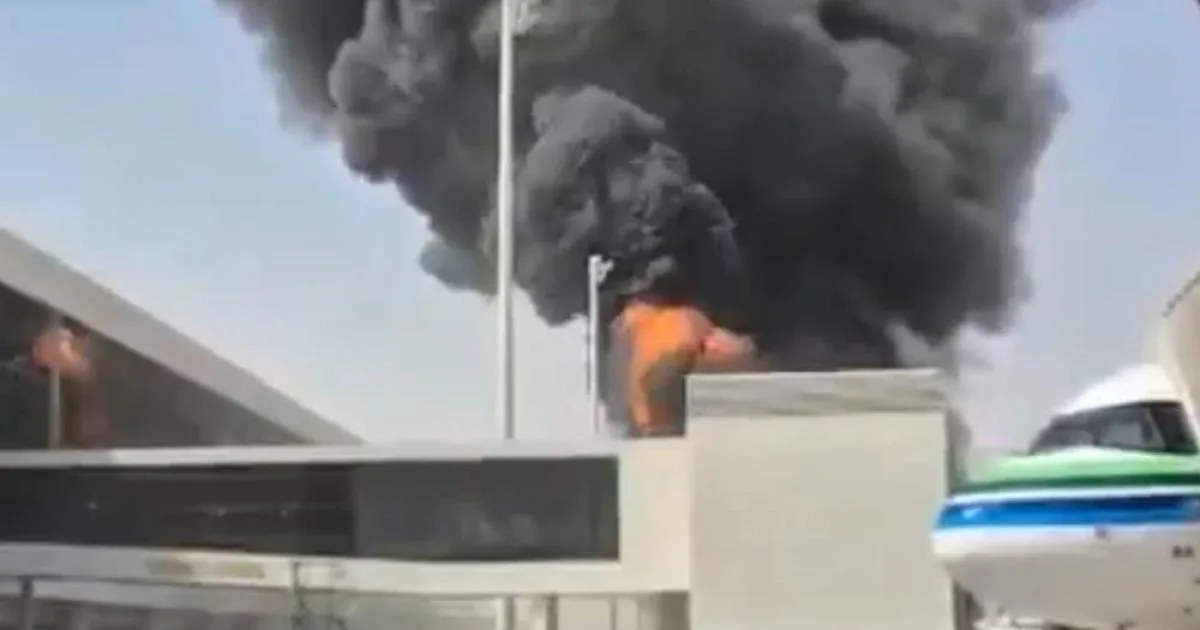
That deadly assault on domestic terminals three and four has instantly transformed a smoldering regional conflict into an urgent crisis for global oil markets and international diplomacy. Saudi Arabia kept its main international airport closed and moved schools in the capital online until the end of the week as the kingdom faces mounting security threats from Yemen’s Iran-backed Houthi rebels. The attack compounds five weeks of intensifying violence that began when a Saudi-led coalition launched a major military offensive against the rebels, ending a relative calm that had held since a 2022 ceasefire collapsed in July.
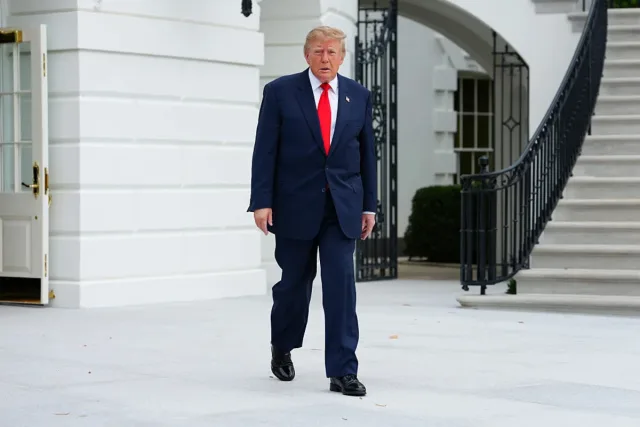
For international travelers, regional investors, and policymakers in Washington, the stakes could hardly be higher. The strike not only disrupted global transport and energy nodes but also threatened to drag the United States into a direct military intervention alongside Riyadh. As President Trump weighs whether American forces should join Saudi strikes against the Houthi movement, the shadow of a wider conflict looms over an already fragile Middle East.
Who is driving the escalation on the ground and in the air?
The violence pits a heavily armed Houthi movement against a Saudi-led coalition that entered Yemen's civil war in 2015 on behalf of the internationally recognized government. While the Houthis did not immediately claim responsibility for the Saturday airport strike, military spokesman Brig. Gen. Yahya Saree issued a sweeping directive on X. He warned all airlines, experts, employees, workers and travellers against using Saudi airports and airspace, as they are vulnerable to attack and have become a theatre of operations for our forces,
while exempting the holy cities of Mecca and Medina.
The Saudi-led coalition labeled the attack a fully-fledged war crime
and vowed a firm response. Meanwhile, Houthi-run Al Masirah TV reported air strikes carried out by Saudi Arabia on Yemen's Sanaa International Airport and a residential house in the capital. The Houthi-run Health Ministry stated that 91 Yemenis have been killed and 168 injured by the coalition in five weeks, with 60% of those casualties being women and children. A regional official, speaking anonymously, confirmed that Saturday's missile slammed into a civilian complex housing domestic flights, noting that the airport contains no military facilities.
The human toll spans multiple nationalities. The 12 victims include four Saudi citizens, two Bangladeshi nationals, a Palestinian, a US citizen, an Egyptian, a Jordanian, a Syrian, and a Sudanese. Among the identified dead are Azza Ramzy, a 28-year-old Egyptian flight attendant for Flynas, and Buthaina Ahmad Oweida, a 56-year-old widowed mother of four from Syria's Idlib province who had been living in Mecca and visiting relatives in Riyadh.
- 2015: Saudi Arabia enters Yemen's civil war on behalf of the internationally recognized government, beginning years of hostilities with Houthi forces.
- 2022: A ceasefire brings a period of relative calm to the region.
- July: The relative calm ends when Houthi attacks resume after accusations that the Saudis fired on Sanaa airport as an Iranian plane tried to land.
- Five weeks ago: A Saudi-led coalition launches a major military offensive against the Houthis, sparking a surge in missile and drone attacks on Saudi infrastructure.
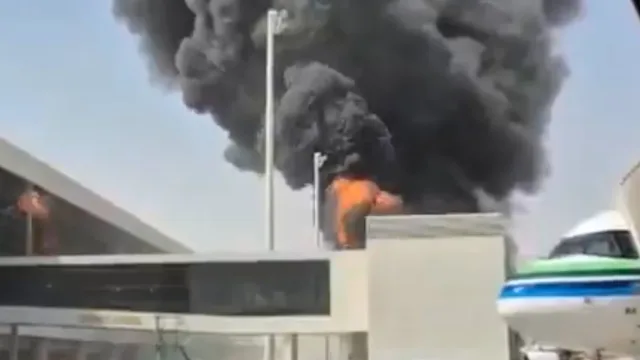
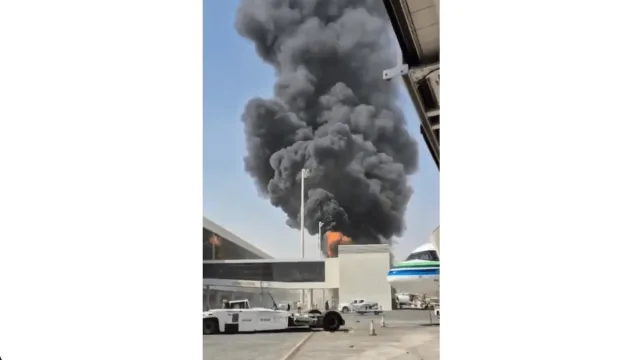
- Saturday: A missile strike hits terminals 3 and 4 of King Khalid International Airport in Riyadh, killing 12 people and wounding over 300.
- Sunday: Saudi Arabia extends airport closures, moves Riyadh schools online, and reports retaliatory strikes on Sanaa, while international leaders condemn the violence.
How are international allies responding to the widening conflict?
Diplomatic shockwaves rippled across capitals immediately following the Riyadh attack, drawing sharp divisions and expressions of solidarity. UN Secretary-General Antonio Guterres declared himself deeply shocked by & strongly condemn Saturday’s lethal attack by the Houthis,
writing on X that attacks on civilians & civilian infrastructure are a violation of international law. These attacks must cease immediately.
European Commission President Ursula von der Leyen similarly warned that attacks by Iran's proxies are pushing the region into a spiral of violence
and destabilizing critical transport and energy nodes.
Major powers and regional neighbors quickly lined up to offer support or urge restraint:
| Country or Body | Position / Action Stated | Key Official or Statement |
|---|---|---|
| United States | Evaluating whether to join Saudi strikes; condemned reprehensible attacks | President Donald Trump / Secretary of State Marco Rubio |
| France | Condemned the heinous attack, expressed total solidarity, and maintained military support | Foreign Ministry statement |
| United Arab Emirates | Stands in solidarity with Saudi Arabia, supporting all measures to safeguard security | Foreign Ministry statement |
| Russia | Condemned the attack on Riyadh airport and urged diplomatic resolution | Foreign Ministry via Interfax |
| Pakistan | Condemned the attack and coordinated assistance for injured nationals through its Riyadh embassy | Foreign Minister Ishaq Dar |
| Iraq | Called for a comprehensive cessation of military operations to protect civilians | Prime Minister's spokesman Sabah al Numan |
The geopolitical alignment reveals how deeply entangled the Riyadh strike is with broader conflicts. Until recently, the Houthis remained largely on the sidelines of the separate US-Iran war. Now, the rebels are serving as a proxy mechanism for Tehran to exert pressure on a vital American ally. At the same time, regional officials revealed that Saudi Arabia is running low on missile interceptors and has appealed to France, Britain, Pakistan, and Egypt for air defense support, noting that US stockpiles have also dwindled during the ongoing conflict with Iran.
What does this mean for oil markets, regional travel, and US politics?
For investors, energy markets, and travelers, the immediate fallout is disruption and uncertainty. Saudi Arabia, the world's top oil exporter, saw its primary international gateway closed by authorities, forcing flight cancellations and scramble efforts. In Kuwait, the Saudi embassy organized buses to transport stranded citizens back to the kingdom upon presentation of cancelled flight bookings. Meanwhile, students across Riyadh will remain in remote online classes through the end of the week.
The broader economic threat is profound. Houthi control of the Bab el-Mandeb waterway—a crucial corridor serving as an alternative to the Strait of Hormuz—gives the rebels strategic leverage to disrupt global shipping and choke off oil flows out of the Persian Gulf if Washington decides to intervene militarily. President Trump acknowledged that direct US involvement would deepen American commitments to an unpopular regional war, a prospect carrying potential political risks for his party in upcoming US midterm elections, even as both Washington and Tehran maintain that electoral calendars do not dictate their strategic moves.
Diplomatic efforts to end the seven-month-old conflict between the US and Iran remain at a complete standstill, leaving the region vulnerable to further miscalculation.
What happens next as the kingdom weighs its retaliation?
President Trump stated he planned to speak directly with Saudi Crown Prince Mohammed bin Salman to determine whether American military assets will participate in direct retaliatory strikes against Houthi positions in Yemen. With the Saudi-led coalition vowing a firm response and Houthi leaders refusing to back down from their airspace warnings, attention now turns to the impending military moves from Riyadh and Washington.
Look for concrete announcements following the scheduled high-level communications between US and Saudi leadership, alongside updates from Flightradar24 on when King Khalid International Airport will lift its rolling closure deadline currently set for 9 p.m. Sunday.