Houthi strikes hit Riyadh airport for second consecutive day
Consecutive Houthi strikes on Riyadh's King Khalid International Airport have left 13 dead and over 300 injured, triggering a sharp regional escalation.
- Headline: Houthi strikes hit Riyadh airport for second consecutive day
- Dispatch Summary: Consecutive Houthi strikes on Riyadh's King Khalid International Airport have left 13 dead and over 300 injured, triggering a sharp regional escalation.
- Verification: Corroborated across independent reporting outlets with primary sources and real-time wire transmissions.
How Bad Is the Destruction at Riyadh's International Airport After Consecutive Houthi Strikes?
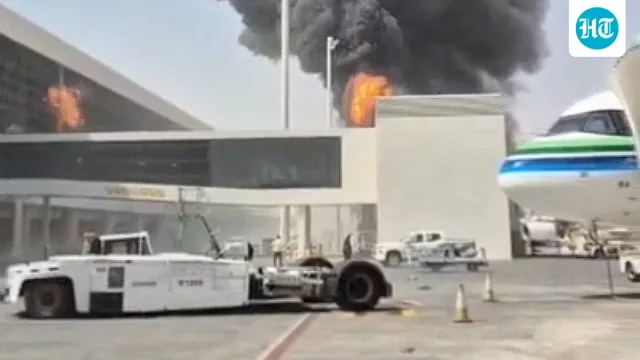
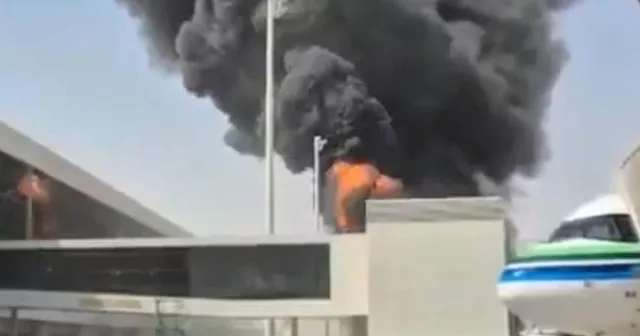
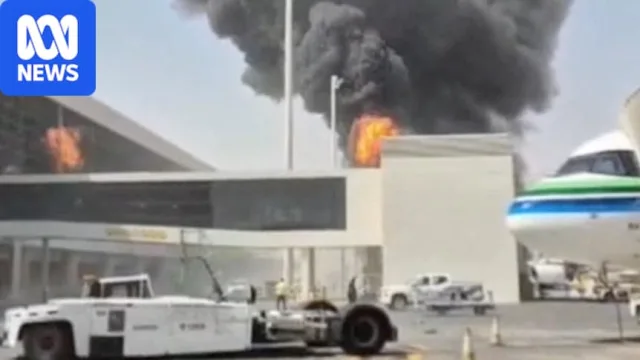
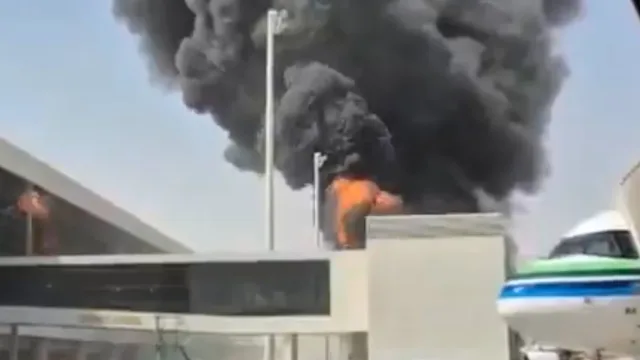
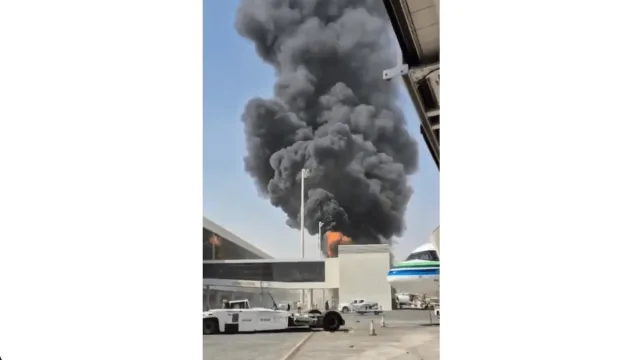
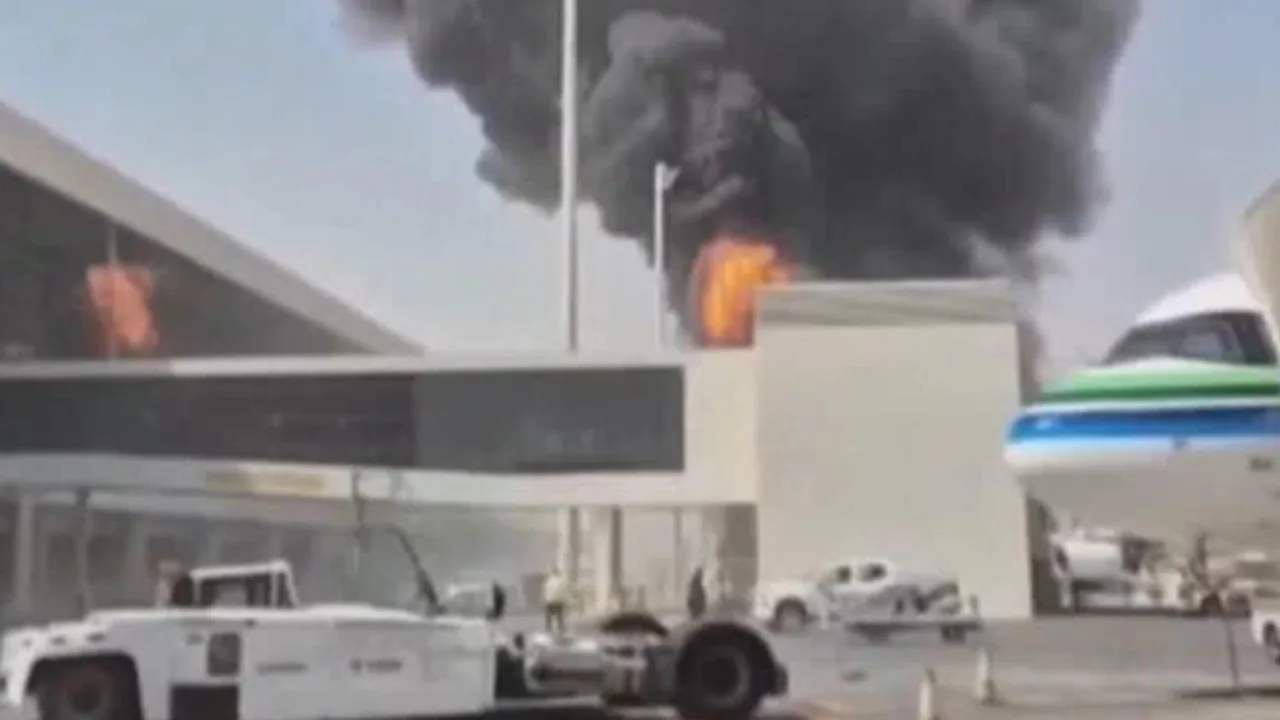
Thirteen people are dead and more than 300 have been injured following a brutal two-day assault on King Khalid International Airport in Riyadh. Sunday’s fresh strike caused a fire at Terminal 4 and triggered explosions across the Saudi capital, coming just 24 hours after a devastating missile attack on Saturday that marked the deadliest strike on Saudi soil in more than a decade. The Saudi General Authority of Civil Aviation confirmed that Sunday’s strike caused injuries at the airport, which was also targeted on Saturday, October 10. The attack on Sunday hit Terminal 4 and caused a fire.
The casualty toll climbed on Sunday after the Indian Embassy in Riyadh announced that an Indian national had succumbed to injuries sustained in Saturday's blast. Saudi officials released a breakdown of the victims from the initial attack, confirming that the dead include four Saudi citizens, two Bangladeshi nationals, a Palestinian, a U.S. citizen, an Egyptian, a Jordanian, a Syrian, and a Sudanese. Among the identified victims is Azza Ramzy, an Egyptian flight attendant working for Saudi airline Flynas, and Buthaina Ahmad Oweida, a Syrian mother of four who had been living in Mecca and was returning from visiting her sister in Riyadh when she was killed.
That leaves international airlines and regional passengers facing prolonged uncertainty, with domestic educational institutions also forced to react. Saudi authorities have moved schools to remote learning for one week over safety concerns. For travelers attempting to navigate the closures, the immediate operational directive from aviation authorities is clear and restrictive.
The latest strikes mark a sharp deterioration in the conflict between the Houthis and Saudi Arabia, which supports Yemen’s internationally recognised government against the armed group. Ahmed Nagi, the International Crisis Group’s senior analyst for Yemen, notes that these pressure tactics carry immense risk for the perpetrators. Rather than pushing Riyadh to step back, attacks on critical Saudi infrastructure could make the Saudis more determined to continue the campaign,
Nagi said.
Why Did the Iran-Backed Group Target Saudi Aviation Hubs Now?
The sudden escalation shatters a relative calm that had held since a 2022 ceasefire, which unravelled in July after the Houthis accused the Saudi-led coalition of firing on Sanaa International Airport as an Iranian aircraft attempted to land. That incident revived deep-seated anger over the Saudi-led blockade that has isolated Houthi-controlled regions in Yemen. In retaliation, the Houthi movement has imposed its own blockade on Saudi Arabia, widening its operations over the past 24 hours to four qualitative operations that targeted energy facilities and King Fahd International Airport in Dammam, located on the Persian Gulf near Bahrain and Qatar.
Brig. Gen. Yahya Saree, the military spokesperson for the Houthis, issued an explicit territorial warning on X. All airlines, experts, employees, workers and travellers against using Saudi airports and airspace, as they are vulnerable to attack and have become a theatre of operations for our forces,
Saree wrote, adding that airports in the holy cities of Mecca and Medina would remain exempt. The group claims these attacks serve as direct retaliation for Saudi strikes on civilian infrastructure in Yemen, which a health ministry spokesperson affiliated with the Houthis states have killed 91 people in Yemen since September 3, with 60 percent of those casualties identified as women and children. Meanwhile, the Saudi-led coalition reported intercepting a cruise missile near Riyadh's airport and shooting down an explosive drone in the eastern region.
The timing of the offensive coincides with Saudi Arabia hosting high-profile international gatherings, directly testing the kingdom's economic resilience. Saudi Energy Minister Prince Abdulaziz bin Salman Al Saud struck a defiant tone at the Riyadh energy conference. There is no way that somebody will break our back. We are like a phoenix, we come out of the ashes all the time,
Prince Abdulaziz bin Salman Al Saud told the conference. Yet behind the rhetoric lies a stark operational reality. Regional officials revealed last month that Saudi Arabia is running critically low on missile interceptors and has appealed urgently to France, Britain, Pakistan, and Egypt for air defense support.
How Are Washington and Regional Powers Responding to the Escalation?
The expanding conflict has instantly drawn intense diplomatic and military calculations from Western capitals. President Donald Trump told reporters on Saturday that Washington is actively weighing its options. Asked if the United States would join the military campaign, Trump stated, We may. We’re going to look at it. We'll make a decision. We move very quickly.
Two Saudi government officials told MS NOW that Riyadh has formally requested urgent defense support from the United States as soon as possible. However, U.S. and regional analysts note that while Washington provides intelligence sharing, direct military intervention has thus far been withheld.
Simultaneously, American defense officials explored whether Israel could execute strikes against Houthi targets in Yemen. During talks between U.S. Central Command commander Adm. Brad Cooper and IDF Chief of Staff Lt. Gen. Eyal Zamir, the possibility of Israeli military action was weighed. Zamir cautioned his American counterparts that an Israeli strike could provoke a wider regional escalation involving Iran and potentially force the indefinite postponement of Israel's scheduled October 27 election. Prime Minister Benjamin Netanyahu nevertheless condemned the airport bombing as a horrific terrorist attack
in a post on X, extending condolences to victims' families. UN Secretary-General António Guterres denounced the violence as a flagrant violation of international law.
That creates a complex dilemma for the White House, which is simultaneously grappling with domestic voter anxiety over surging fuel costs ahead of the upcoming midterm elections. An October poll from the Pew Research Center showed that 74 percent of Americans are very concerned about gas and energy prices. Any direct U.S. military involvement in a widening Middle Eastern war risks destabilizing global oil markets and further punishing an administration already facing severe bipartisan blowback over domestic economic pressures and foreign policy maneuvers.
What Happens Next as Sanctions and Ceasefire Claims Create Global Confusion?
The diplomatic arena is currently crowded with unverified announcements and severe policy friction. On Sunday, President Trump used Truth Social to declare that an energy ceasefire had been agreed upon in the war between Russia and Ukraine, warning both parties not to break it. Ukrainian President Volodymyr Zelenskyy promptly told Axios that the arrangement was entirely news to him, stating that while Ukraine would honor an energy ceasefire if Russia agreed, no formal accord had been communicated. Moscow offered no immediate public comment.
That confusion compounds an already volatile economic landscape created by the Trump administration's decision on Friday to temporarily lift sanctions on Russian diesel. The move prompted fierce bipartisan condemnation from lawmakers including Democratic Senators Chuck Schumer, Elizabeth Warren, and Jeanne Shaheen, who labeled the step a total betrayal of European allies and American national security. Republican Representative Don Bacon of Nebraska criticized the administration for a moral blindness toward Vladimir Putin, while Senator Thom Tillis warned that the deal could potentially violate federal law. With early voting already underway across several states, the convergence of mounting casualties in Riyadh, shuttered aviation routes, soaring energy price anxieties, and a Department of Justice antitrust investigation into five major television networks over White House press pool coverage leaves the administration facing a precarious political and diplomatic reckoning.
Attention now turns to the coming days as Saudi aviation authorities maintain security. Observers will be watching for any formal defense pact announcements between Washington and Riyadh, or concrete military retaliation from the Saudi-led coalition.