Spain and Argentina prepare for 2026 World Cup final showdown
Top-ranked Argentina and Spain prepare for the 2026 World Cup final, blending Spain’s structured tactical dominance with Lionel Messi’s late-game brilliance.
Spain and Argentina prepare for 2026 World Cup final showdown
Argentina and Spain fine-tuned preparations for Sunday's World Cup final in New Jersey as a persistent, choking smog blanketed the eastern United States, with air quality in New Jersey expected to be “moderate” on match day. The smog, caused by wildfires in Canada, led to health concerns and prompted warnings for residents to stay indoors. Despite the conditions, the MetLife Stadium in East Rutherford, temporarily renamed New York-New Jersey Stadium for the event, hosted the final, which will feature the first-ever halftime show in World Cup history.
US President Donald Trump and Mexican President Claudia Sheinbaum were among the high-profile attendees, with Trump making it the only World Cup game he will attend. FIFA chief Gianni Infantino hailed the event as “the most successful sporting event, maybe in the history of the world,” while Trump praised the “American dream” of hosting the tournament. The final, set for 3pm (19:00 GMT), will see Argentina aim to become the first team since Brazil in 1962 to win back-to-back World Cups, while Spain seeks its second title after the 2010 victory.
The match, held at a venue with a capacity of 82,500, faced delays due to storms and logistical issues, including a prolonged closing ceremony that impacted the game’s start. Despite the challenges, the stadium’s atmosphere was heightened by a star-studded halftime show featuring Madonna, Shakira, Justin Bieber, and K-pop group BTS. The event marked the first World Cup halftime show, with performances including Madonna being driven around by Ronaldo and Ronaldinho in a beach buggy.
Spain’s defensive record remained formidable, with goalkeeper Unai Simon breaking Italy’s Walter Zenga’s World Cup record for consecutive scoreless minutes. Argentina’s Emiliano Martínez, meanwhile, made crucial saves, including a 77th-minute stop against Pau Cubarsi’s long-range shot. The first half ended scoreless, with Spain dominating possession and Argentina relying on physicality. Substitutions and tactical adjustments were frequent, with Argentina’s Lisandro Martínez receiving a yellow card and later being replaced due to injury.
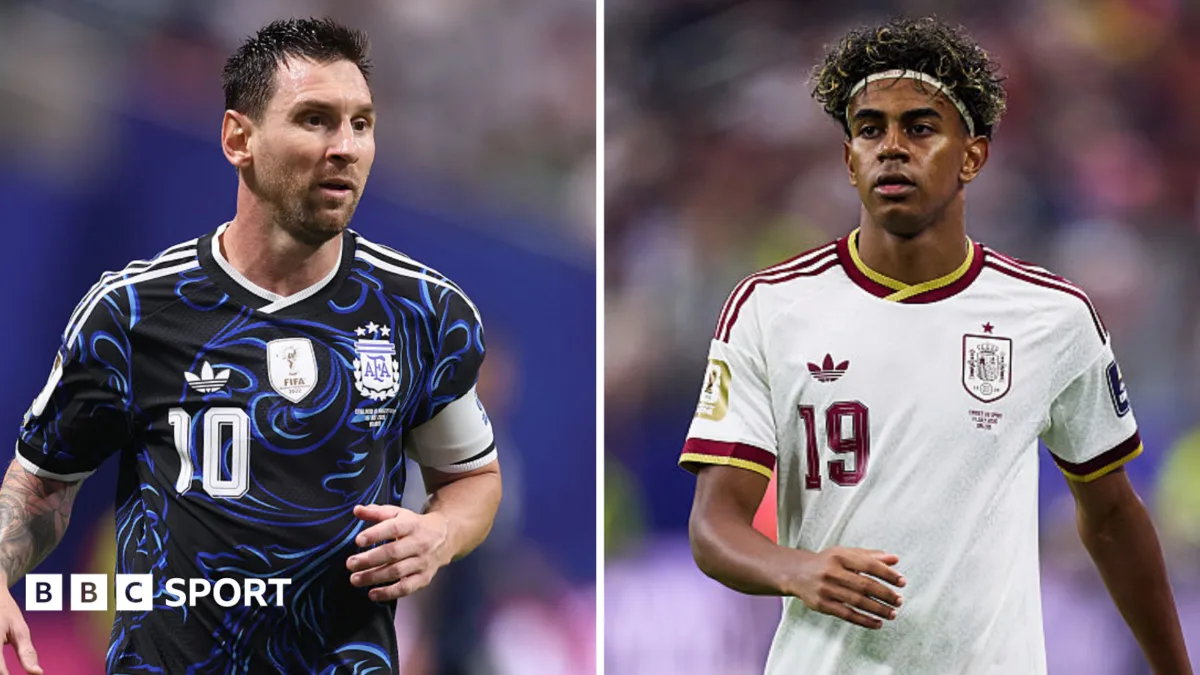
Spain’s captain Rodri acknowledged the anticipated physicality of the match, stating, “It will be a more physical one, and we must be prepared.” Argentina’s coach Lionel Scaloni emphasized the significance of Messi’s final appearance, calling him “a legend.” Messi, 39, remains the top scorer with eight goals, while Spain’s Mikel Oyarzabal has five tournament goals. The teams’ histories were highlighted, with Argentina aiming to equal Brazil’s record of three World Cup titles and Spain seeking to replicate its 2010 triumph.
The final’s context extended beyond the pitch, with the 2030 World Cup co-hosted by Spain, Portugal, and Morocco, and Argentina, Paraguay, and Uruguay each hosting matches to celebrate the 100th anniversary of the inaugural tournament. Meanwhile, the 2027 FIFA Women’s World Cup will be held in Brazil for the first time.
As the match progressed, Spain’s Lamine Yamal and Argentina’s Messi remained central to the narrative. Yamal’s pace and creativity tested Argentina’s defense, while Messi’s experience and late-game impact were critical. The game’s outcome hinged on tactical adjustments, with both teams showcasing their resilience—Spain’s structured play against Argentina’s dynamic attacks. The final’s legacy was set to be defined by the clash of footballing philosophies and the enduring legacies of the players on the pitch.
Dateline Wire is dedicated to independent, evidence-backed reporting. This briefing was synthesized from primary source reporting, corroborated across independent newsrooms, and verified against our Editorial Standards.