OpenAI releases Codex Micro keyboard as its first consumer hardware device
OpenAI has officially launched its first consumer hardware device, the Codex Micro, while navigating conflicting reports and legal challenges regarding a potential smart speaker.
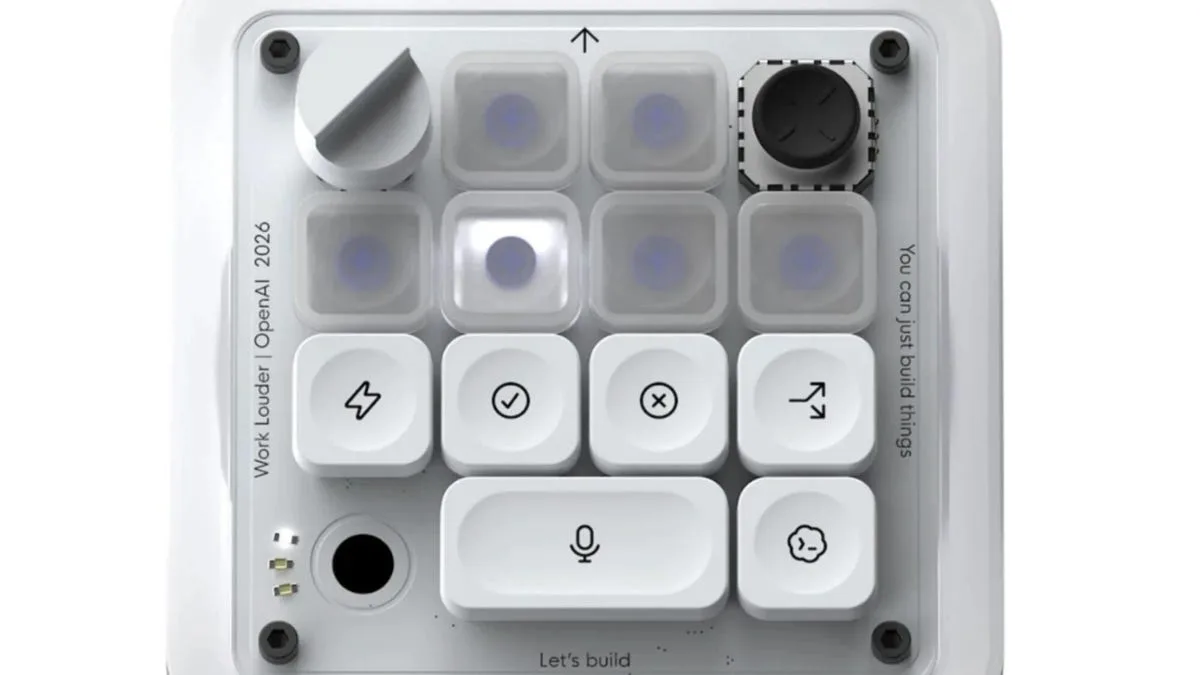
OpenAI’s first consumer hardware device has been reported by multiple outlets, with conflicting details emerging about its form and purpose. According to cnet.com, OpenAI officially announced the Codex Micro, a $230 miniature keyboard designed for monitoring and controlling Codex agents, on July 15, 2026. However, other reports, including those from macrumors.com, techcrunch.com, and reuters.com, describe a separate, screenless smart speaker under development, which OpenAI has not officially confirmed.
Official Announcement: The Codex Micro Keyboard
As detailed in cnet.com, the Codex Micro features 13 RGB-lit Agent Keys, a customizable Command Key set, a rotary dial for adjusting AI “reasoning levels,” and a joystick for workflow automation. It connects via Bluetooth or USB-C and is compatible with Mac and Windows systems. Pre-orders, with an estimated ship date of July 24, 2026, were available through OpenAI’s Supply Co. merch store. OpenAI emphasized that the device targets developers and “vibe coders,” noting that nearly half of Codex usage involves non-coding tasks.
The company highlighted the Codex Micro’s role in integrating AI into daily work routines, beyond traditional coding applications. However, no official statement from OpenAI directly addresses the competing reports of a smart speaker.
Reported Device: A Screenless Smart Speaker
Multiple outlets, including macrumors.com, techcrunch.com, and reuters.com, reported that OpenAI is developing a portable, screenless smart speaker described as a “humanlike AI companion.” Bloomberg, citing “people familiar with the matter,” stated the device would control smart home appliances, answer questions, and interact with users via ChatGPT. It includes a camera, sensors, and mechanical elements for “movement,” creating a sense of “liveness.”
Apple’s July 14, 2026, lawsuit against OpenAI, alleging trade secret theft, has cast uncertainty over the project. The tech giant claims OpenAI improperly accessed Apple’s confidential information, including a proprietary metal finishing technique, to develop the speaker. OpenAI has denied these allegations, asserting the device “veers significantly” from Apple’s offerings and “unlikely” violates trade secrets.
Timeline and Legal Context
The smart speaker’s development traces back to May 2025, when OpenAI acquired Jony Ive’s AI startup, io Products, for $6.5 billion. The purchase, which included Ive’s design studio LoveFrom, reportedly involved former Apple engineers and designers. OpenAI’s CEO Sam Altman and Ive had previously teased the device as a “new type of computer for the AI era,” with plans to launch it as early as 2026. However, legal challenges and internal delays have pushed its release to 2027, according to court filings.
In contrast, the Codex Micro’s release appears to be a more immediate move. OpenAI’s decision to prioritize a coding-focused keyboard may reflect a strategic shift to address developer needs while navigating the legal and reputational risks associated with its broader hardware ambitions.
Disagreements and Uncertainties
The conflicting reports highlight discrepancies in OpenAI’s messaging. While the Codex Micro aligns with its existing Codex platform, the smart speaker represents a departure into consumer hardware. Sources like machinesociety.ai and builtin.com suggested the speaker could resemble a “desktop robot” with mobile capabilities, while others, including tech.yahoo.com, linked it to Apple’s unannounced home hub project.
OpenAI has not publicly addressed the contradiction, but the company’s focus on Codex may indicate a prioritization of niche, developer-oriented tools over mass-market hardware. Meanwhile, the smart speaker’s delayed timeline and legal hurdles raise questions about its viability.
What Comes Next?
OpenAI’s hardware strategy remains in flux. The Codex Micro’s release on July 24, 2026, will test its ability to deliver specialized tools, while the smart speaker’s future hinges on resolving legal disputes and technical challenges. The company has also explored other concepts, including AI-powered earbuds, smartphones, and smart glasses, though none have advanced beyond rumors.
As OpenAI navigates these developments, the broader AI hardware market continues to evolve. Competitors like Apple, Google, and Amazon are also investing in physical AI devices, with OpenAI’s entry potentially reshaping the landscape. Whether the Codex Micro or the smart speaker becomes its defining product remains to be seen.
Dateline Wire is dedicated to independent, evidence-backed reporting. This briefing was synthesized from primary source reporting, corroborated across independent newsrooms, and verified against our Editorial Standards.