Trump says US will stop $4 billion in funding to Israel at end of 2026
U.S. President Donald Trump announced that Washington will stop $4 billion in annual funding to Israel by the end of the year, clashing with officials.
- Headline: Trump says US will stop $4 billion in funding to Israel at end of 2026
- Dispatch Summary: U.S. President Donald Trump announced that Washington will stop $4 billion in annual funding to Israel by the end of the year, clashing with officials.
- Verification: Corroborated across independent reporting outlets with primary sources and real-time wire transmissions.
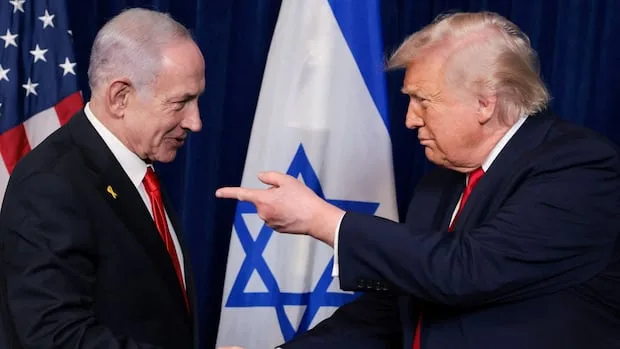
U.S. President Donald Trump on Tuesday said he made a deal with Israeli Prime Minister Benjamin Netanyahu that Washington would stop $4 billion US in funding to Israel after the end of this year. Speaking to Fox News's Fox and Friends, Trump said Israel no longer needed the funding and that some Democrats and left-wing politicians were using the U.S. financial support to Israel as a talking point to criticize Republicans.
The announcement came as Americans voted in the midterm elections and raised questions about an existing military assistance arrangement running through 2028. While Trump asserted that by the end of this year, we won't be paying Israel,
the announcement immediately collided with existing diplomatic frameworks, differing timelines from Jerusalem, and an initial response from a Netanyahu spokesman who said he was unaware of Trump's remarks and would seek further information, alongside reports that there was no immediate comment from Netanyahu's office on Trump's remarks.
An Existing Memorandum of Understanding and Unclear Funding Targets
It was not immediately clear which exact funding Trump was referring to. A memorandum of understanding that provides $3.8 billion annually in U.S. military aid to Israel is approaching its expiration date in 2028, and conversations have been under way on how Washington's assistance to Israel would evolve beyond that date. The current memorandum of understanding provides $38 billion in military assistance between 2018 and 2028, equivalent to $3.8 billion annually, supporting purchases of equipment from American companies.
Now, as far as paying Israel, Bibi Netanyahu and I have made a deal that we give Israel $4 billion a year, and we made a deal months ago that we're stopping,
Trump said. He added that we've already agreed that by the end of this year, we won't be paying Israel. Now we'll help Israel if they need it.
Despite the cutoff, Trump noted that Israel and Europe could buy weaponry, stating, They can buy whatever they want. They can buy whatever they want. So can Europe. We make the greatest weapons in the world.
Diverging Timelines Between Washington and Jerusalem
Trump attributed the proposed cutoff to Netanyahu, saying Israel's economic success meant it no longer needed the payments. However, Netanyahu's stated timetable for weaning Israel off American military support differs substantially from the president's abrupt deadline.
Netanyahu said in a May interview with CBS that he hoped to wean Israel off U.S. military support within a decade. In a June letter to a U.S. congressman, he wrote that the time had come for Israel to move from aid recipient to partner.
Netanyahu also told CBS News in June: I want to draw down to zero the American financial support, the financial component of the military cooperation that we have.
Reactions from Jerusalem were initially uncoordinated. While CBC News reported there was no immediate comment from Netanyahu's office on Trump's remarks, Business Times reported that a Netanyahu spokesman said he was unaware of Trump's remarks and would seek further information.
Shifting Domestic Politics and Eroding Public Support
Trump also described a domestic political calculation. U.S. assistance to Israel and the Gaza war have become contentious campaign issues, and he said Democrats had used the annual payment to criticise Republicans.
The left uses the $4-billion payment that everybody knows about — well, it's no secret — as a signal of unfairness, and we can't allow that to happen,
Trump said. I don't like that because you know it's too easy. It's almost too easy a target.
He added, We were giving them $4 billion, we are. But it gets cut off at the end of the year. Why? Because they don't need it.
This political sensitivity reflects broader shifts in American public opinion. U.S. public support for Israel has fallen since the Gaza war began in 2023, particularly among Democrats. A June Quinnipiac University poll found:
- 48 percent of voters believe the United States is too supportive of Israel
- 66 percent of Democrats believe the United States is too supportive of Israel
- 16 percent of voters held that view when the question was first asked in 2017
- 20 percent of Democrats held that view when the question was first asked in 2017
Support for Israel among Democratic voters has plummeted, candidates critical of Israel are winning Democratic primaries and even moderate lawmakers are increasingly willing to challenge decades of U.S. support for Israel. A new progressive wave is exposing the Democratic rift over Israel — just the way Republicans want it. Lack of big-name Democratic candidates at pro-Israel conference confirms for some voters the party has changed.
Broader Financial and Geopolitical Repercussions
Brent crude fell more than 3% to around $101 a barrel, its lowest level in more than three weeks, as traders interpreted the comments as another possible indication that the Iran conflict could end without renewed escalation.
With the end of 2026 cited by Trump as the definitive deadline for halting the annual payments, attention now turns to how Israeli officials formally respond once Netanyahu's office completes its review of the remarks, and whether the U.S. administration moves to formally restructure or terminate the 2028 memorandum of understanding ahead of schedule.