Israeli exit polls show election deadlock as Netanyahu and Eisenkot fall…
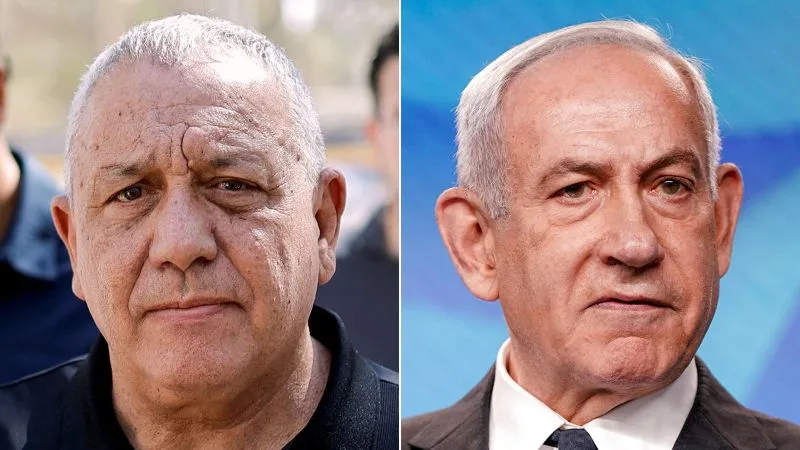
Israel faces political deadlock after exit polls show neither Benjamin Netanyahu nor Gadi Eisenkot secured a parliamentary majority.
- Headline: Israeli exit polls show election deadlock as Netanyahu and Eisenkot fall…
- Dispatch Summary: Israel faces political deadlock after exit polls show neither Benjamin Netanyahu nor Gadi Eisenkot secured a parliamentary majority.
- Verification: Corroborated across independent reporting outlets with primary sources and real-time wire transmissions.
High Turnout and Decisive Rejection Trigger Israel Election Deadlock
Israel faced an urgent national reckoning on Tuesday as voters went to the polls in the country’s first general election since the Hamas-led attacks of October 7, 2023. Prime Minister Benjamin Netanyahu entered the ballot facing a severe test of his wartime leadership. With polls closing following a rejected Likud request to extend voting hours, major television exit polls revealed an inconclusive result that left the nation in political limbo. Neither Netanyahu nor his chief challenger, former military chief Gadi Eisenkot, secured the parliamentary majority required to govern, setting off the prospect of prolonged coalition bargaining or even another round of elections.
The ballot functioned as a definitive referendum on Netanyahu's tenure. Polling stations recorded a massive surge in participation that caught campaigns off guard. According to the Central Elections Committee, voter turnout reached 74.3% by 8 p.m. local time with 5,450,000 ballots cast, surpassing total turnout figures for the previous 10 elections and exceeding the 70.6% recorded in the 2022 vote. Long lines formed outside schools and public buildings as Israelis grappled with the collective trauma of wartime and regional conflict spanning Gaza, Lebanon, and Iran. Meanwhile, opposition figures celebrated the exit poll numbers as a historic rebuke of the current administration.
Parliamentary Seat Projections Reveal Fractured Knesset Math
The exit polls broadcast by Israel’s major networks painted a picture of a collapsed governing majority and a deeply divided parliament. Prime Minister Benjamin Netanyahu’s right-wing bloc of ultra-Orthodox and far-right allies plummeted from 68 seats in the previous Knesset to just 50 seats, according to Channel 12 News. While Netanyahu's Likud party is projected to remain the largest single party with 24 seats, his path to retaining power has narrowed significantly. An outright victory requires a governing coalition to control at least 61 of the Knesset’s 120 seats. Eisenkot’s opposition bloc held a slight edge, projected to win 52 seats, with his centrist Yashar party slated to take 22 seats.
The arithmetic inside the 120-seat parliament leaves both major camps short of a clear governing majority. Pro-Netanyahu outlet Channel 14 offered a diverging projection showing the incumbent bloc reaching 60 seats, underscoring how close the margins remain as actual votes are tabulated. Yet the overarching reality is a fractured legislature where smaller factions wield immense leverage. The 3.25% electoral threshold, which requires a party to capture roughly 160,000 votes to enter parliament, also threatens several fringe right-wing parties like Ofer Winter’s Amcha Yisrael, Yoaz Hendel’s Reservists, and Finance Minister Bezalel Smotrich’s Religious Zionism. If any of these borderline factions fail to clear the threshold, the balance of power could shift dramatically once again.
Surging Arab Turnout and the Kingmaker Dilemma
The defining storyline of the election was the historic mobilization of Palestinian citizens of Israel, who make up roughly 20% of the population. While Arab voter turnout sat at 53% during the 2022 contest, participation surged past 78% on Tuesday as communities treated the vote as a direct protest against Netanyahu and far-right ministers Itamar Ben-Gvir and Bezalel Smotrich. Exit polls allocated a record 18 seats to Arab parties including the Joint List and Ra’am, surpassing their previous high of 15 seats won in the 2015 government and rising sharply from the 10 seats they held in the outgoing Knesset. Celebrations erupted at campaign headquarters in Nazareth and on the streets of Tayibeh and Sakhnin as crowds cheered candidates on their shoulders.
In a statement, the Joint List declared We can say with confidence: we sent the fascist right wing government to the dustbin of history.
Ra’am leader Mansour Abbas told supporters in Sakhnin We will turn the seats we won into a new reality in the country.
These gains position Arab lawmakers as potential kingmakers, but capitalizing on that influence requires navigating deep political divides. Major Zionist opposition parties in Eisenkot’s bloc have historically ruled out forming a government that relies on Arab support, though retired Israeli Air Force Maj. Gen. Nimrod Sheffer, a candidate for the left-wing Democrats, revealed on Tuesday that the anti-Netanyahu coalition had already held discussions with Arab leaders about forming a new government.
Candidates React to an Inconclusive Night
Political leaders responded to the exit projections with starkly contrasting assessments of the public mandate. Gadi Eisenkot framed the outcome as a direct indictment of the administration's handling of national security. I will act immediately to implement the will of the people, to replace the Netanyahu government and to establish a Zionist conscription government, as soon as possible,
Eisenkot said, adding that the numbers indicate a complete lack of confidence in Netanyahu and the October 7th government.
Political analyst Dahlia Scheindlin noted that Eisenkot's appeal stems partly from voters sharing his personal grief, as he lost a son and two nephews fighting in the war.
Former Prime Minister Yair Lapid adopted an equally uncompromising tone regarding the incumbent's standing. Don’t let anyone confuse you: the Netanyahu bloc has suffered a crushing defeat. This is a total collapse and the public has told them to go home,
Lapid said in a statement. Yair Golan, head of the left-wing Democrats, echoed that sentiment by stating The public has spoken. It has fired Netanyahu’s government. We have been given a historic opportunity to establish a genuine government of change in Israel, and we have no intention of giving it up.
Coalition Arithmetic and the Path Ahead
As the election night dust settles, Israel faces weeks of intense political maneuvering. Because Israel conducts in-person voting without absentee or mail-in ballots, and officials process paper rolls by hand, the official tally will take time to firm up. While preliminary results are expected over the coming hours, final results are expected over the next 48 hours, though forging a governing coalition could take days or even weeks. The political stalemate could ultimately work to Netanyahu's advantage, allowing him to remain in power in a caretaker capacity while rival factions attempt to bridge their differences.
Once final results are published, the constitutional burden shifts to Israeli President Isaac Herzog. Herzog will select a party leader he believes will win the majority of support in Knesset. The president holds three chances to tap a worthy candidate, but should the Knesset fail to rally around his pick, a new round of elections would be held. With international and regional implications hanging in the balance, all eyes now turn to the Central Elections Committee as overnight ballot counting begins.