US carries out strikes on Iran's Qeshm Island — report
The United States carried out military strikes against Iran's Qeshm Island, aimed at protecting shipping in the Strait of Hormuz amid the US midterms.
- Headline: US carries out strikes on Iran's Qeshm Island — report
- Dispatch Summary: The United States carried out military strikes against Iran's Qeshm Island, aimed at protecting shipping in the Strait of Hormuz amid the US midterms.
- Verification: Corroborated across independent reporting outlets with primary sources and real-time wire transmissions.
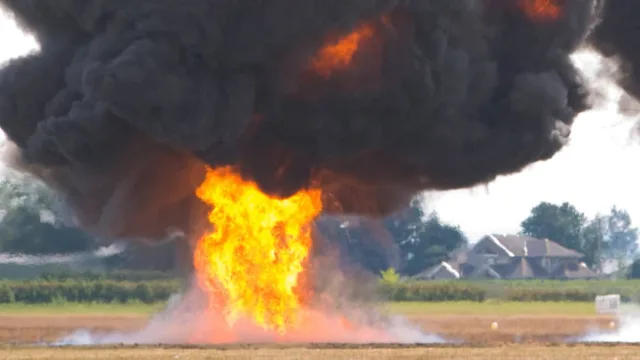
The United States carried out military strikes against Iran's Qeshm Island on Monday, according to The Wall Street Journal and U.S. officials, as Americans headed to the polls for the U.S. midterm elections on November 3. The attacks represent the latest in a series of smaller-scale military operations conducted by American forces over several weeks. Iranian state news agency IRNA reported that five explosions were heard on Qeshm Island, with further blasts reported in the coastal city of Bandar Lengeh in southern Iran, and residents reporting two aircraft flying over the island.
Backchannel Talks Collide With Regional Pressure
The timing coincides with high political stakes inside the United States. President Donald Trump has sought to downplay the prospect of renewed large-scale military confrontation with Iran following Tuesday's midterm elections. Asked by reporters whether he was considering striking Iran again following the elections, Trump responded No,
and insisted that diplomatic efforts were progressing. When asked about a return to hostilities, Trump stated,
We had a war with Iran. We won. I don’t know if you even call it a war because we haven’t been doing any fighting for months.
Donald Trump, US President
While President Trump has publicly touted the possibility of a peace deal and suggested that diplomatic arrangements are coming together nicely, American forces have continued conducting smaller-scale strikes against Iranian targets. Unnamed U.S. officials cited by The Wall Street Journal and the Associated Press described these operations as defensive, saying they were intended to prevent Iran from gaining the ability to threaten or attack commercial shipping in the strategically important Strait of Hormuz. One official stated, Iranians using surface to air missiles against US assets
were targeted.
These operations were kept secret to avoid signalling that Washington intended to resume its major military campaign against Iran. Qeshm Island is an island at the entrance to the Strait of Hormuz and houses a large underground missile site and a desalination plant. The location was previously struck by the U.S. on June 2, 2026, when Washington targeted an Iranian military ground control station used to direct drone operations.
Diplomatic efforts are moving on parallel tracks. Qatari mediators held two rounds of talks last week with Iranian officials, trying to advance a framework for Iran to cease its attacks in the Strait of Hormuz in return for the U.S. lifting its blockade on Iran's ports. Meanwhile, Israeli Prime Minister Benjamin Netanyahu has pushed for the U.S. to carry out another wave of strikes on Iran after Tuesday's midterm elections, according to two regional officials and a third person familiar with the matter. Netanyahu pressed for strikes during a call over the weekend with Trump, who would not commit to taking military action, according to a person briefed on the call.
Drones Downed and Economic Vulnerabilities
Iran claimed its forces brought down three U.S. drones near the Strait of Hormuz. The IRGC Aerospace Force claimed it used electronic warfare systems to bring down two MQM-170 reconnaissance drones south of Qeshm Island, and tracked and destroyed a U.S. MQ-9 drone east of the Strait of Hormuz using a newly developed air defense system, describing it as the 55th advanced MQ-9 drone intercepted. Separately, the IRGC Navy claimed it captured a fourth U.S. MQM-170 reconnaissance and decoy drone intact west of the Strait of Hormuz by taking control of its guidance systems.
President Trump and the Republicans risk losing their majority in both chambers of Congress, amid growing ire among voters over rising fuel costs. Trump linked expectations of an agreement to falling energy prices. On Truth Social on Monday, Trump claimed oil prices had fallen by nearly $10 a barrel, describing the drop as a record and writing, Iran wants a settlement, as soon as possible. It could happen!
U.S. Vice President JD Vance also expressed optimism, telling Fox News in Minnesota that the administration believed progress had been made toward a possible agreement. Vance sent a letter last week to Iran's security chief, Mohsen Rezaei, focused on assisting Iran with medical supplies and various things,
according to Trump. Rezaei told state television that the tone has completely changed
from the U.S. and called it a very good sign.
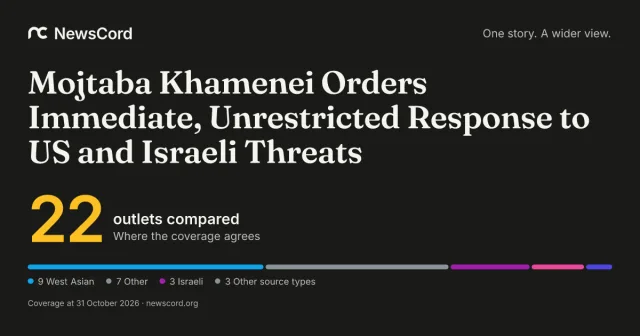
The administration insists that Tehran would never obtain nuclear weapons, adding that Iranian officials already recognized that position. Iranian Foreign Minister Abbas Araghchi maintained that Tehran was prepared for both diplomacy and military confrontation, warning that any renewed military action would invite a stronger response. The new supreme leader, Ayatollah Mojtaba Khamenei, met with Iran's military chiefs and said the response to any threat from the U.S. or Israel should be immediate and without geographic limits.
Regional Repercussions and Markets
The conflict has cost U.S. taxpayers at least $47 billion. A recent analysis by the Associated Press found that Iranian strikes on more than two dozen U.S. bases since the start of the war have caused billions of dollars in equipment damage. October saw the most attacks on commercial ships in the Strait of Hormuz since March. The national average price of regular gasoline stood at $4.17 per gallon on Monday, according to AAA, which reported that crude oil prices above $100 per barrel were limiting further declines at the pump.
Other U.S. allies in the Middle East warned against more strikes. Saudi Defense Minister Prince Khalid bin Salman spoke by phone on Monday with U.S. Secretary of Defense Pete Hegseth about regional developments and Houthi attacks on Saudi Arabia. United Arab Emirates presidential adviser Anwar Gargash told attendees at the Manama Dialogue security summit in Bahrain that U.S. and Iranian stances remain far apart. Egypt's Foreign Minister Badr Abdelatty warned at the summit that the next escalation will be more dangerous and destructive. China announced it will send a special envoy to Iran, Oman, and Saudi Arabia in early to mid November.
| Actor | Public Stance | Reported Action |
|---|---|---|
| US President Donald Trump | Downplayed prospect of renewed large-scale military confrontation; said "No" to striking Iran again following the elections | Presided over smaller-scale strikes via US forces |
| US Military Officials | Described operations as defensive | Carried out strikes against Iranian targets for several weeks |
| Iranian State Media / Iranian News Agencies | Reported explosions and claimed 3 drones downed | Reported several explosions in southern Iran, including on Qeshm Island and Bandar Lengeh; claimed capture or destruction of U.S. drones |
Attention turns immediately to the outcome of the U.S. midterm elections on November 3, which will determine control of Congress for the next two years of Trump's presidency.
Updated 1 time since publication; last update 3 November 2026, 05:12.