Supreme Court rejects Trump administration push to set aside 20,000 Cali…
The Supreme Court has declined the Trump administration's emergency bid to force California to segregate 20,000 mail-in ballots flagged as noncitizen votes.
- Headline: Supreme Court rejects Trump administration push to set aside 20,000 Cali…
- Dispatch Summary: The Supreme Court has declined the Trump administration's emergency bid to force California to segregate 20,000 mail-in ballots flagged as noncitizen votes.
- Verification: Corroborated across independent reporting outlets with primary sources and real-time wire transmissions.
Supreme Court rejects Trump administration push to set aside 20,000 California mail-in ballots
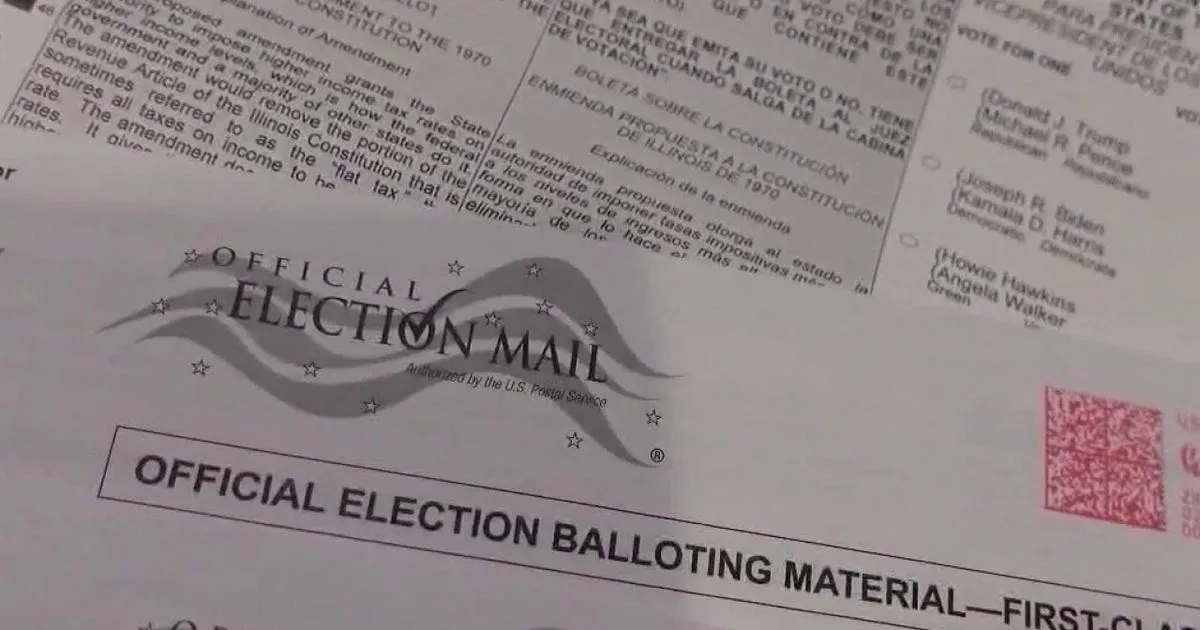
For California's roughly 23 million registered voters casting mail-in ballots ahead of the midterm elections, the U.S. Supreme Court's emergency decision means their votes will not be pulled aside or disqualified by federal officials attempting to challenge voter rolls at the eleventh hour. The high court on Monday declined to step into a dispute over California mail ballots, rejecting the Trump administration's emergency request to force California to segregate 20,000 mail-in ballots from individuals the federal government flagged as likely noncitizens. The swift, one-sentence denial came without any public dissents or requests for a response from the state, effectively keeping lower-court rulings in place and allowing the counting of more than six million ballots already received by election officials. The court's move came one day before the midterm elections.
The justices gave no explanation, which is common in emergency orders. The court had also turned down Trump's bid to limit mail voting nationwide in September. Still, the court has backed Trump's administration in other emergency appeals, and Monday's order was part of a wave of election lawsuits filed just before voting.
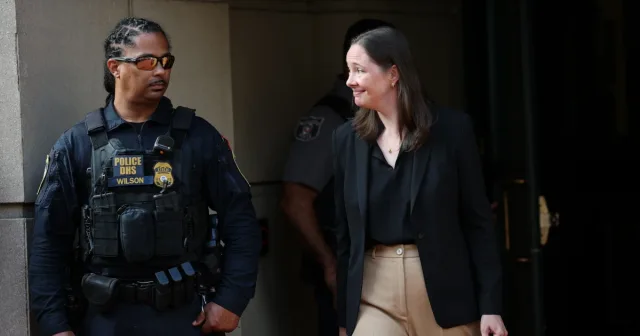
That decisive action capped a string of defeats for the administration's aggressive posture toward state election rules on the eve of the midterms, which will determine control of Congress for the last two years of President Donald Trump's second term. The legal confrontation stems from letters and thumb drives sent last month by the Department of Justice and the Department of Homeland Security to the California secretary of state and the Los Angeles County Registrar. Armed DHS officials subsequently delivered letters to county officials threatening criminal charges if they did not sequester the ballots, prompting multiple lawsuits and fierce resistance from state leaders who argued the federal list was unreliable and that separating the votes during an active election would be logistically impossible and disenfranchise legal citizens.
Why did the Trump administration demand that California set aside 20,000 ballots?
The Justice Department argued that identifying and segregating ballots from voters it considered likely noncitizens was a modest, necessary step to protect the integrity of federal elections. Solicitor General D. John Sauer maintained in the administration's Supreme Court petition that the federal government suffers a cognizable injury to its sovereignty from the violation of its laws, stating that once California commingles challenged ballots with lawful ones, there is no way to retrieve them. Bill Essayli, the federal prosecutor running the Justice Department's Los Angeles office, told a news conference he was highly confident the people on the list were not entitled to vote, insisting This isn't speculation. This isn't a theory,
even as he conceded potential errors.
Critics and state officials pushed back hard against those assertions. California Attorney General Rob Bonta also criticized the Supreme Court appeal, stating the request reeks of desperation and is another attempt to undermine our elections and trample on the rule of law.
Voting has been underway since early October, and California officials warned that finding and setting aside the challenged ballots while voting was concluding would wreak havoc on the election. Independent research shows that noncitizen voting is extremely rare, yet the Republican administration has prioritized targeting it throughout the year, framing its actions as a defense against unlawful participation.
How lower courts responded to the federal government's emergency demands
| Court Level | Judge or Panel | Ruling Date | Decision |
|---|---|---|---|
| U.S. District Court (Los Angeles) | Judge David O. Carter | Last Wednesday | Denied DOJ request to set aside ballots, warning of danger to democracy. |
| 9th U.S. Circuit Court of Appeals | Judges Mark Bennett and Gabriel Sanchez (Majority) | Friday | 2-1 ruling upholding District Court order against segregation. |
| U.S. District Court (Washington) | Chief Judge James Boasberg | Monday | Ruled administration violated Elections Clause; later denied broader Democratic suit for lack of standing. |
| U.S. District Court (San Francisco) | Judge Trina Thompson | Monday | Barred DOJ from threatening election workers with criminal prosecution. |
The federal push encountered immediate skepticism from judges who questioned the reliability of the underlying data. During a hearing before U.S. District Court Judge Trina Thompson regarding threats of prosecution against election workers, Justice Department attorney Kenneth Kao admitted that the lists of purported noncitizens on California's voter rolls had a high error rate. Judge Thompson pressed Kao, asking, Would you agree theres a high error rate?
Kao replied, Thats a fair statement,
while arguing that registrars' aid was needed to verify valid voters.
Last week, U.S. District Judge David O. Carter issued a scathing ruling denying the DOJ's request, writing, If the Executive can discount votes and threaten an ongoing election due to unproven allegations, then our democracy is in danger.
Carter added that never before in American history had the federal government sought on the eve of an election to coerce local authorities into abandoning constitutional election procedures.
A three-judge panel of the 9th U.S. Circuit Court of Appeals upheld Carter's order in a 2-1 vote on Friday, with Circuit Judges Mark Bennett (appointed by Trump) and Gabriel Sanchez (appointed by Joe Biden) ruling that there was a material risk of disenfranchising eligible voters. A third judge, also appointed by Trump, dissented from the panel decision, arguing that California's refusal to separate ballots encouraged breaches of federal law. The Justice Department also tried to speed up the case, unsuccessfully asking an appeals court to step in earlier and take action before election day.
Meanwhile, in Washington, Chief Judge James Boasberg ruled that the executive branch had likely violated the Constitution's Elections Clause, which commits authority over election rules exclusively to states and Congress. Boasberg wrote, The Executive Branch has likely violated the Constitutions Elections Clause, which commits authority over election rules to the states and Congress alone.
Boasberg also barred a separate Democratic bid to temporarily block the Justice Department from pressuring other states, finding that Democratic campaign groups lacked legal standing because no state had yet acquiesced to the federal letters.
What this means for ordinary voters and what they can check or do
For voters in California and across the country watching the midterm contests decide control of Congress, the Supreme Court's refusal to intervene means ballots already submitted are proceeding through normal tabulation without federal disqualification. California leaders emphasized that state protections held firm against executive pressure.
The swift rejection by the nation's highest tribunal closes the door on an unprecedented federal attempt to rewrite state voting procedures hours before polls closed, leaving local election administrators free to complete their counts. Rob Bonta noted that the lack of even a request for a response from California showed the petition had no merit. That abrupt dismissal leaves the administration with no further legal avenues to alter California's vote tabulation, showing the absolute limits of executive intervention in state-run elections.
Updated 1 time since publication; last update 3 November 2026, 06:54.