Mojtaba Khamenei orders immediate, unrestricted response to US and Israe…
Iranian Supreme Leader Mojtaba Khamenei has directed military commanders to prepare an unrestricted response to US and Israeli attacks amid ongoing regional conflict.
- Headline: Mojtaba Khamenei orders immediate, unrestricted response to US and Israe…
- Dispatch Summary: Iranian Supreme Leader Mojtaba Khamenei has directed military commanders to prepare an unrestricted response to US and Israeli attacks amid ongoing regional conflict.
- Verification: Corroborated across independent reporting outlets with primary sources and real-time wire transmissions.
Seven months into a devastating regional conflict that began on February 28, Iranian Supreme Leader Mojtaba Khamenei has ordered senior military commanders to prepare an immediate, impactful, and geographically unrestricted response to any renewed U.S. or Israeli attacks. The directive, issued following a meeting with top armed forces leadership, mandates that Iran's military update its strategic target database to bring all tangible and intangible American and Israeli assets within striking range. Every level and type of threat must be confronted with an immediate, effective, and unrestricted geographical response,
the statement read, adding that if the enemies resume military or terrorist attacks, it is the armed forces of the Islamic Republic and the people of Iran who will determine the time and conditions for ending them.
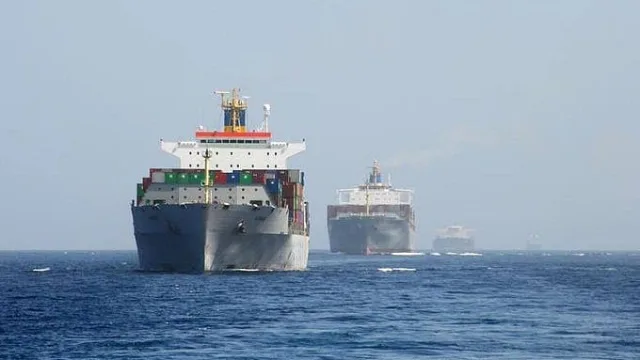
That posture signals that Tehran has no intention of backing down despite intense economic pressure and ongoing naval blockades affecting Iranian ports. The directives represent Khamenei's meeting with top military commanders since succeeding his father, Ayatollah Ali Khamenei, who was killed alongside several senior officers during the opening strikes of the U.S. and Israeli campaign on February 28. Operating with a low public profile, the Supreme Leader used the meeting to demand intelligent combat readiness as a fundamental requirement for maximum deterrence, while commanding a reported "doubling of production" for ammunition, reconnaissance equipment, and combat weapons.
Senior military officials attending the briefing included Maj. Gen. Abdollahi, chief of the Joint Staff of the Armed Forces; Maj. Gen. Hatami, commander of the Iranian army; and Maj. Gen. Vahidi, commander of the Islamic Revolutionary Guard Corps (IRGC). These commanders briefed Khamenei on defensive readiness across the Persian Gulf coast, the Strait of Hormuz, the Gulf of Oman, and the country's northwestern and southeastern borders. In response to the directives, Iranian Army spokesman Brigadier General Mohammad Akraminia issued a warning on X directed at U.S. President Donald Trump, writing, If the U.S. president once again embarks on another military adventure in the region under pressure from and inducement by the Zionists, the flames of war will undoubtedly engulf a much wider geographical area.
Akraminia added that the end of the conflict will not be in his hands.
Diplomatic Draft Frameworks and Washington's Calculus
While Tehran sharpens its military readiness, diplomatic channels are quietly attempting to restart negotiations amid a complex backdrop of mediation and tentative proposals. A preliminary draft framework for U.S.-Iran negotiations, exclusively obtained by Al Arabiya English, proposes transferring Iran's highly enriched uranium stockpile to an agreed third country or reducing its enrichment level. The same framework outlines reopening the Strait of Hormuz to international maritime traffic within seven days of an initial understanding, suggesting China could act as a guarantor for the implementation and sustainability of any agreement. Furthermore, the proposals suggest holding direct U.S.-Iran negotiations in Doha instead of Istanbul. Citing the Qatari newspaper Al-Araby Al-Jadeed, The Times of Israel reported that an American delegation is expected to join Iranian officials for direct talks in Doha following a reported breakthrough in indirect negotiations.
Washington, however, views the balance of power differently from the Oval Office. Speaking to reporters in the Oval Office, U.S. President Donald Trump maintained that time favors the American side, characterizing the ongoing hostilities as not a typical war
and asserting that Washington is in no hurry to reach a settlement. There are talks. They want to talk. They keep talking,
Trump told reporters in the Oval Office. But look, they're not paying their soldiers, they're not paying their police. They're in a lot of trouble. And we have time, frankly. It's a war, but it's not a typical war; we've been there for seven months.
| Actor | Stated Position | Key Demands or Actions |
|---|---|---|
| Mojtaba Khamenei / Tehran | Immediate, geographically unrestricted response to attacks; independent control over conflict termination | Updating target bank for U.S./Israeli assets; accelerating weapons production; maintaining maritime pressure |
| Donald / Washington | No rush to end hostilities; leverage through economic distress and military presence | Sustaining military posture; monitoring regional movements; conditioning relief on nuclear and security terms |
| Qatari Mediators / Regional Partners | Facilitating direct talks to resolve navigation and nuclear disputes | Proposing uranium stockpile transfers, Doha negotiations, and Chinese third-party guarantees |
That stark divergence between Washington's assessment of Iranian financial vulnerability and Tehran's aggressive military mobilization leaves very little margin for error. The Supreme Leader's reliance on popular backing—explicitly linking deterrence to public gatherings, the resilience of regional militias in the Resistance Front, and the Basij forces—suggests that domestic political structures are digging in for a protracted struggle. That creates a high-stakes environment where any miscalculation in the Gulf waters or along the borders could trigger the wider conflagration warned of by military spokesmen.
Strategic Alignment and Regional Posturing
The broader strategy articulated in Tehran extends well beyond immediate border defense, framing the confrontation as the birth pangs of a new regional order. Khamenei praised the steadiness of the Resistance Front and described the "unity of arenas" as a factor shaping a new political and security system in West Asia.
By asking senior leaders to convey his thanks and appreciation to members of the armed forces, security agencies, Basij forces, Defense Ministry employees, and their families, the Supreme Leader sought to reinforce the ideological and spiritual foundations of the armed forces while addressing their welfare needs.
That ideological reinforcement accompanies tangible operational shifts. Commanders reported a significant increase in the production of key munitions and various weapons systems designed for reconnaissance, support, and combat missions. By ordering the inclusion of various types of material and non-material enemy assets into the updated target database, Tehran has expanded its doctrine to encompass assets belonging to its adversaries. That broad definition ensures that any future exchange will not remain localized to military installations.
The immediate next steps hinge on whether the proposed Doha talks materialize and whether the preliminary framework concerning enriched uranium and maritime access can bridge the gap between Washington's insistence on compliance and Tehran's demands for unrestricted sovereign deterrence. With American military movements closely monitored across the region and Iranian forces maintaining high combat readiness along critical coastal and border sectors, the trajectory of the crisis remains volatile.
Regional diplomatic efforts, including mediation involving Qatar, continue to navigate the deep distrust between the two adversaries. As military commanders await further developments, Brigadier General Mohammad Akraminia reiterated that the Iranian army remains on high alert, watching U.S. military movements across the region as the countdown to potential talks or renewed hostilities ticks forward.