US conducts defensive strikes on targets in Strait of Hormuz, official says
The United States military has launched limited defensive strikes against Iranian targets in the Strait of Hormuz following an attack on an American aircraft, raising regional tensions ahead of midterm elections.
- Headline: US conducts defensive strikes on targets in Strait of Hormuz, official says
- Dispatch Summary: The United States military has launched limited defensive strikes against Iranian targets in the Strait of Hormuz following an attack on an American aircraft, raising regional tensions ahead of midterm elections.
- Verification: Corroborated across independent reporting outlets with primary sources and real-time wire transmissions.
If Washington makes another strategic miscalculation, it should know that this time it will face a new battlefield and will find itself even more desperate than it is today,
Mohammad Bagher Qalibaf, Iran’s chief negotiator and parliament speaker, warned on Tuesday via Iranian state television.
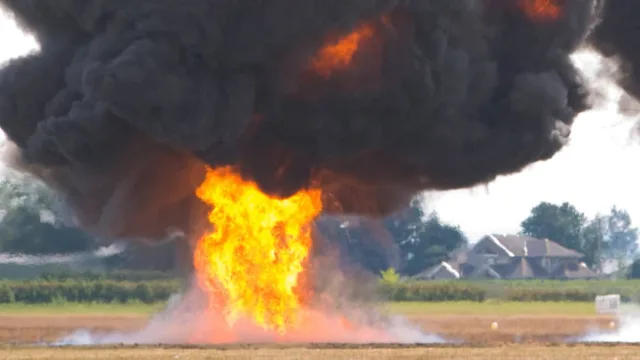
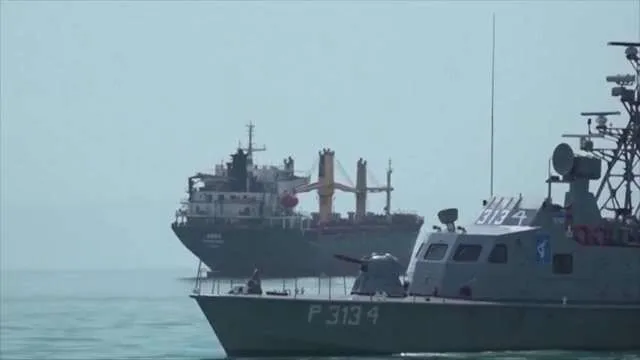
Those stark words capture the fragile and volatile moment unfolding across the Middle East and Washington. The United States military launched limited, defensive strikes on Monday against Iranian targets in the strategic Strait of Hormuz, three U.S. officials told CBS News, with the operation targeting Iran's Qeshm Island after the Islamic Revolutionary Guard Corps fired at an American aircraft. The strikes — which were first reported by The Wall Street Journal and confirmed anonymously by American officials — came on the eve of Tuesday's crucial midterm elections in the United States. Unlike earlier operations in the more than eight-month-old war, these attacks were not publicly announced by Washington, leaving international observers and residents in suspense as explosions were reported on the islands of Qeshm and Hengam, as well as the nearby mainland area of Bandar Abbas.
What changes for the war, the economy, and the ballot box?
For American voters, the ongoing conflict has translated directly into economic pain at the pump and rising living costs, which have severely damaged support for President Donald Trump and his Republican Party as they fight to retain control of Congress. The war, sparked by joint U.S.-Israeli strikes on February 28, has cost U.S. taxpayers at least $47.1 billion in military expenditure alone as of mid-October, according to a new estimate from U.S. Central Command obtained by CBS News. CENTCOM figures show that replacing spent munitions accounts for about $29 billion, replacing lost equipment requires another $6.1 billion, and incremental costs such as supporting American service members total roughly $11.9 billion. These staggering totals exclude structural damage to U.S. military bases across the Middle East.
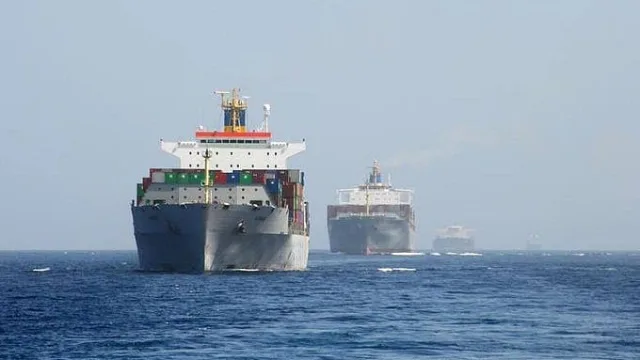
The Strait of Hormuz itself remains a choke point for the global economy. During peacetime, about a fifth of the world's oil supply flows through the narrow waterway. The current U.S. naval blockade, enforced by thousands of troops and aircraft carriers in the waters off Iran, aims to prevent tankers carrying Iranian oil from reaching the global market, though thousands of additional troops and another aircraft carrier are currently on their way to the region.
In Israel, the war has upended domestic politics just as profoundly. Prime Minister Benjamin Netanyahu and his right-wing allies lost their parliamentary majority in last week's elections, the first held since October 7, 2023. A return to full-scale war with Iran could offer Netanyahu a political lifeline, potentially helping him form an emergency government.
Why did the strikes happen now despite ongoing negotiations?
The timing of Monday's operation creates a jarring contradiction against simultaneous diplomatic tracks. President Trump had previously stated that America would not launch strikes on Iran before the midterm elections. On Monday, he posted on Truth Social that a deal could happen
and that Iran wants a settlement, as soon as possible.
Vice President JD Vance similarly told reporters on Monday that he and Trump both feel pretty good about the prospects for potentially coming to a negotiated settlement.
Yet, behind closed doors, intense lobbying has pulled the administration in opposite directions. Israeli Prime Minister Benjamin Netanyahu pushed for sustained strikes against Iran during a weekend call with Trump, according to two regional officials and a third person familiar with the matter. Trump acknowledged speaking with the Israeli leader, saying he had a very good talk with
the Israeli leader, though he did not elaborate on what he and Netanyahu discussed. Later on Monday night, during an appearance on Sean Hannity's program on Fox News, Trump warned that we still have to take care of
several sites in Iran, including Pickaxe Mountain, which houses a suspected nuclear site, adding that it was not a big deal
and could be done in an hour.
Simultaneously, back-channel negotiations mediated by Qatari officials have been playing out. Mediators are attempting to advance a framework where Iran would cease its attacks in the Strait of Hormuz in return for the U.S. lifting its blockade on Iranian ports. Iran recently stated it has a two-day plan to reopen the critical waterway and resume nuclear talks if Washington meets its demands, which include lifting sanctions on Iranian oil sales and agreeing to a ceasefire that includes Lebanon. Tehran's revised proposal indicates that ships passing through a reopened strait would follow a route agreed upon by Iran and Oman.
How is Iran preparing for a potential escalation?
Tehran has adopted a dual track of signaling diplomatic readiness while aggressively mobilizing its domestic population for a protracted conflict. Iranian state television quoted parliament speaker Mohammad Bagher Qalibaf on Tuesday asserting that Iran had delivered a firm and rational response to the American side,
adding that the ball is now in America's court to prevent war,
though he did not specify what response he meant. Meanwhile, Iran's Deputy Foreign Minister Kazem Gharibabadi stated Tuesday that Tehran retained the right to legitimate self-defense
and would maintain it until the military aggression has been completely and permanently brought to an end.
On the ground, mobilization efforts accelerated significantly on Monday with the opening of a third military training center in Tehran. Authorities announced ambitious plans to train one million paramilitary volunteers nationwide. Members of the Basij, a paramilitary force affiliated with the Islamic Revolutionary Guard Corps, attended the inauguration. Ali Kowsari, the Basij's deputy head for training, outlined the scope of the mobilization:
Starting this week, across the country 1,500 training bases will start working in all cities and towns, and will aim for training one million sacrificial volunteers.
Ali Kowsari, Basij's deputy head for training
The Janfada,
or sacrificials,
campaign began registering volunteers in March. The training program encompasses urban defense, weapons handling, air defense, rescue operations, firefighting, and navigation, showing the deep anxiety within the Iranian regime regarding potential post-election military actions by the United States and Israel.
The immediate trajectory of the conflict hinges on diplomatic meetings scheduled for later this week. Mediators are set to continue pushing for the framework linking the cessation of Iranian strait attacks to the lifting of U.S. port blockades. At the same time, international observers will be scrutinizing the fallout from Tuesday's U.S. midterm elections to see whether congressional shifts alter the White House's military authority or domestic political pressure regarding the war.
More talks are planned for this week as the region waits to see if Washington and Tehran can bridge their demands or if the latest strikes on Qeshm Island mark the beginning of a broader resumption of hostilities.