News Desk. (2026, October 27). Justice department charges ex-FBI director James Comey for third time. Dateline Wire. https://www.datelinewire.com/news/justice-department-charges-james-comey/
@article{datelinewire1350,
  author  = "News Desk",\n  title   = "Justice department charges ex-FBI director James Comey for third time",\n  journal = "Dateline Wire",\n  year    = 2026,\n  url     = "https://www.datelinewire.com/news/justice-department-charges-james-comey/"\n}
[Justice department charges ex-FBI director James Comey for third time](https://www.datelinewire.com/news/justice-department-charges-james-comey/) — *Dateline Wire* (2026).
Headline: Justice department charges ex-FBI director James Comey for third time
Dispatch Summary: Former FBI Director James Comey faces a third set of criminal charges from the Justice Department regarding a 2016 media leak.
Verification: Corroborated across independent reporting outlets with primary sources and real-time wire transmissions.
Justice department charges ex-FBI director James Comey for third time
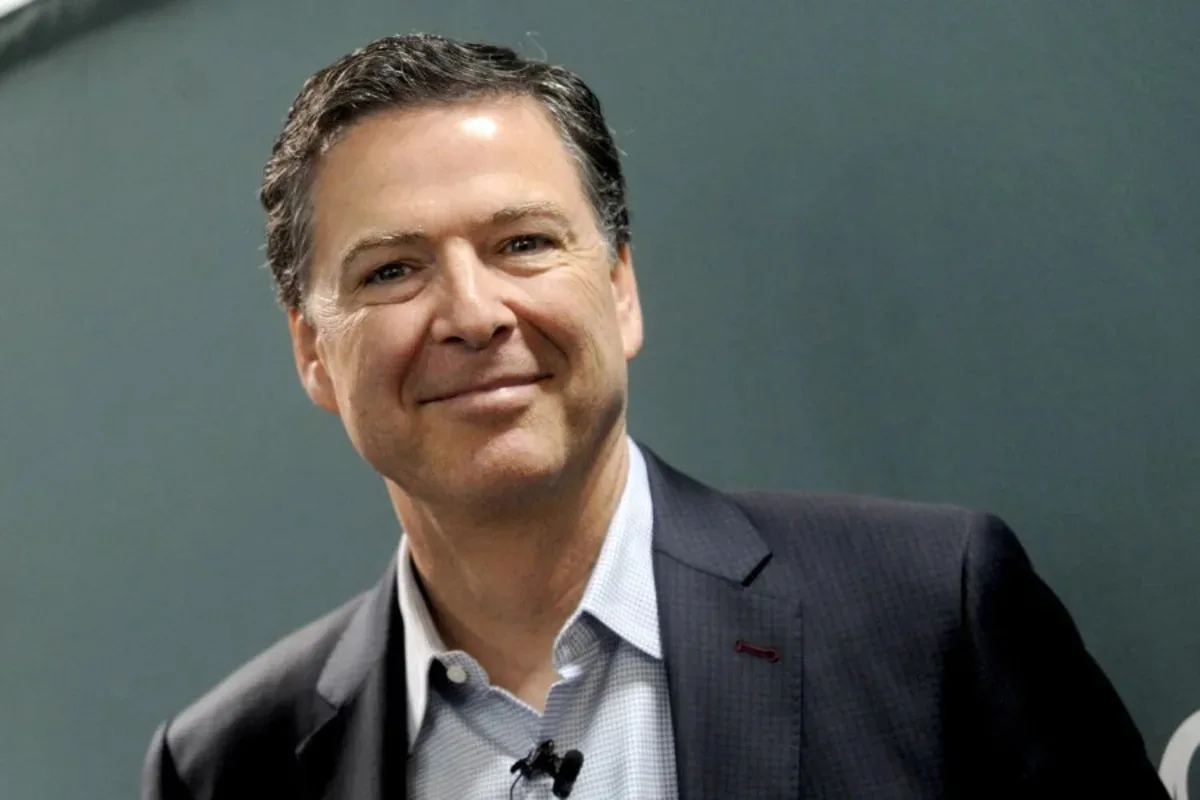
The U.S. Justice Department has brought a third set of criminal charges against former FBI Director James Comey, accusing him of transmitting national defense information to the press a decade ago. The charges were unsealed Monday in U.S. District Court in Washington, D.C., coming to light only hours after a federal judge ruled that the department unlawfully fired Comey's daughter, Maurene Comey, last year from her position as an assistant U.S. attorney for the Southern District of New York.
Responding to the new case in a video posted on Substack on Monday, Comey called the charges an appalling abuse.
It would almost be funny if it weren't such an appalling abuse of the department of justice, one that we cannot become numb to. Nothing's changed with me - I'm still innocent, I'm still not afraid of these people and I still believe the independent federal judiciary.
Video: Justice Department announces charges against former FBI Director James Comey — NBC News (YouTube)James Comey, via Substack
The timing underscores an extraordinary and sustained campaign of criminal cases against Comey since Donald Trump returned to office in January 2025. Trump abruptly fired Comey as FBI director in May 2017 while Comey oversaw the start in March 2017 of an inquiry into Russian interference in the 2016 election. Both men have since been fierce critics of one another, and Comey's defense attorneys have argued that the government's efforts to prosecute him are improperly motivated by Trump's longstanding hostility.
An Oct. 5, 2016 Disclosure Under Scrutiny
The newly unsealed criminal information, filed under seal on Oct. 5 by Acting Deputy Attorney General R. Trent McCotter, Associate Deputy Attorney General Aakash Singh, and three special assistant U.S. attorneys, accuses Comey of two counts. The first alleges that on or about Oct. 5, 2016, Comey knowingly and willfully caused national defense information to be transmitted to someone not entitled to receive it. A second count alleges that Comey and unnamed others conspired to violate the law beginning no later than Oct. 4, 2016, and continuing through the date prosecutors filed the case.
According to Patrick Fitzgerald, Comey’s attorney, the charges relate to an Oct. 5, 2016, The New York Times article written by reporter Charlie Savage. Prosecutors claim that Comey, through one or more co-conspirators, directed an unnamed individual to disclose national defense information to Savage. The three-page filing does not identify the alleged national defense information, the reporter, the news outlet, or the person prosecutors call Individual #1, nor does it explain what conduct prosecutors believe allowed an alleged conspiracy originating in 2016 to continue until October 2026.
That leaves the former FBI chief facing a legal battlefield spanning multiple jurisdictions, where ten years after the article was published marks the exact threshold the government sought to beat by utilizing a criminal information rather than awaiting a grand jury indictment.
Statute of Limitations and Procedural Maneuvers
The mechanics of the latest prosecution reveal a race against time. Judge Trevor McFadden granted a DOJ request to seal the information on Oct. 5, citing the risk that an ongoing criminal investigation would be compromised. Attorneys for Comey filed a motion to dismiss the case on Oct. 9, arguing that the 10-year statute of limitations to file a grand jury indictment relating to events of Oct. 5, 2016, had expired, and accused the DOJ of filing a faulty information under seal in an effort to put the statute of limitations on hold.
Furthermore, Comey's lawyers told the judge that the alleged disclosure was investigated by two separate U.S. attorneys over the past ten years, and both declined to prosecute. Fitzgerald noted in a statement that two different teams of prosecutors had investigated the alleged disclosure to The New York Times a decade ago during the first Trump administration, and both times the Government determined that no charges should be brought against anyone. Fitzgerald added that the filing purports to charge Mr Comey with crimes that he did not commit.
Comey was charged in Washington D.C. through a criminal information, which is a formal written charging document filed directly by a prosecutor. This is different to a criminal indictment, which must be approved by a grand jury, a group of citizens sworn in to review if evidence is strong enough to prosecute. Judge McFadden agreed to unseal the documents on Monday at Comey's request, allowing his defense team to mount their public and legal pushback.
That means the defense is leaning heavily on procedural defects and past departmental decisions not to prosecute, forcing the DOJ to defend both the timing of its filing and the unusual decision to bypass a grand jury.
Prior Indictments and Broader Political Retaliation Claims
This prosecution is part of a broader sequence of legal actions against Comey during Trump's second term. In September 2025, a federal grand jury in Virginia charged Comey with making a false statement and obstructing a congressional proceeding over testimony he gave to the Senate Judiciary Committee on Sept. 30, 2020, regarding whether he authorized another person at the FBI to serve as an anonymous source in news reports regarding an investigation of Hillary Clinton and her emails when she was the Democratic presidential nominee in 2016. That first indictment was dismissed on Nov. 24, 2025, after a judge ruled that Lindsey Halligan, a then-interim U.S. attorney who obtained the indictments, had been invalidly appointed. The Justice Department has appealed.
In April 2026, Comey surrendered to authorities to face charges in federal court in North Carolina over an Instagram post showing seashells on a beach arranged to form the numbers 86 47. Prosecutors claimed that 86 (which is often used in restaurants to indicate that a menu item is no longer available) was code for suggesting someone kill Trump, the 47th president. Comey has denied wrongdoing in that case, stating he understood the image as a political message and did not intend violence, and is seeking dismissal.
Those developments coincide with the ruling by a federal judge in New York that the administration unlawfully fired Maurene Comey, adding further weight to claims of coordinated retaliation against the family.
Upcoming court hearings in U.S. District Court in Washington, D.C., will feature Judge McFadden weighing Comey's motion to dismiss the latest charges based on the expired statute of limitations and the use of an unapproved information.
Updated 1 time since publication; last update 27 October 2026, 00:47.
The News Desk handles breaking and developing stories for Dateline Wire. A development is published once several independent outlets carry it, early numbers are attributed to whoever reported them rather than stated as fact, and a developing story is updated in one report as facts firm up instead of being split across duplicate articles. Each report says what changed, who confirmed it and what is still unverified. Story tips: [email protected].