Supreme Court Rules Internet Access Is Fundamental Right For Children
The Supreme Court ruled that internet access is a fundamental right for children, rejecting blanket bans and placing the burden of safety on tech companies.
- Headline: Supreme Court Rules Internet Access Is Fundamental Right For Children
- Dispatch Summary: The Supreme Court ruled that internet access is a fundamental right for children, rejecting blanket bans and placing the burden of safety on tech companies.
- Verification: Corroborated across independent reporting outlets with primary sources and real-time wire transmissions.
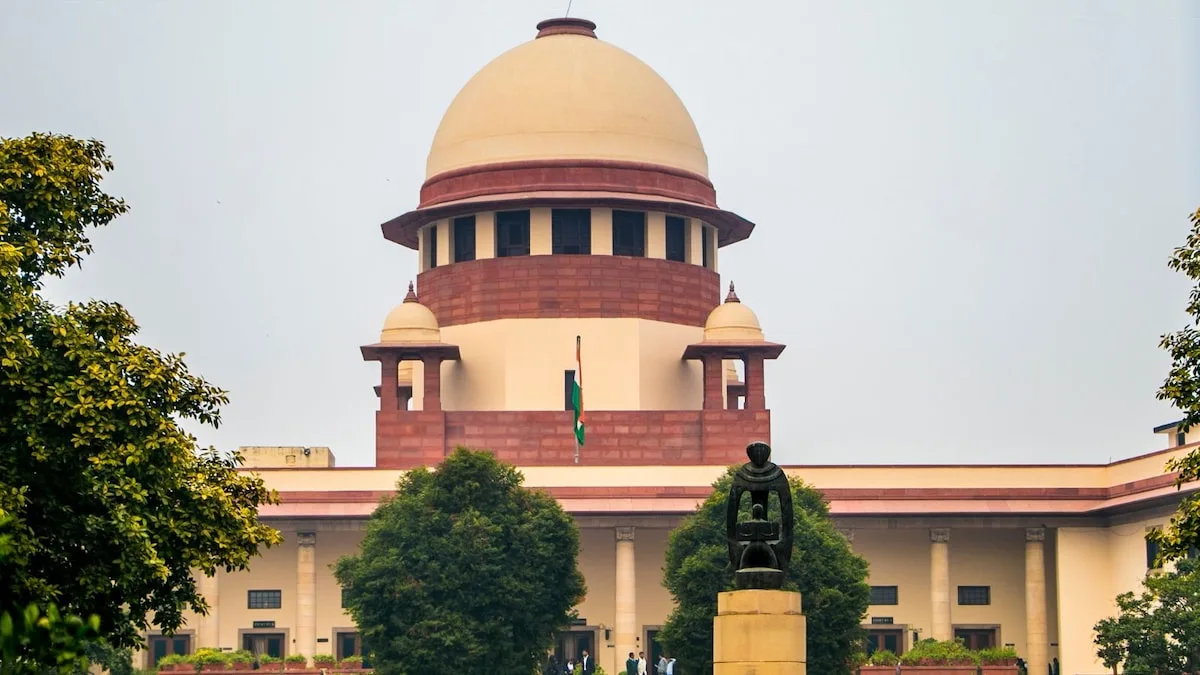
When the Supreme Court delivered its October 15, 2026, ruling in Just Rights for Children Alliance v. S. Harish, it directly challenged the growing political appetite for blanket digital bans. Facing mounting pressure to address online dangers, a bench comprising Justice J.B. Pardiwala and Justice K. Vinod Chandran established that access to and use of the internet is a fundamental right for every individual, including children, under Article 21 and Article 19(1)(a) of the Constitution. Rather than permitting governments or platforms to lock young people out of the digital world entirely, the apex court ordered technology companies and regulators to shoulder the burden of filtering out child sexual exploitation and abuse material while preserving constitutional freedoms.
That reading cuts against the grain of conventional policymaking, which often treats children as liabilities to be shielded offline rather than citizens with rights to be protected online. The justices dismantled the rationale of broad bans by pointing out a practical reality: total restrictions do not stop children from connecting; they simply push young users toward unregulated websites and darker corners of the web where risks multiply. Our children, irrespective of their age enjoy the same rights, and to deny the same altogether would be as absurd as saying children below a certain age do not have a conscience worth protecting or a freedom of speech worth expressing,
the bench stated, as per Live Law.
Why Did The Supreme Court Reject Blanket Bans Now?
The urgency behind this ruling stems from a surge of petitions and concerns over the circulation of illicit digital material via social media promotions, links, and paid content. In response, some authorities and interest groups advocated for sweeping age-based exclusions. The court rejected those proposals as unproven and disproportionate, noting that freedom of speech and expression inherently includes the right to know, receive, and share information. For children in remote areas, the internet serves as a vital educational lifeline, while for children with special needs, online platforms provide essential connections to peers facing similar experiences.
That leaves the Union government, technology intermediaries, and law enforcement facing a stark new compliance landscape. Instead of hiding behind wholesale bans, platforms must build sophisticated interception mechanisms. The court ordered the creation of a national database of known child sexual exploitation and abuse material hashes and URLs, requiring entries to be verified by at least three trained human analysts. Significant social media platforms must adopt hash-matching systems, remove prohibited material immediately, and handle newly identified material within two hours. Furthermore, platforms must acknowledge complaints within 24 hours, publish monthly compliance reports, and face independent audits alongside potential financial penalties linked to corporate turnover.
Who Gains And Who Loses Under The New Legal Framework?
The decision draws a sharp line between punishing young users and holding corporations accountable. The clear losers are major technology intermediaries and social media platforms that have long deflected responsibility for the content circulating on their networks. Under the court's directives, those companies can no longer rely on passive moderation or plead helplessness; failure to block and demonetize harmful content now carries heavy financial and regulatory consequences.
Conversely, children and digital rights advocates emerge as the primary beneficiaries, securing constitutional protection for their digital presence. Yet, the judgment also protects young people from another emerging threat: the privacy invasions tied to aggressive age-verification schemes. The bench expressed deep concern that mandatory age-checks require the continuous collection of sensitive personal data, paving the way for unwarranted surveillance and data misuse.
- Children and minors, who retain guaranteed access to education, communication, and expression online.
- Social media platforms and online intermediaries, which face strict liability, rapid removal windows, and mandatory audit regimes.
- The Union government, specifically the Ministry of Electronics and Information Technology and the Ministry of Law and Justice, tasked with overseeing implementation and amending the IT Act and IT Rules.
- Law enforcement agencies, which gain a structured national hash-and-URL database to track confirmed abuse material.
How Did The Court Shape Child Safety Measures Instead?
Rejecting a ban does not mean abandoning safety. The court made clear that proportionate, age-appropriate safeguards remain vital. Rather than locking children out, the bench proposed practical tools designed to fence off dangers without shutting the door on development.
- October 15, 2026: Justices J.B. Pardiwala and K. Vinod Chandran hand down the ruling in Just Rights for Children Alliance v. S. Harish, declaring internet access a fundamental right for children.
- Within two hours of identification: Significant social media platforms must verify, remove, and report newly identified exploitation material using encrypted hash-and-URL databases.
- Within 24 hours: Platforms must formally acknowledge user complaints submitted through newly strengthened reporting mechanisms.
- December 10, 2026: The Union government must file a formal affidavit detailing its progress and steps taken to frame operational rules and guidelines.
The proposed safeguards rely on parental guidance, consent, and oversight. The bench suggested introducing dedicated child-mode accounts featuring private-by-default settings, restrictions on direct messages from unknown adults, and tighter moderation of advertisements. These measures place the guardrails around the experience rather than locking the user out of the room entirely.
What Arguments Did The Critics Raise?
Defenders of stricter age limits argued that the digital ecosystem is inherently toxic for minors, pointing to rising rates of cyberbullying, exploitation, and compulsive platform usage. From that perspective, blanket restrictions and rigid age-gated lockouts represent a necessary defensive wall against harms that corporate self-regulation has failed to curb. Critics also warned that leaving enforcement to parental consent mechanisms places an unmanageable burden on families who lack the technical literacy to monitor sophisticated algorithms.
The Supreme Court acknowledged those severe risks but maintained that total exclusion creates a worse paradox. When children fear punishment or scolding from parents for simply using the internet, they hide online threats rather than reporting abuse. Any blanket restriction on the access of internet by children is nothing more than unproven measures of proven disproportionality,
the court observed.
The harder question is whether the Union government and technology platforms can successfully operationalize the court's strict technical mandates before the December 10 hearing. As ministries race to draft the required standard operating procedures and database rules, the true test of this historic ruling will be whether tech companies can execute rapid content removal without building the exact mass-surveillance apparatus the judiciary warned against.