Meerut Court Sentences Muskan Rastogi and Sahil Shukla to Death for Murder
A Meerut court has sentenced Muskan Rastogi and Sahil Shukla to death for murdering her husband Saurabh Rajput and sealing his remains in a drum.
- Headline: Meerut Court Sentences Muskan Rastogi and Sahil Shukla to Death for Murder
- Dispatch Summary: A Meerut court has sentenced Muskan Rastogi and Sahil Shukla to death for murdering her husband Saurabh Rajput and sealing his remains in a drum.
- Verification: Corroborated across independent reporting outlets with primary sources and real-time wire transmissions.
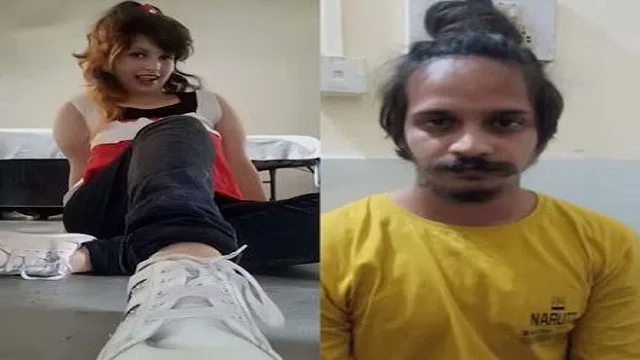
Meerut Court Sentences Muskan Rastogi and Sahil Shukla to Death for Murder
A local court in Meerut has sentenced Muskan Rastogi and her lover, Sahil Shukla, to death for the murder of her husband, 29-year-old former Merchant Navy officer Saurabh Rajput. District Judge Arvind Kumar Mishra pronounced the verdict on Wednesday, October 14, 2026, concluding an intense legal proceeding that saw 126 court hearings and statements from more than 22 witnesses following a trial that began in July 2025.
The case, widely known as the blue drum murder, gripped public attention across India after Rajput’s dismembered remains were discovered sealed inside a large blue plastic drum filled with a wet compound of sand, water, and cement at the couple's Indra Nagar home. Both convicted individuals are currently lodged in Meerut’s Chaudhary Charan Singh Jail and have been ordered to pay fines of Rs 50,000 under Section 302 and Rs 20,000 under Section 238A.
How Did the Crime Unfold Behind Closed Doors?
According to the police case and prosecution, the premeditated conspiracy began on March 3, 2025, when Muskan Rastogi sedated her husband, Saurabh Rajput, by lacing his food at their Indra Nagar residence. Her schoolmate-turned-partner, Sahil Shukla, arrived shortly after the sedative took effect. The duo stabbed Rajput to death before dismembering his body in the bathroom.
To suppress the odour of decomposition and conceal the evidence, the couple packed the body parts into the large blue plastic drum and sealed it with the concrete mixture. The prosecution successfully argued that the crime fell into the rarest of rare category. Advocate Krishan Kumar Dubey elaborated on the chilling nature of the execution during the proceedings:
She killed her husband—whom she had married out of love—and then dismembered his body into three parts for disposal, hiding the remains in a blue drum. It was a meticulously planned conspiracy and strategy. She executed the murder with a calm and composed mind. Consequently, the death penalty was the appropriate punishment for such a premeditated killing.
Advocate Krishan Kumar Dubey, via Babushahi.com
The day after the murder, Rastogi and Shukla fled to Himachal Pradesh. During their time away, Rastogi used Rajput’s mobile phone to send text messages to his family members, creating a false illusion that he was alive and travelling for business. Photographs during the investigation later tracked the pair travelling to Shimla before the grim discovery of the drum led to their arrest.
What Arguments Did the Defense Raise Against the Death Penalty?
Facing overwhelming forensic and circumstantial evidence, the defense attempted to sway the court by pointing to personal circumstances. Advocates argued that no one actually witnessed the murder take place and highlighted the fact that both accused have daughters, with Rastogi's family even telling the court earlier that Rajput was a good person and that they would not oppose capital punishment.
District Judge Arvind Kumar Mishra ultimately set those defense arguments aside, observing that such brutal crimes create fear in society. Advocate Krishan Kumar Dubey noted the courtroom atmosphere upon the delivery of the sentence, stating:
The court has also imposed fines of Rs 50,000 under Section 302 and Rs 20,000 under Section 238A... They appeared to be in a state of shock; they were stunned. One can imagine the mental state of someone facing the death penalty. The defense had presented arguments—such as the fact that no one actually witnessed the murder and that both accused have daughters—but these were all set aside because the evidence presented by the prosecution was so strong, significant, and precise that it conclusively proved their guilt.
Advocate Krishan Kumar Dubey, via Babushahi.com
Public scrutiny surrounding the trial was immense. Outside the courtroom earlier in the proceedings, lawyers assaulted Sahil Shukla, leaving his clothes torn, while Muskan remained largely silent during police questioning and court appearances.
Regarding family welfare, legal representatives noted that Rastogi's daughter can stay with her mother for six years.
What is the Chronology of the Blue Drum Investigation?
- March 3, 2025: Muskan Rastogi drugs Saurabh Rajput's food at their Indra Nagar home, and Sahil Shukla arrives to help stab and dismember him before sealing the body in a blue drum with concrete.
- March 4, 2025: The perpetrators flee to Himachal Pradesh while using Rajput's mobile phone to send misleading messages to his family.
- July 2025: The formal court trial begins in Meerut, initiating a process spanning nearly 13 months.
- September 30, 2026: A Meerut court formally convicts Muskan Rastogi and Sahil Shukla for murder and destruction of evidence.
- October 14, 2026: District Judge Arvind Kumar Mishra sentences both convicts to death and imposes financial penalties.