Army postpones detonation of lead azide in Iowa until Monday
Following bipartisan backlash and a federal lawsuit over airborne lead hazards, the U.S. Army delayed a controlled explosion of degraded munitions at the plant until Monday.
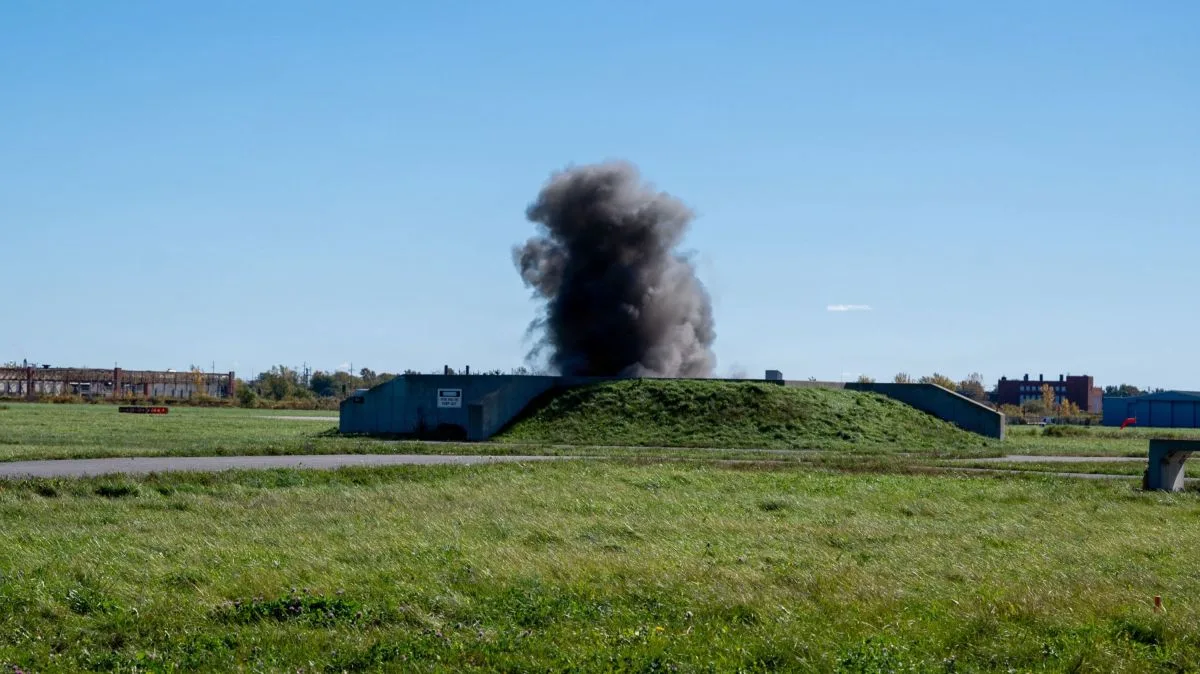
Thousands of residents and school children across southeast Iowa and neighboring Illinois will head into the weekend with unexpected breathing room after the U.S. Army reversed course under mounting political and legal pressure. Acting Secretary of the Army Adam Telle announced Thursday evening that a planned controlled explosion of unstable munitions components at the Iowa Army Ammunition Plant in Middletown would be pushed back from Friday to Monday, Nov. 23.
That eleventh-hour reprieve comes after a week of frantic local preparations, emergency court filings, and blunt warnings from public officials who accused military leadership of keeping communities in the dark about airborne lead hazards. School districts in Danville and Mediapolis had already pulled the plug on Friday classes, while firefighters in Mediapolis planned to hose down public playgrounds against settling lead dust.
From Discovery to Emergency Permit in Middletown
The crisis began in March when staff at the Middletown facility paused operations as part of a review and discovered that several dozen barrels containing lead azide had degraded, creating a highly volatile chemical compound used to detonate munitions. Army officials maintain that moving the crystallized material risked an accidental, catastrophic explosion, a danger that compounds as winter temperatures drop.
To neutralize the threat, the U.S. Environmental Protection Agency issued an emergency permit on Nov. 13 allowing the plant to conduct a controlled blast. The Army planned to surround the barrels with concrete and earthworks while watering down the soil to trap escaping particles. Yet public awareness lagged behind bureaucratic approvals. Although the Army hosted an open house in Middletown on Oct. 15, a public advisory issued Sunday marked the first time many outlying communities within a 100-mile radius learned they sat directly in the path of a projected lead-dust plume.
Bipartisan Backlash and a Federal Lawsuit
That communication gap triggered a furious bipartisan backlash as the clock ticked down toward Friday noon. Governor-elect Rob Sand denounced what he termed an unacceptable lack of clarity, demanding to know why alternative chemical neutralization methods were discarded. Senator-elect Josh Turek echoed those frustrations, drawing a personal parallel to his own family history with airborne toxins as he pressed for immediate transparency.
The public deserves to know, if this is the safest option, why other options were worse. If it isn’t as safe as possible to do this tomorrow, it shouldn’t happen tomorrow.
Rob Sand, Governor-elect, via The Hill
The political pressure was matched by direct legal action. Earthjustice filed a petition on Thursday in the 8th U.S. Circuit Court of Appeals on behalf of the Iowa Environmental Council and the Sierra Club’s Iowa chapter. The lawsuit sought an emergency hold on the EPA permit, arguing that regulators failed to demand adequate safeguards or properly weigh safer disposal alternatives before greenlighting an explosion that would shower surrounding towns with toxic heavy metals.
Scientific Uncertainty and Fractured Local Trust
Public health experts point out that the true scope of the atmospheric fallout remains genuinely uncertain. While EPA modeling suggested that resulting air concentrations would remain below federal intervention thresholds, independent toxicologists warned of potential neurological risks, particularly for young children exposed to lead dust. Pat Wallace, superintendent of Danville schools, captured the prevailing local anxiety when explaining his decision to cancel classes.
The reality is that we simply do not know exactly what conditions will look like Friday afternoon,
Wallace wrote.
Illinois Governor JB Pritzker noted that his administration was actively monitoring potential impacts across Mercer County and neighboring Illinois communities located just over 10 miles from the detonation site. Meanwhile, extension offices in Des Moines County fielded panicked calls from residents desperate to protect livestock and backyard vegetable gardens from settling particulates.
The Narrow Window Prior to Freezing Temperatures
In his Thursday social media announcement, Telle stated that the three-day delay was carefully calibrated to push the operation to the absolute brink of a forecasted cold snap. Colder weather accelerates the chemical destabilization of degraded lead azide, leaving military engineers with an increasingly narrow calendar window.
Official statements from Army leadership insist that public safety remains paramount and that active engagement with regional stakeholders will continue through the weekend. Yet the episode exposes a deep structural vulnerability in how federal agencies coordinate high-risk hazardous disposal with civilian populations. The Army bought itself three days to mend frayed public trust, but when the blasts finally echo across Middletown on Monday, Nov. 23, they will detonate under an unprecedented level of public scrutiny and legal watchfulness.