Trump threatens EU tariffs over proposal to make Canada associate member
President Trump has labeled the EU's proposal to grant Canada associate membership a 'hostile act,' warning of retaliatory tariffs as Ottawa seeks to diversify trade.
European Commission President Ursula von der Leyen’s proposal to make Canada the EU’s first associate member has ignited a diplomatic standoff with the United States, as President Donald Trump accused European leaders of planning a “hostile act” and warned of retaliatory tariffs. The tension underscores shifting alliances in North America and Europe, with Canada seeking to reduce its economic dependence on the U.S. while the EU explores new strategic partnerships.
Trump’s Threats and the EU’s Proposal
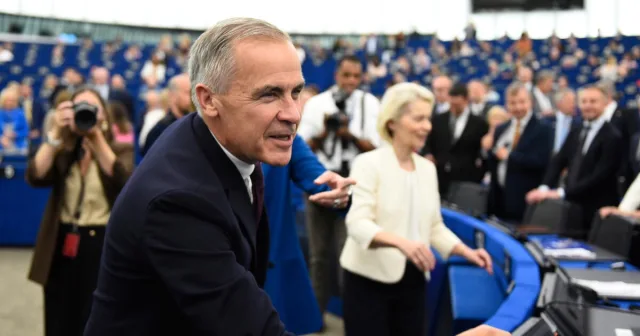
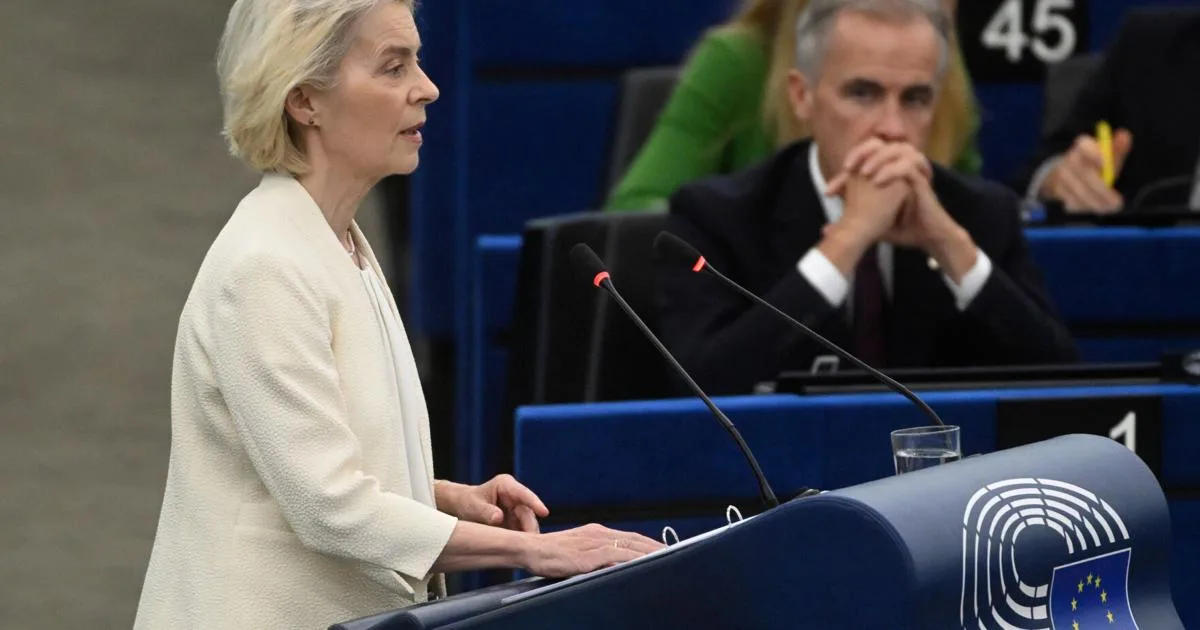
Von der Leyen unveiled the associate-member initiative during her annual State of the European Union address on September 16, 2026, in Strasbourg, France. The proposal, which would grant Canada expanded economic and political ties with the bloc without full membership, came as Ottawa seeks to diversify its trade relationships amid escalating friction with Washington. Trump, speaking hours later in Charlotte, North Carolina, dismissed the idea as “laughable” and claimed Canada was a “terrible trade partner,” warning that the EU’s move could trigger “very heavy tariffs” or even a trade shutdown.
Trump’s rhetoric aligns with his broader campaign to pressure Canada, which has faced a 50% tariff on goods imposed by the U.S. and threatened restrictions on dairy, alcohol, and auto imports. The president’s comments also reflect his long-standing skepticism of multilateral agreements, framing the EU’s overture as a challenge to American influence. “We’re carrying the European nations,” he said, suggesting the U.S. could sever trade ties with Europe over the issue.
Canada’s Strategic Shift
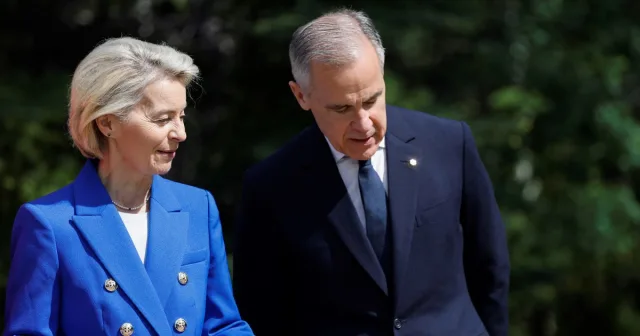
Canadian Prime Minister Mark Carney, who attended von der Leyen’s address, praised the EU’s vision for a “common prosperity and economic security space” but stopped short of endorsing associate membership. His office emphasized that Ottawa is pursuing a “unique alliance” with Europe, focusing on shared democratic values and economic cooperation rather than formal integration. Carney has previously argued that full EU membership would require sacrificing Canadian sovereignty, a concern echoed by Canadian officials familiar with the discussions.
The proposed associate membership would build on the Canada-EU Comprehensive Economic and Trade Agreement (CETA), which already eliminates tariffs on 99% of goods. However, the concept of associate membership remains undefined under EU treaties, with no clear framework for rights or obligations. Canadian officials have indicated they are exploring arrangements that would allow citizens to live and work in Europe without visas, while maintaining control over domestic policies.
Uncertainty Over EU’s Next Steps
The EU’s proposal has created confusion among member states, many of whom were reportedly surprised by von der Leyen’s announcement. While the European Commission has not provided specifics, the idea of an associate membership for Canada contrasts with its cautious approach to Ukraine’s membership aspirations, which were scaled back in May 2026. Analysts suggest the EU is testing new models of engagement amid geopolitical shifts, but the lack of clarity has left room for U.S. pressure.
Trump’s threats could complicate the EU’s plans, particularly given the bloc’s reliance on U.S. trade. The 2025 transatlantic trade agreement set a 15% tariff ceiling on most EU exports to the U.S., but Trump’s proposed tariffs could exceed this limit. European officials have yet to publicly address the president’s remarks, with some member states reportedly wary of provoking further U.S. retaliation.
| Detail | Information |
|---|---|
| EU’s Associate Membership Proposal | Unspecified under EU treaties; no formal definition or obligations outlined. |
| U.S. Tariff on Canadian Goods | 50% on select products, with planned restrictions on dairy, alcohol, and auto imports. |
| Canada-EU Free Trade Agreement (CETA) | Eliminates tariffs on 99% of goods, but requires ratification by 10 EU states. |
Frequently Asked Questions
What is the EU’s associate-member proposal for Canada?
The European Commission has not provided a formal definition for associate membership, which does not currently exist under EU treaties. The concept appears to involve expanded economic and political ties, including potential visa-free travel for Canadians, while avoiding full EU membership and its associated sovereignty concessions.
How has Canada responded to the EU’s proposal?
Canadian Prime Minister Mark Carney has welcomed the EU’s overture, describing it as part of a broader “unique alliance” with Europe. However, Ottawa has not endorsed associate membership specifically, emphasizing its focus on sovereignty and existing trade agreements like CETA. Canadian officials have indicated they seek closer cooperation without surrendering control over domestic policies.
The next critical step will be whether EU member states endorse the associate-member framework despite Trump’s threats. A Canada-EU summit in Montreal next month is expected to address further details, but the outcome remains uncertain. As the U.S. and EU navigate this standoff, the broader implications for transatlantic trade and global alliances will likely shape the coming months.
Dateline Wire is dedicated to independent, evidence-backed reporting. This briefing was synthesized from primary source reporting, corroborated across independent newsrooms, and verified against our Editorial Standards.