Alberta Voters Reject Independence Push and Back Staying in Canada
Albertans decisively rejected a nonbinding push to begin a separation process in a referendum, with 75% voting to remain part of Canada.
- Headline: Alberta Voters Reject Independence Push and Back Staying in Canada
- Dispatch Summary: Albertans decisively rejected a nonbinding push to begin a separation process in a referendum, with 75% voting to remain part of Canada.
- Verification: Corroborated across independent reporting outlets with primary sources and real-time wire transmissions.
Albertans stepped to the ballot box on Monday under intense political gravity, promised a chance to redraw the map of North America, only to return a decisive verdict. With more than 1.8 million valid votes counted and results reported from 84% of voting areas, 75% of voters supported remaining in Canada, while 25% backed beginning a process toward separation, according to unofficial results from Elections Alberta. The Guardian reported that nearly 1.9 million votes were counted, with roughly 76% supporting Canada and 24% backing the start of a separation process.
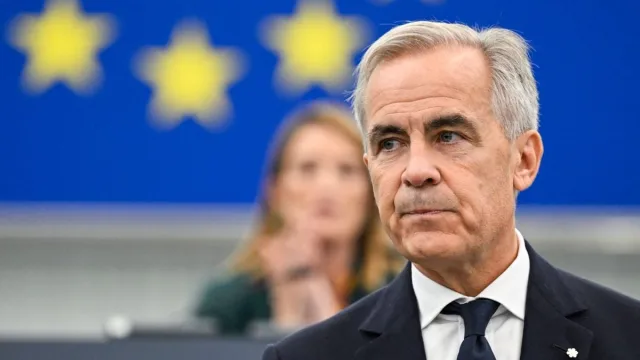
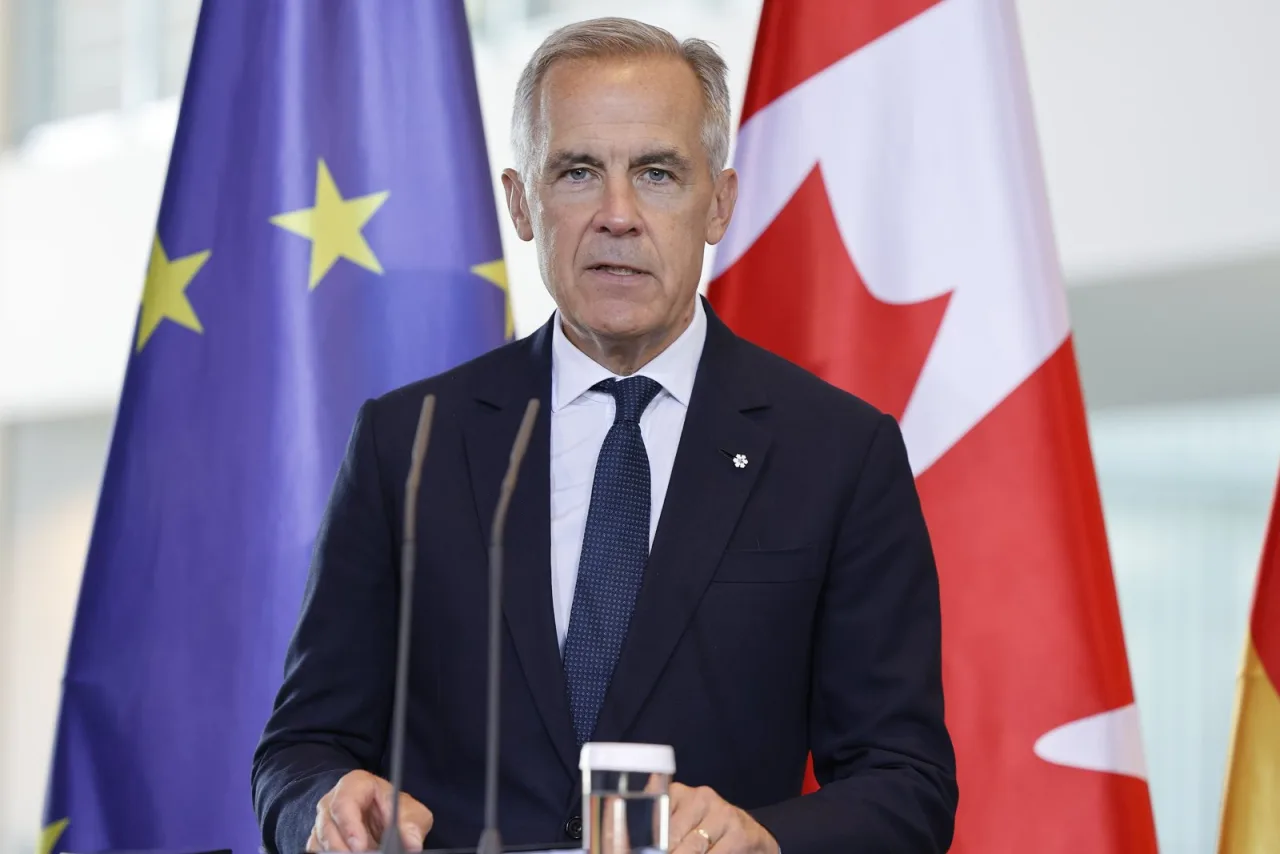
The vote delivered a much-needed political boost to Prime Minister Mark Carney as he seeks to maintain national unity amid U.S. President Donald Trump’s trade war and threats to make Canada the 51st U.S. state. The ballot question did not ask Albertans to decide directly whether to leave Canada. Instead, Question 10 asked whether the province should remain in Canada or whether its government should begin the constitutional process required to hold a binding provincial referendum on separation. The question itself was nonbinding.
Promises of Autonomy Face Reality at the Polls
The referendum followed a citizen initiative organized by Stay Free Alberta, whose proponent Mitch Sylvestre submitted a petition to Elections Alberta on May 4, 2026. Stay Free Alberta said it delivered 301,620 signatures, while Elections Alberta initially counted 286,593 and deemed 279,337 valid before using statistical sampling to estimate that 222,597 signatures could be verified, exceeding the statutory threshold of 177,732. The petition ran into a legal obstacle when the Alberta Court of King’s Bench issued a temporary stay on April 10, and Justice Shaina Leonard ruled in May that the petition was unconstitutional because the required consultation over potential effects on First Nations treaty rights had not taken place.
Despite the court ruling, Alberta Premier Danielle Smith announced on May 21 that her government would put a separation question on the October ballot anyway. Smith said she believed voters should have the opportunity to express their views on an issue that had become increasingly prominent in provincial politics. The provincial referendum included 10 questions, with the other nine addressing issues such as immigration, eligibility for publicly funded services, and constitutional changes. Delays at roughly 100 of the 1,400 polling stations across the province pushed results back by more than two hours after late openings forced stations to extend voting hours on Monday.
For decades, Alberta’s political culture has aligned more closely with the American West than much of Canada, fueled by deep-seated resentment toward Ottawa over energy development, climate policy, and provincial powers. Home to the world’s fourth-largest proven oil reserves, the province has long seen its economic might clash with federal priorities. Former Premier Jason Kenney noted that separatist parties traditionally attracted only 1% or 2% of the vote, but opposition to federal COVID-19 restrictions and vaccine requirements helped mobilize activists who later embraced the separatist movement. That resentment manifested in conflicting motivations at the ballot box. Edmonton voter Shawn Campbell said he voted to begin the separation process even though he doesn’t want Alberta to leave Canada, explaining It sends a message to Ottawa that Albertans are not happy,
via The Associated Press. Dustin Degenhardt, a voter in Wainwright, said after voting on Monday that Alberta has essentially been treated as, you know, a colony. They want to take and take and take from us, and not return anything,
via The Associated Press.
Relief in Ottawa and Divisions in Edmonton
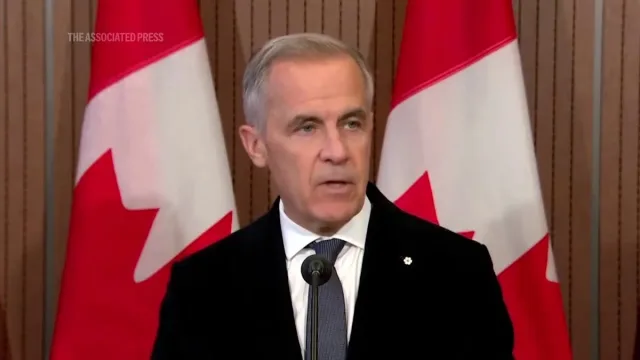
Prime Minister Carney welcomed the result, telling reporters before a Cabinet meeting in Ottawa that The result is absolutely clear. It’s a vast majority in favor of staying in Canada. And now is the time to work together for all Albertans and all Canadians,
via The Associated Press. Carney added that Albertans had chosen unity and that the outcome would help the country pursue shared economic priorities, including trade diversification, infrastructure, and energy development. In a formal statement reported by ABC News and The Guardian, Carney said, Albertans made a clear choice. They chose unity, to build together, and to take care of each other. Above all, Albertans chose Canada.
Carney also noted that the roughly one quarter of Albertans who voted to begin the separation process did not necessarily want independence, suggesting only a smaller hard-core group actually wanted to leave.
Premier Smith also welcomed the early results, posting on social media that Albertans have voted for a stronger Alberta in a united Canada,
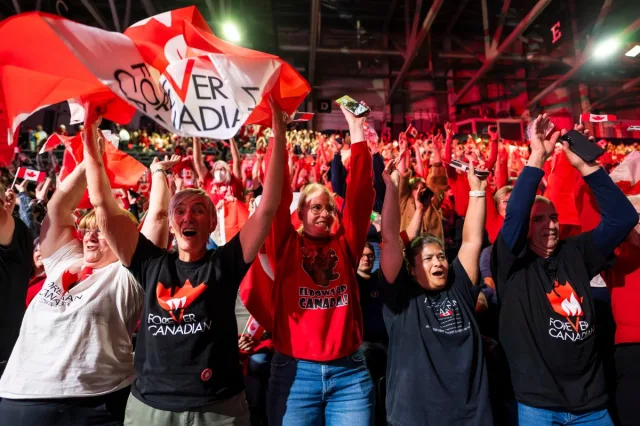
via The Associated Press and The Guardian. Smith’s tenure as leader of the governing United Conservative Party has been precarious, caught between separatists within her conservative base and Albertans who oppose independence. Thomas Lukaszuk, a former Alberta deputy premier who led the Forever Canadian campaign against separation, told supporters We are a solid country that’s united from coast to coast to coast,
via The Associated Press. Assembly of First Nations National Chief Cindy Woodhouse Nepinak praised the outcome in a written statement reported by The Star, saying that people of Alberta and First Nations stood together and chose a future in Canada built on Treaty and sharing, over division and chaos,
adding that voters turned out in huge numbers and stood up for our shared past, present and future in Canada and rejected a divisive proposal that would bring needless upheaval, conflict and uncertainty for everyone.
Separatist leaders made clear they intend to keep pushing. Keith Wilson, a leader of the separatist movement, acknowledged the defeat while noting It is fair to say that at least a quarter of Albertans feel that Alberta needs to be treated better,
via The Associated Press and The Guardian. Jeffrey Rath, a separatist lawyer and co-founder of the Alberta Prosperity Project, argued that the movement’s support remains politically significant and criticized Smith’s leadership. Rath also indicated he would push for a special general meeting of the UCP to remove Smith, arguing that Alberta independence will remain a dream as long as an avowed federalist remains in power.
Economic Strains and Indigenous Opposition
The referendum carried heavy financial and social costs that troubled many residents. Dave Malka, 59, of Edmonton, criticized spending money on what he called a referendum on a referendum rather than healthcare, noting It seems to be happening at the absolute worst time when we should be united. Instead we’re fighting among ourselves,
via The Associated Press. One radio host posted on social media that Someone owes Albertans $130m for this theatrical waste of taxpayers’ money,
cited by The Guardian. Pollster David Coletto told The Guardian that residents felt the referendum was a distraction from real threats, stating There was almost a general sadness about the wasted energy spent on this rather than the more real threats they see, including the Trump administration. Most Albertans feel deep grievances with the federal government while also being proudly Canadian. The marriage may be rocky at times, and most Albertans want to see some thing changed, but very few are willing to see the marriage end.
First Nations opposition proved to be a formidable legal and political barrier. The Athabasca Chipewyan First Nation and the Blackfoot Confederacy challenged the petition in court, successfully arguing that required consultations over treaty rights had not taken place. Independent analysts also highlighted the profound structural hurdles facing any future separation bid. Independence would raise major questions regarding:
- Constitutional status
- Trade arrangements
- Public finances
- Indigenous treaty rights
- Negotiations over the economic relationship with Canada
Ian Brodie, a prominent conservative and political scientist at the University of Calgary who served as chief of staff to former prime minister Stephen Harper, dismissed current independence organizers as nobodies, pointing out that even on a very soft question they could not gain real traction in the Olds Didsbury district, which famously elected a Western Canada Concept separatist in a 1982 provincial byelection. Meanwhile, Calgary Mayor Jeromy Farkas argued before the results that the city's best future remains as a Canadian city, telling The Guardian I am Canadian because I’m Canadian, not in a transactional way and regardless of the flavour of prime minister. And I’m going to continue to make the case for how our future is strongest together, because no result will permanently put this to bed.
What Readers Should Watch For Next
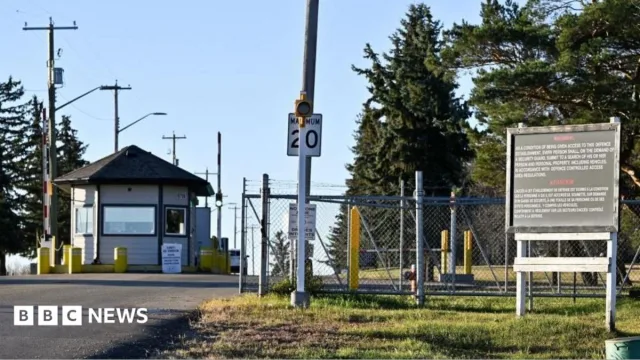
Prime Minister Carney and Premier Smith spoke on Tuesday morning following the vote to discuss greater federal-provincial cooperation, including immigration. Carney noted that their first priority was supporting victims and families affected by the incident at Canadian Forces Base Wainwright. Smith addressed Albertans on Tuesday evening to discuss the referendum results and Alberta’s future.
Separatist organizers have signaled they will use the 25% voting bloc to pressure provincial leadership and agitate for internal party changes within the United Conservative Party. With official results due on October 29, the debate over provincial autonomy versus federal unity is set to persist in legislative halls even as the immediate constitutional challenge has been turned back by voters.