Democrat Scott Colom wins Mississippi Senate race
Democrat Scott Colom has won a historic U.S. Senate race in Mississippi, narrowly defeating Republican incumbent Cindy Hyde-Smith by more than 4,500 votes.
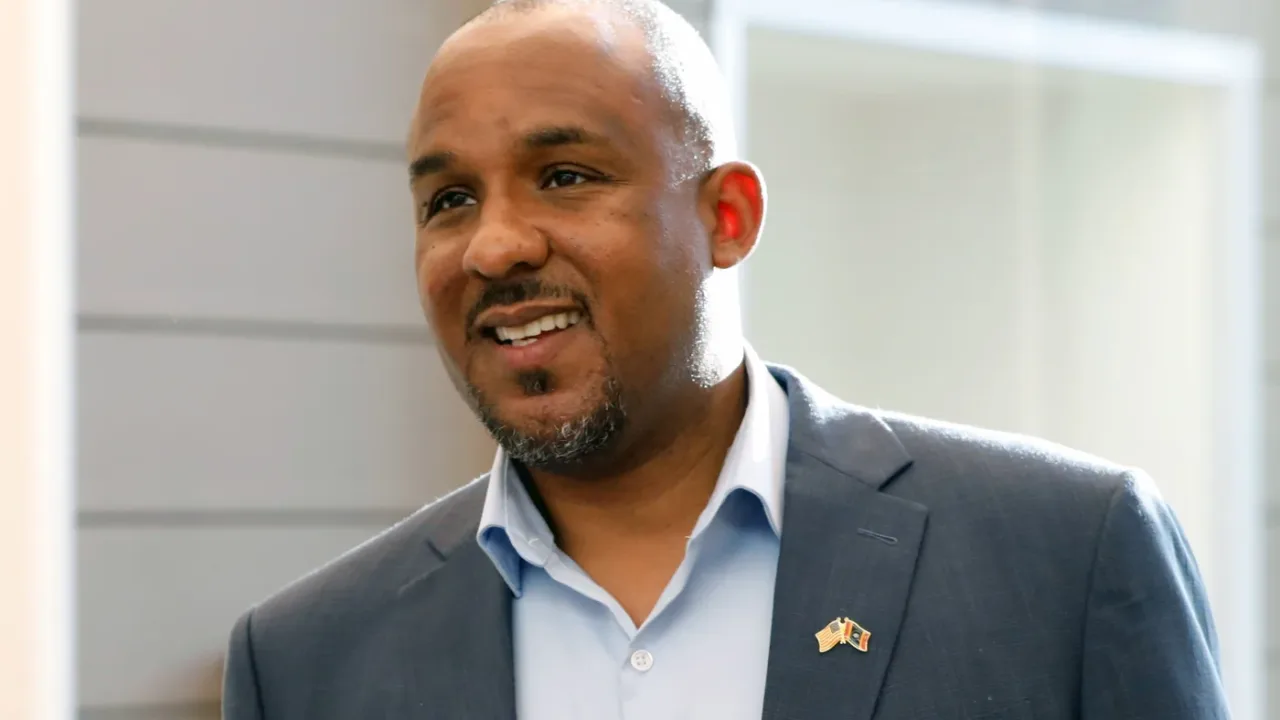
Democrat Scott Colom has won election to the U.S. Senate from Mississippi, defeating Republican incumbent Sen. Cindy Hyde-Smith after a final count on Wednesday that concluded a prolonged ballot counting process of outstanding absentee and affidavit ballots. The race was called by media outlets including the Associated Press, CBS News, and CNN, sealing a historic upset in a deep-red state where President Donald Trump won by 23 points in 2024, or 20 points according to CBS News figures. Colom becomes the first Black senator elected in Mississippi since the Reconstruction era — specifically since 1874, according to the South China Morning Post — and the first Democrat from the state headed to the Senate in 44 years, with Mississippi having not elected a Democrat to the chamber since 1982. Colom spoke during a news conference on November 10, 2026, at the Hinds County Sheriff's Office in Jackson, Mississippi.
Majority Expansion and National Repercussions
The outcome delivers Democrats an eighth flipped Senate seat after a dramatic contest that remained up in the air for days. With this projected victory, Democrats add yet another seat to their majority, positioning the party to control a 55-44 advantage in the 100-member Senate, with Alaska's Senate race still a toss-up. The victory also adds to a national drubbing and a series of defeats for President Donald Trump's party in several Republican-controlled states, bolstering arguments that the future for some Democrats runs through the American South.
That expansion of the Senate majority underscores how national headwinds on affordability and foreign policy managed to breach reliably red territory. Colom, 43, is a district attorney for the 16th judicial district in Mississippi and a seventh-generation Mississippian. He campaigned heavily on economic anxiety in a rural, agriculture-heavy state disproportionately impacted by rising prices, tariffs, and the Iran war, calling to raise the minimum wage, expand Medicaid access, support farmers, and address the rural hospital crisis. Hyde-Smith, 67, had been in the Senate since 2018 after being appointed by then-Gov. Phil Bryant when Thad Cochran resigned, and subsequently winning a special election runoff in 2018 and a full term in 2020. Both times she defeated Democrat Mike Espy, a former U.S. agriculture secretary who had also been Mississippi's first Black congressman since Reconstruction. Hyde-Smith made history as the first woman elected to represent Mississippi in Congress, but she faced attacks from Colom arguing she was out of touch and indifferent to rising grocery and gas prices during Trump's second term.
Scott Colom, via France 24
They actually deserve a senator that will listen to them, that actually cares about what they think, actually cares about what they're going through,
Colom said during the campaign that he could represent all of Mississippi, stating, It's got to be about having a party that represents rural America again, suburban America, urban America – a party that makes sure we actually deliver for voters in ways that make their lives better, and we don't come up with excuses as to why we can't do it.
How the Campaign Gained National Momentum
Mississippi has the highest share of Black voters in the country at close to 40 percent, and Colom's victory was fueled by strong turnout in the Mississippi Delta and its concentration of majority-Black counties. National Democrats were initially criticized for ignoring the state, leaving Mississippi out of a $40-million investment in 10 battleground states ahead of the November midterm election. Colom told NPR earlier this month that a lack of investment from national Democrats until the last minute was a mistake, stating, The reality is, Mississippi has never been a lost cause, we've been a betrayed cause.
Senate Majority PAC eventually announced a $1.2 million ad buy on Oct. 20, and the Cook Political Report changed its rating from solidly Republican to leaning Republican as affordability issues and an unpopular war in Iran created headwinds across the map. Black senators, including Georgia's Raphael Warnock and Maryland's Angela Alsobrooks, urged donors and party leaders early to see the contest as winnable. Senate Majority Leader Chuck Schumer helped Colom raise money, and he drew financial support from other outside players, including Illinois Gov. JB Pritzker. Figures like former President Bill Clinton, former Vice President Kamala Harris, former President Barack Obama, and Senator Raphael Warnock made high-profile visits or recorded endorsements in the closing weeks.
Scott Colom is the only person who could've gotten this done,
Senate Majority Leader Chuck Schumer wrote. Along with his staff and volunteers, Scott ran the campaign of a lifetime and re-imagined what's possible for Democrats in the South.
The Viral Protein Comment and Campaign Tactics
Affidavit ballots are Mississippi's term for provisional ballots that voters cast if they don't have their identification with them at the polls or were listed as having inactive voter registrations. In the weeks before Election Day, over 200,000 Mississippi voters were shifted to inactive status after the state used unverified commercial credit data to maintain its voter roll, which forced thousands of people to vote by affidavit, according to The Atlantic. Each ballot then had to be reviewed by county election commissioners in a public meeting. The race appeared extremely close the day after the election, when at one point just a few dozen votes separated the candidates, before Colom's lead strengthened over more than a week of counting to secure victory by more than 4,500 votes, capturing 49.19 percent of the total ballots cast according to CNN projections.
The race turned dramatically when Hyde-Smith responded to questions about high beef prices in February by suggesting that consumers have so many other proteins to choose from. Colom weaponized the remark in a viral campaign ad that reached over 6.3 million views, featuring incredulous voters mocking the suggestion. One voter quipped back in the spot, Pick another protein? Shiiii– I'd rather pick another senator instead.
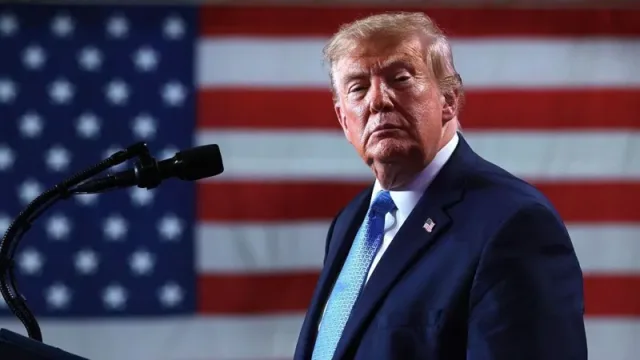
In contrast, Hyde-Smith rarely spoke to reporters in Washington and maintained a minimal presence in the state during the final stretch. When President Trump came to Corinth, Mississippi, in late October for a rally, Hyde-Smith was called to the stage and delivered nine words in six seconds: Is this not the best president in our lifetime?
I love that,
Trump replied when he continued his 80-plus minutes at the microphone. Sometimes they get up and they talk for 10 minutes.
Colom utilized a different tactic, walking the line of Trump supporters outside the gates in Corinth to introduce himself, ask about their concerns, and discuss his priorities without taking personal jabs at the president or people who voted for him. Instead, he consistently put the onus on Hyde-Smith, framing her as a non-entity in Washington, a critique that resonated in a state accustomed to long-serving senators like Thad Cochran, Trent Lott, and John Stennis, who all rose to powerful posts and routed federal money back to Mississippi.
Bitter Judicial Precedent and Concession
The contest carried intense personal history between the two candidates stemming from a 2023 clash over federal nominations. President Joe Biden had nominated Colom to be a U.S. District Court judge in the Northern District of Mississippi, a choice backed by senior Republican Sen. Roger Wicker and former Gov. Haley Barbour, who is also a former national Republican chairman. Hyde-Smith blocked the confirmation using the Senate blue-slip tradition, refusing to return her slip.
At the time, Hyde-Smith declared that she was concerned about Scott Colom's opposition to legislation to protect female athletes and claimed that significant support from philanthropist George Soros weighed against his nomination. I simply cannot support his nomination to serve on the federal bench in Mississippi for a lifetime,
she said then. Colom said his Senate bid was never about getting even with Hyde-Smith. On election night, Hyde-Smith prematurely told supporters, I blocked Scott Colom from being a federal judge, and you blocked him from being a U.S. senator.
A spokesman for Hyde-Smith confirmed that she called Colom to concede on Wednesday afternoon.
Colom concluded his campaign with an ad filmed at the Jackson home of Medgar Evers, the civil rights leader who was assassinated in 1963 in his driveway by a white supremacist in front of his family for voter registration efforts. In the spot, Colom told the story of Evers' military service at Normandy in World War II, his voter registration efforts, his assassination, and the three decades it took to win a conviction.
Scott Colom, via France 24
In Mississippi, no one is above the law, and no one should be outside its protection,
Reflecting on the historic nature of his win during the extended ballot count, Colom emphasized his responsibility to younger generations, stating, My job is to do well enough as the next United States senator that the next time some young Black boy or girl has the work ethic, the vision, and the values, and they want to be United States senator, that nobody says because of anything I’ve done that they shouldn’t get a chance.
Updated 2 times since publication; last update 12 November 2026, 11:41.