House Republicans Elect Jim Jordan as Minority Leader Following Midterms
House Republicans have elected Ohio Rep. Jim Jordan as their new minority leader following a midterm election rout that left Democrats with a majority. Jordan defeated House Majority Leader Steve Scalise 106 to 73 in a secret ballot.
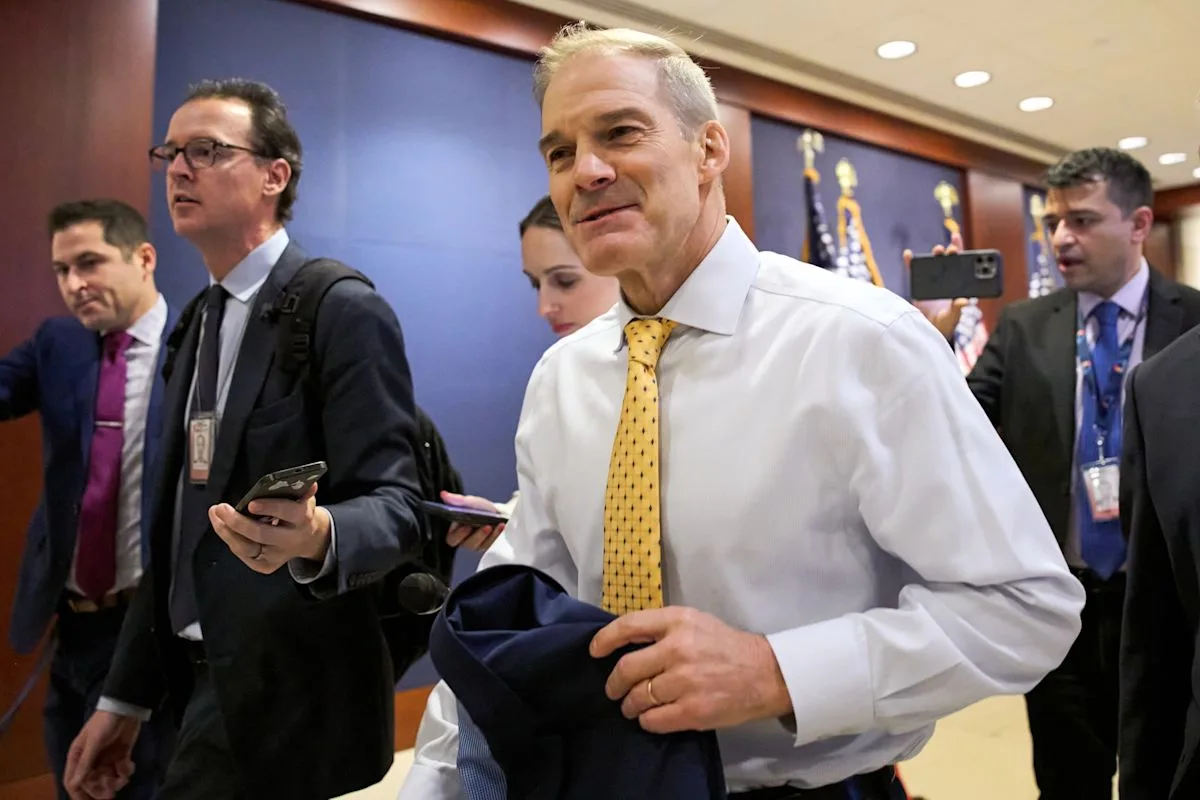
Ohio Rep. Jim Jordan secured 106 votes to defeat House Majority Leader Steve Scalise, who garnered 73 votes in a secret ballot, as House Republicans chose their new leadership following a midterm election rout that left Democrats holding a 254-166 margin over Republicans going into the 120th Congress, with 15 races still undecided. That sweeping Democratic majority triggered an immediate scramble for direction among congressional Republicans and prompted Speaker Mike Johnson to announce he would not stand for election as minority leader.
The transition puts Jordan, a co-founder of the hard-right House Freedom Caucus and current chairman of the House Judiciary Committee, in charge of the party's opposition in the upcoming Congress. Al Jazeera reported that Jordan described himself as a battle-tested leader in a letter to fellow Republicans before Tuesday's vote, writing, I know what it will take to lead our Conference in the minority, to stay unified, and to coordinate and calibrate our response to the Democrats’ tactics
. House Freedom Caucus Chairman Andy Harris congratulated Jordan after the vote, calling him a fierce fighter, uniter, principled conservative, and relentless advocate for the American people
via a statement reported by Al Jazeera, adding that Jim is exactly the right man for the job to fight back against the radical, crazy agenda of Democrats
.
Leadership Shakeup in the House and Senate
The Republican leadership elections on Capitol Hill on Tuesday followed a bruising election cycle that prompted dozens of Republican National Committee members to send a letter demanding a 30-day delay to evaluate losses. That appeal was bypassed in both chambers, though Senate Republicans spent their morning in what was described as a frank discussion rather than immediate voting before approving Sen. John Thune of South Dakota by acclimation to remain the conference's leader in the minority. Yahoo reported that Thune stated on X that he appreciated the opportunity to have an open, honest, and transparent conversation with his colleagues, emphasizing that the Republican team remains united in our commitment to advancing conservative priorities, working with President Trump and our colleagues in the House, and holding the line against Democrats’ efforts to enact their far-left liberal agenda
.
The House contest mirrored the 2023 speakership battle that followed the ouster of Kevin McCarthy, where Jordan, Scalise, and current Whip Tom Emmer all vied for the gavel before Johnson ultimately emerged following a three-week shutdown of the conference. This time, Scalise ran as part of the established leadership team that had served for more than a decade, while Jordan pitched himself as an aggressive counterweight to the incoming Democratic majority. Alongside Jordan's victory, Rep. Tom Emmer of Minnesota was elected to serve as GOP minority whip over Texas Rep. August Pfluger, and Rep. Lisa McClain of Michigan secured the No. 3 position as GOP conference chair by defeating Rep. Erin Houchin of Indiana and Rep. Greg Steube of Florida, according to multiple sources cited by Yahoo. In the Senate, the caucus re-elected Sen. John Barrasso as whip, Sen. Tom Cotton as conference chair, and chose Sen. Bernie Moreno as chairman of the National Republican Senatorial Committee to replace South Carolina Sen. Tim Scott.
| Chamber & Office | Elected Leader | Key Challengers or Margins |
|---|---|---|
| House Minority Leader | Rep. Jim Jordan (Ohio) | Defeated Rep. Steve Scalise (106 to 73 votes) |
| House Minority Whip | Rep. Tom Emmer (Minnesota) | Defeated Rep. August Pfluger (Texas) |
| House Conference Chair | Rep. Lisa McClain (Michigan) | Defeated Rep. Erin Houchin and Rep. Greg Steube |
| Senate Minority Leader | Sen. John Thune (South Dakota) | Approved by acclimation after conservative discussions |
Jordan's background on the Oversight and Judiciary committees has defined his national profile through high-profile investigations into former Special Counsel Jack Smith and Fulton County District Attorney Fani Willis, alongside campus anti-Semitism hearings and staunch support for military aid to Israel. His aggressive approach has earned praise from allies such as Republican Congressman Brandon Gill, who wrote on social media, He’s the original congressional brawler and is exactly what our Conference needs to lead us back to the majority
as reported by Al Jazeera. Conversely, former Speaker John Boehner once famously branded Jordan a legislative terrorist for his uncompromising tactics, and the congressman previously faced allegations regarding his knowledge of historical abuse at Ohio State University where he worked as an assistant wrestling coach, allegations that Jordan has denied.
Strategic Direction and Unresolved Questions
The strategic path forward remains contested as the party attempts to recover from historic losses that threatened to undo a decade of work, according to the RNC members' letter. Former Speaker Kevin McCarthy, speaking on his podcast Glory, Grief and the Gavel as reported by Al Jazeera, offered blunt advice to the incoming leadership: You can’t just play it day by day. You’ve got to have a strategy, because it’ll knock the Democrats off base
and You better have an acknowledgement of what transpired in this last election. Because you got to tell the American people I heard you and it’s going to take time to earn your trust again.
Neither President Donald Trump nor congressional leaders have detailed how they intend to reconcile the hardline investigative posture promised by Jordan with the broader voter backlash that left Senate Republicans down at least seven seats with two races still undecided.
While the internal party mechanics have settled leadership posts for the upcoming Congress, critical questions remain regarding how the new minority will fund operations, coordinate legislative resistance against a larger Democratic caucus, and handle anticipated investigations into the Trump administration. With 15 House races still undecided as of Tuesday, the exact final margin of the incoming Democratic majority is still unknown, leaving party planners uncertain of the precise floor math they will face in January. As the conference shifts from internal recriminations to organizing its legislative machinery, the immediate focus turns to committee assignments and drafting a unified messaging strategy under Jordan's leadership.