Trump Faces Renewed Scrutiny Over Iran Strategy After Midterm Losses
Democrats gained majorities in the House and Senate following a voter backlash against high living costs and the administration's military strategy. This shift has created internal divisions within the White House over whether to pursue a diplomatic settlement or continue military operations.
- Headline: Trump Faces Renewed Scrutiny Over Iran Strategy After Midterm Losses
- Dispatch Summary: Democrats gained majorities in the House and Senate following a voter backlash against high living costs and the administration's military strategy. This shift has created internal divisions within the White House over whether to pursue a diplomatic settlement or continue military operations.
- Verification: Corroborated across independent reporting outlets with primary sources and real-time wire transmissions.
Ordinary American families waking up to a transformed political map in Washington will find their grocery bills, heating costs, and health expenses suddenly dictating the legislative paralysis of the federal government. Following the November 3 midterm elections, Democrats have seized control of both the House of Representatives and the Senate in a sweeping victory that ends Republican majorities across Capitol Hill. Voters fueled this blue wave by rejecting debilitatingly high living costs, surging gas prices, and the ongoing military conflict with Iran, handing the opposition party the power to block presidential priorities, subpoena executive officials, and launch aggressive congressional investigations.
The earthquake in Washington has laid bare deep internal fractures within the ruling party over foreign intervention and economic distress.
How Did 2024 Trump Voters Hand Congress to the Democrats?
The Republican defeat extended far beyond traditional battleground districts, fueled by a mass defection of voters who had backed Donald Trump and JD Vance just two years prior. Data analysts inside the Republican coalition had obsessed over composition, measuring whether the electorate looked close enough to the 2024 winning map. Yet internal warnings proved correct as voters shifted their allegiance in states across the country.
In Texas, Democrat James Talarico defeated Republican Ken Paxton to end a decades-long losing streak in statewide elections, while state Representative Gina Hinojosa unseated three-term Governor Greg Abbott to become the state's first Latina governor and the first Democrat in the office in 36 years. Kansas saw Adam Hamilton unseat incumbent Roger Marshall, making him the state's first Democratic senator elected since 1932. Additional Senate seats fell to Democrats in South Carolina, where pediatrician Annie Andrews defeated Darline Graham, alongside decisive flips in Iowa, Ohio, North Carolina, and Maine. In Michigan, progressive Democrat Abdul El-Sayed defeated Trump-endorsed Mike Rogers to become the first Muslim elected to the United States Senate, while Jon Ossoff secured reelection in Georgia.
The House of Representatives witnessed a parallel collapse, with Democrats flipping more than two dozen Republican-held districts, including several in regions Trump carried comfortably during the 2024 presidential race. According to national surveys like the ABC News Voter Poll, the grievances driving this turnout were broad: 49 percent of House voters cited the cost of living, 55 percent pointed to government corruption, and 59 percent expressed serious anxiety about medical expenses.
That sweeping voter backlash stripped the administration of its legislative vehicle overnight.
Why Does Vice President JD Vance Blame the Iran War?
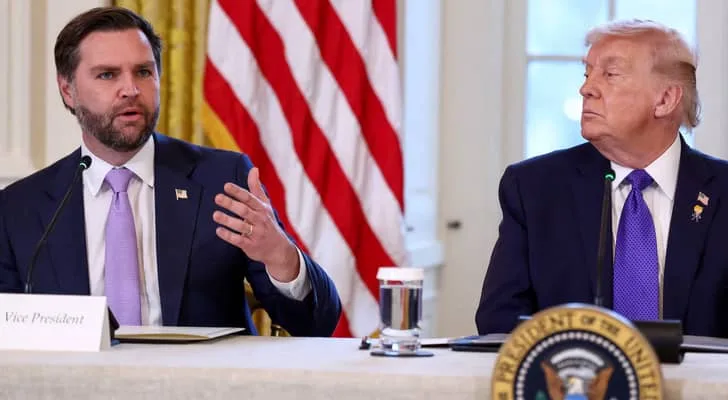
Amid the wreckage of the Republican defeat, Vice President JD Vance offered an assessment of the catastrophe, identifying the military campaign against Tehran as the primary catalyst for the party's downfall. In a statement posted on X on Wednesday, Vance wrote: The reason we lost is the war.
He argued that the problem went beyond mere voter turnout, noting that former supporters from the 2024 coalition actively shifted their ballots to Democratic candidates.
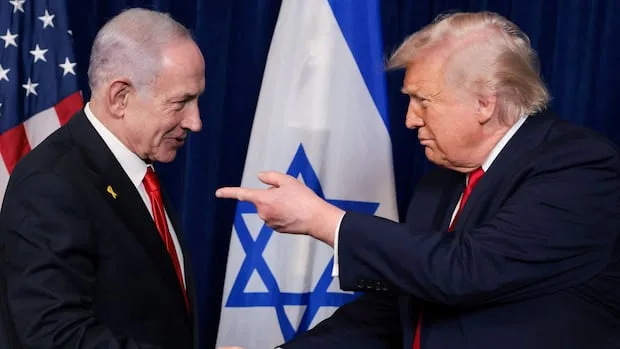
Vance explicitly pointed to inflation, the cost of living, and Washington's unyielding policy toward Israel as severe liabilities for the party. Behind closed doors, Vance has been an internal advocate for a diplomatic settlement with Iran, criticizing Israeli Prime Minister Benjamin Netanyahu and telling associates that the prime minister was being wrong on everything
regarding the conflict, according to sources cited by Axios. Vance's public break with administration orthodoxy has set him apart from moderate figures like Secretary of State Marco Rubio, positioning the vice president ahead of the 2028 presidential cycle.
President Trump acknowledged that Vance's assessment was largely true,
conceding that the war contributed to higher gasoline prices and the midterm losses. However, the president steadfastly defended his military choices. If I had it to do again, I’d have to do it again because long term, it’s the only answer,
Trump told reporters, insisting that strikes were essential to prevent Iran from acquiring a nuclear weapon. Asked when the war would end, he stated: Whenever I wanted to. But it's got to be done right, because they can't have a nuclear weapon.
That leaves the administration divided between competing factions as it confronts a hostile new Congress.
What Are the Competing Paths Facing the White House Now?
Inside the executive branch, three distinct factions are pressing Trump to adopt radically different strategies for the remainder of his term:
- Diplomatic Settlement: Led by Vice President JD Vance and regional mediators, this path seeks to leverage Qatari-backed talks to prevent further escalation and restart direct negotiations with Tehran.
- Renewed Military Action: Backed by pressure from Netanyahu and military planners, forces are completing preparations for a potential return to major combat operations, with extra assets deployed to the region.
- Sustained Economic Pressure: Championed by CIA Director John Ratcliffe and Treasury Secretary Scott Bessent, this approach relies on maintaining the naval blockade and economic sanctions to force Iranian concessions over time.
The risks attached to each option are severe. Launching fresh military strikes risks prolonging the economic pain that alienated voters at the ballot box, while diplomatic overtures could collapse if Tehran misinterprets Washington's electoral weakness. Iranian officials have already seized on the outcome. Mohsen Rezaei, secretary of Iran's Supreme National Security Council, posted on X that Tehran had inflicted a strategic defeat on Trump on the battlefield, in the Strait of Hormuz, and in Washington. Thousands gathered outside the former US embassy in Tehran for an annual anti-American rally, burning banners of Trump, Vance, and Netanyahu while celebrating soaring energy prices.
Ali Vaez, deputy program director for the Middle East and North Africa at the International Crisis Group, warned that Iranian officials might misread America's political turmoil as military weakness and make excessive demands, complicating mediation efforts led by Qatar and Pakistan.
These geopolitical maneuvers will collide immediately with a revitalized opposition in Congress.
How Will Democratic Control of Congress Change Federal Policy?
Beginning in January 2027, the incoming Democratic majorities will fundamentally alter the federal government by taking control of congressional committees, subpoenaing executive officials, and scrutinizing federal spending. Senate Democrats will wield the authority to block judicial and executive branch nominations, while the entire legislative apparatus will possess the power to investigate administration policies.
Yet Democratic control does not ensure an unobstructed path for the opposition's own priorities. Most major legislation will still require sixty votes to clear the Senate, and President Trump made clear that he is prepared to use his ultimate constitutional check against any bill he opposes on taxation, spending, or immigration. Otherwise, I’d just veto everything,
Trump warned CBS News.
International allies are already recalculating their positions. Ukrainian President Volodymyr Zelensky expressed hope that the Democratic takeover will unlock increased military and financial aid for Kyiv in its war with Russia, noting that Democrats speak very clearly about supporting Ukraine. Conversely, South Korea's Prime Minister Han Seong-sook stated that he does not expect major differences in relations with the United States following the results.
The hard question for Republicans is whether the midterm blowout is a temporary electoral punishment or a permanent fracture in their base.