Russia and North Korea open first road bridge across shared border
Russia and North Korea inaugurated their first permanent road bridge across the Tumen River, marking a significant step in their deepening bilateral ties.
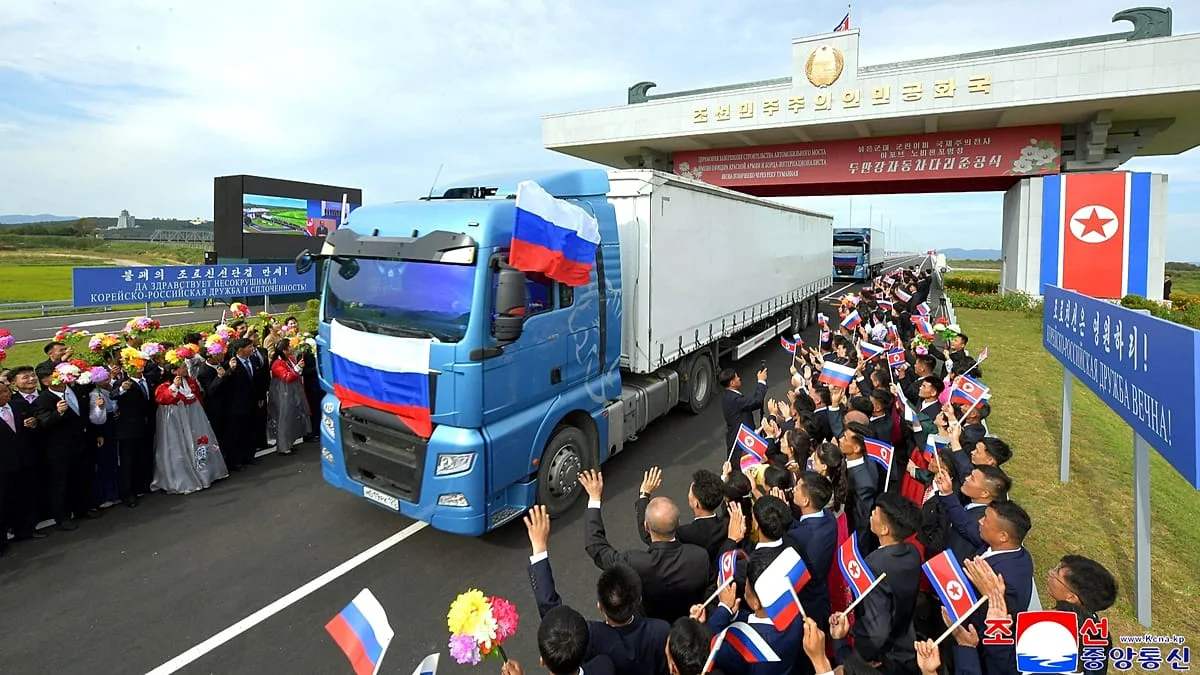
Russia and North Korea inaugurated their first permanent road bridge across the Tumen River on Monday, a move that underscores the rapid escalation of bilateral ties since Moscow’s invasion of Ukraine in 2022. The one-kilometre structure, linking the Russian border city of Khasan with North Korea’s Tumangang, was described by Russian Prime Minister Mikhail Mishustin as a "new symbol of friendship" during a video-linked ceremony. The project, which took 495 days to complete, represents a shift in the geopolitical landscape, as the two nations consolidate strategic and economic partnerships amid Western sanctions and global isolation.
Russia and North Korea Expand Strategic Ties
The bridge’s opening coincides with a surge in military and economic cooperation between Moscow and Pyongyang. Since 2022, Russia has relied on North Korean troops, weapons, and labor to sustain its war in Ukraine, while North Korea has gained access to Russian technology and resources. The new crossing, named after Soviet officer Yakov Novichenko, is designed to facilitate the movement of cargo, personnel, and passengers, with initial operations prioritizing freight. Russian state media reported that the bridge can accommodate up to 300 vehicles and 2,323 people daily, a capacity expected to grow as passenger traffic expands later this year.
North Korean officials emphasized the bridge’s role in "personnel exchanges, tourism, and trade," according to state media. However, Ukrainian investigative group Truth Hounds warned the structure could serve as a "covert military logistics corridor," enabling the flow of North Korean troops, construction workers, and military officials into Russia. The group also highlighted concerns that Russian technology and resources might flow back to North Korea through the crossing, bypassing international scrutiny.
| Detail | Information |
|---|---|
| Bridge capacity | 300 vehicles and 2,323 people daily |
| Construction duration | 495 days (started 2025) |
| Initial use | Cargo transport, with passenger traffic to follow |
| Strategic context | Part of broader Russia-North Korea military-economic alliance |
Geopolitical Implications and Regional Reactions
The bridge’s completion reflects a broader realignment of power dynamics in East Asia. Analysts note that North Korea’s newfound access to Russian and Chinese infrastructure—alongside its existing Sino-Korean Friendship Bridge—positions it to leverage competition between its two major neighbors. "North Korea will simultaneously secure two major overland routes linking it with Russia and China, allowing it to encourage competition between the two countries and maximise its gains," said Lim Eul-chul, a professor at Kyungnam University.
Russian officials have framed the bridge as a catalyst for economic and cultural cooperation. Mishustin praised the project as a "powerful impetus for the further development of trade, economic, scientific, technological and cultural cooperation." Meanwhile, North Korean Prime Minister Pak Thae-song called the opening a "historical event" in bilateral relations. The bridge also aligns with Pyongyang’s efforts to rebuild its tourism sector, which has been crippled by pandemic-era border closures and geopolitical isolation.
However, the project has drawn scrutiny from Western allies. Ukrainian human rights groups have long warned of the risks posed by Russia’s deepening ties with North Korea. In 2024, Kyiv accused Moscow of using North Korean missiles in its attacks on Ukrainian cities, while South Korea’s central bank reported that North Korea’s economy grew by over 3% in 2025, driven by expanded cooperation with Russia. The New Yalu River Bridge, an alternative to the Sino-Korean Friendship Bridge, is expected to be completed this year, further solidifying North Korea’s connectivity to its neighbors.
Military and Economic Dimensions
The bridge’s strategic significance extends beyond trade. Russian and North Korean officials have pledged mutual support under a 2024 treaty, with Moscow providing military technology and Pyongyang offering troops and labor. South Korean intelligence estimates that North Korea has transferred $7 to $14 billion in weapons and munitions to Russia, while an estimated 11,000 North Korean soldiers are actively fighting in Ukraine. The bridge is expected to streamline these exchanges, reducing reliance on maritime routes that are vulnerable to Western sanctions.
Russian tourists, who were barred from entering North Korea for years, have begun to trickle into the country since 2024. North Korea has opened resorts in Wonsan-Kalma and Pyongyang to accommodate them, while continuing to restrict visitors from other nations. Meanwhile, an estimated 10,000 North Koreans work in Russian construction and logging sectors, often under the guise of student visas. The bridge could accelerate this labor flow, further entrenching economic interdependence between the two states.
Frequently Asked Questions
What is the significance of the Russia-North Korea bridge?
The bridge marks the first permanent road connection between Russia and North Korea, symbolizing the rapid deepening of their military and economic ties. It is expected to facilitate trade, tourism, and the movement of personnel, while also raising concerns about its potential use for covert military logistics.
How does the bridge impact the Ukraine war?
The bridge could streamline the flow of North Korean troops, weapons, and labor to Russia, bolstering Moscow’s war effort. Ukrainian human rights groups have warned it may serve as a logistics corridor for military operations, while South Korean intelligence estimates North Korea has already transferred billions in military equipment to Russia.
What are the geopolitical risks of this development?
The bridge strengthens a triangular alliance between North Korea, Russia, and China, challenging Western influence in the region. It also raises concerns about the proliferation of weapons and the entrenchment of authoritarian partnerships, as seen in Russia’s growing reliance on North Korean resources and manpower.
The bridge’s completion signals a new phase in Russia and North Korea’s relationship, one defined by mutual strategic interests and defiance of international norms. As the two nations expand their infrastructure and cooperation, the global community faces a complex web of geopolitical consequences, from regional instability to the erosion of sanctions regimes. The next critical development will likely be the full operationalization of the New Yalu River Bridge, which could further cement North Korea’s role as a linchpin in the Russia-China-North Korea axis.
Dateline Wire is dedicated to independent, evidence-backed reporting. This briefing was synthesized from primary source reporting, corroborated across independent newsrooms, and verified against our Editorial Standards.