RBI Raises Repo Rate To 5.50 Percent And Increases FY27 Growth Forecast
The Reserve Bank of India raised its benchmark repo rate to 5.50 per cent and lifted its FY27 real GDP growth forecast to 7.1 per cent amid inflation concerns.
- Headline: RBI Raises Repo Rate To 5.50 Percent And Increases FY27 Growth Forecast
- Dispatch Summary: The Reserve Bank of India raised its benchmark repo rate to 5.50 per cent and lifted its FY27 real GDP growth forecast to 7.1 per cent amid inflation concerns.
- Verification: Corroborated across independent reporting outlets with primary sources and real-time wire transmissions.
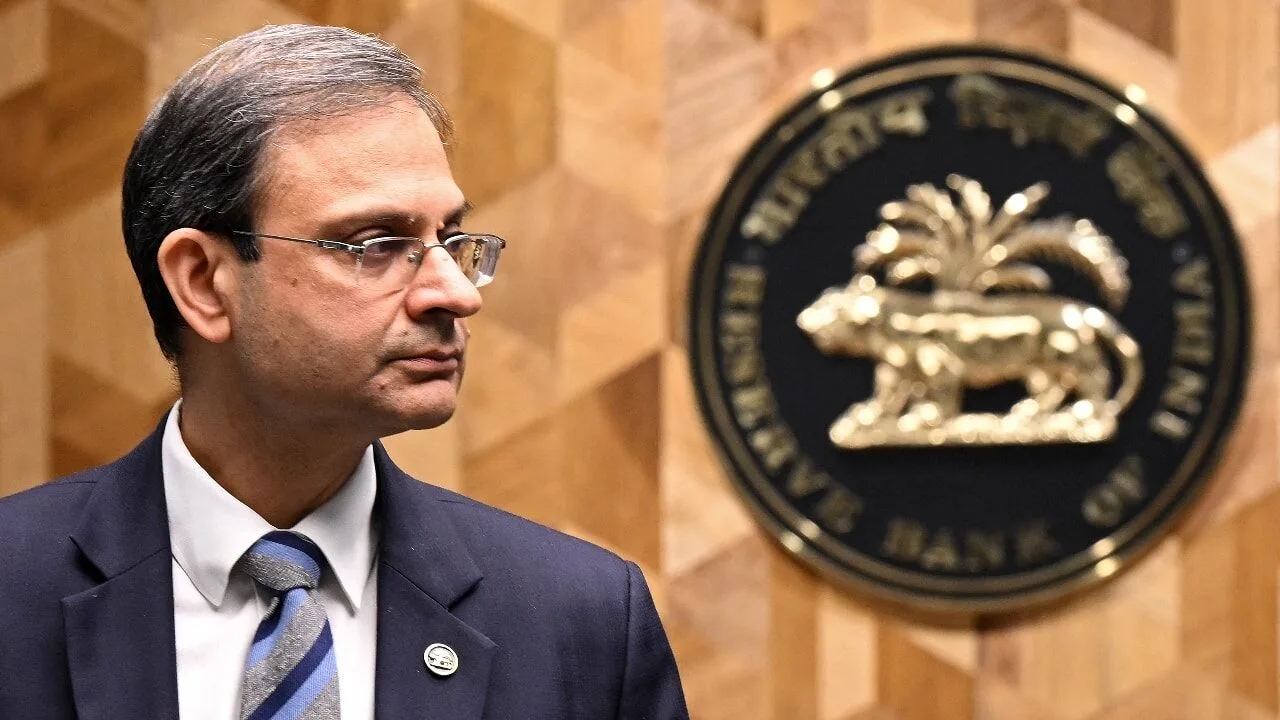
After a detailed assessment of the evolving macroeconomic and financial conditions, developments and the outlook, the MPC voted unanimously to increase the policy repo rate by 25 basis points
Reserve Bank of India Governor Sanjay Malhotra announced on Wednesday, marking a significant turning point for benchmark borrowing costs in the country. Unveiling the October bi-monthly monetary policy in Mumbai, Malhotra confirmed that the central bank had lifted the repo rate to 5.50 per cent from 5.25 per cent. The decision brings an end to a rate change drought that began after a December 2025 cut lowered the rate to 5.25 per cent, after which it was kept unchanged through four policy reviews in 2026. It is the first time the central bank has raised the benchmark interest rate since February 2023, when it was increased by 25 basis points to 6.50 per cent.
The rate increase arrives as policymakers confront lingering inflationary pressures that have stayed above the central bank medium term goal of 4.0 per cent for three consecutive months, touching 4.82 per cent in August. Consumer price increases have broadened beyond food and fuel to encompass nearly half of the consumer price index basket. At the same time, the Monetary Policy Committee shifted its policy stance from neutral to calibrated tightening by a majority vote, signaling a more hawkish posture to anchor inflation amid geopolitical volatility and high crude oil prices hovering around USD 100 a barrel. Alongside the repo rate adjustment, the standing deposit facility rate stands at 5.25 per cent, while the marginal standing facility rate and the Bank Rate are pegged at 5.75 per cent.
Growth Revisions And Market Impact
Despite the tightening measures, the central bank expressed strong confidence in the broader economy, raising its real GDP growth forecast for the current financial year 2026-27 by 40 basis points to 7.1 per cent. Governor Malhotra attributed the upward revision to robust domestic economic activity, pointing to real GDP growth of 7.8 per cent in the first quarter of 2026-27, which was driven by resilient private consumption, strong investment activity, and positive contributions from net exports. However, the governor cautioned that protracted geopolitical tensions, elevated international commodity prices, additional frictions in global trade, and tightening global financial conditions could pose risks to the economic outlook. To map out the official trajectory, the central bank projected quarterly real GDP figures for the current fiscal year alongside consumer inflation expectations.
- Q1 2026-27 real GDP growth recorded at 7.8 per cent
- Q2 2026-27 real GDP growth projected at 7.2 per cent
- Q3 2026-27 real GDP growth projected at 6.9 per cent
- Q4 2026-27 real GDP growth projected at 6.8 per cent
- Full year FY27 real GDP growth projected at 7.1 per cent
- Full year FY27 consumer inflation projected at 5.2 per cent
- Q1 FY28 consumer inflation projected at 5.6 per cent
The policy announcement rippled immediately across domestic financial markets, where benchmark equity indices traded in negative territory. The Sensex fell as much as 528.6 points, or 0.7 per cent, to hit an intraday low of 72,539.2, while the Nifty 50 touched an intraday low of 22,585.1, dropping 191.1 points or 0.8 per cent. Rate sensitive sectors faced heightened pressure, with the Nifty Auto index falling 1.13 per cent to 25,252.80, the Nifty Financial Services index declining half a per cent to 24,820, and the Nifty Realty index dipping 0.5 per cent to 833. Market veteran Ajay Bagga awarded the policy a 9 out of 10 rating, noting that the move sets the stage for the RBI to potentially hike rates another two times this financial year while providing short term benefits to banks as loans reprise faster than deposits.
The currency and debt markets reacted with measured calm. The rupee edged higher to 96.3625 per dollar as large foreign banks sold dollars and traders anticipated potential central bank intervention through state run banks.
Borrower Realities And Industry Reactions
For retail borrowers and corporate entities, the quarter-point increase translates directly into higher capital costs. Home loan EMIs tied to external benchmarks will reset as repo-linked rates adjust. To illustrate the tangible impact on household budgets, on a standard ₹50 lakh home loan with a 30-year tenure, a 25 basis point rate increase lifts the monthly EMI by ₹852 at a public sector bank—moving from ₹34,109 to ₹34,961—and by ₹867 at a private bank, rising from ₹35,821 to ₹36,688. Over the full 30-year tenure, this translates into an additional interest outgo of approximately ₹3.07 lakh for a public sector bank borrower and ₹3.12 lakh for a private bank borrower.
Corporate and real estate executives pointed to underlying economic strength as a buffer against higher borrowing expenses. Anshuman Magazine, Chairman & CEO – India, South East Asia, Middle East & Africa at CBRE, observed that housing demand is expected to hold up despite the slight uptick in capital costs. We expect the impact on housing demand to remain measured, particularly in the mid and premium segments, where underlying demand remains healthy. A 25 basis point increase in the repo rate will push borrowing costs up slightly, but we expect the sector to hold up,
Magazine stated, adding that India's robust growth fundamentals provide a supportive backdrop.
| Loan Provider Type | Pre-Hike Monthly EMI (₹) | Post-Hike Monthly EMI (₹) | Monthly Increase (₹) | Estimated Total Extra Interest (₹) |
|---|---|---|---|---|
| Public Sector Bank | 34,109 | 34,961 | 852 | 3.07 lakh |
| Private Bank | 35,821 | 36,688 | 867 | 3.12 lakh |
The central bank decision leaves open a critical trajectory for the remainder of the fiscal year: whether the shift to calibrated tightening will remain a singular defensive adjustment or foreshadow a sustained series of rate increases if global crude prices and domestic inflation breach projected ceilings.