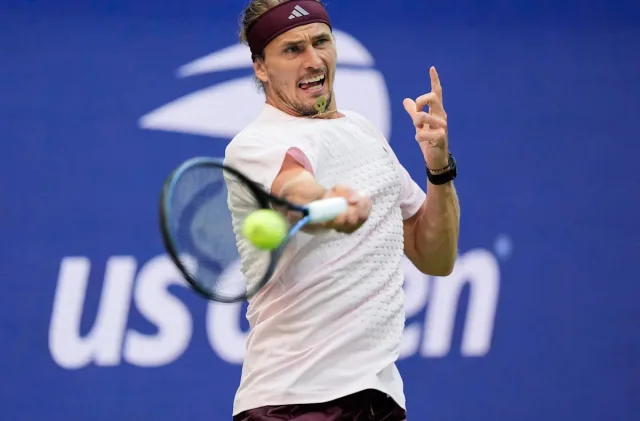
Novak Djokovic wins China Open after Alex de Minaur retires due to injury
Novak Djokovic secured his seventh China Open title after Alex de Minaur retired due to an adductor injury during the final.
- Headline: Novak Djokovic wins China Open after Alex de Minaur retires due to injury
- Dispatch Summary: Novak Djokovic secured his seventh China Open title after Alex de Minaur retired due to an adductor injury during the final.
- Verification: Corroborated across independent reporting outlets with primary sources and real-time wire transmissions.
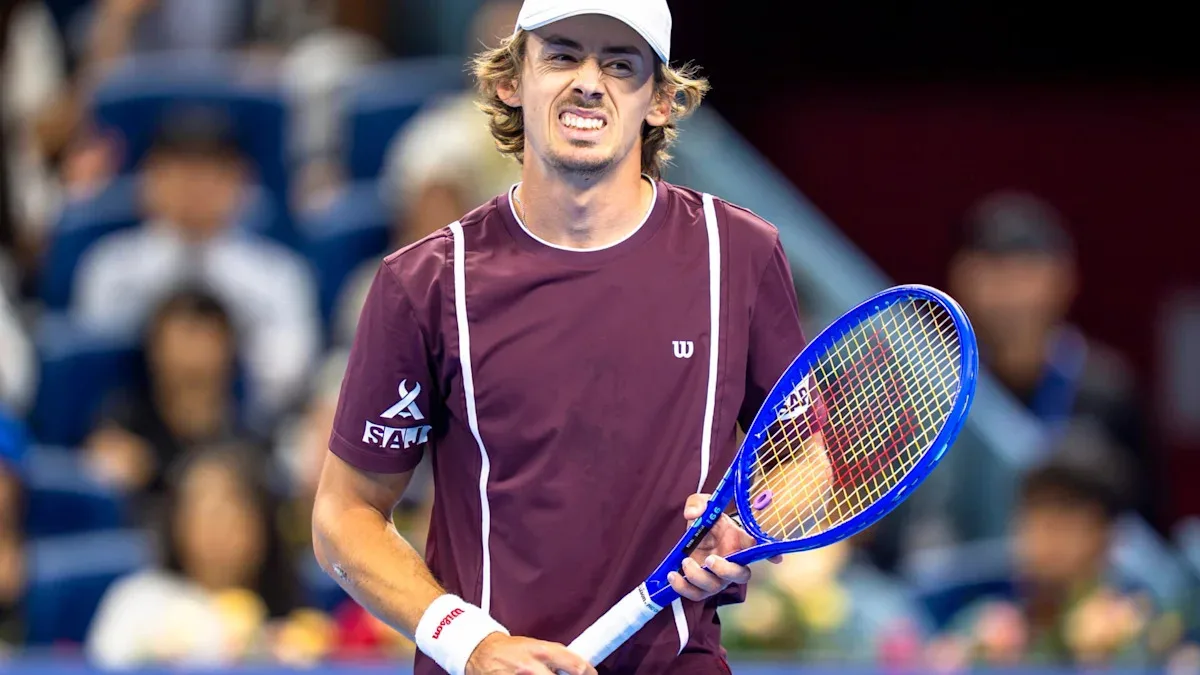
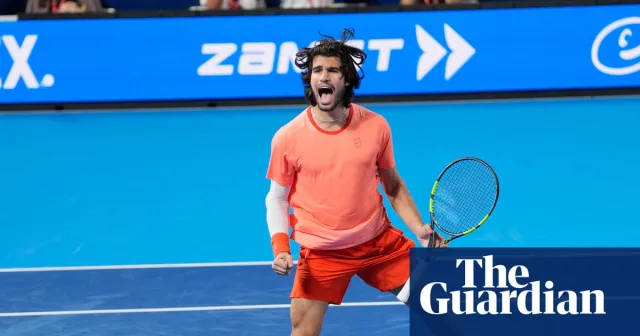
Novak Djokovic extended his dominance at the China Open on Tuesday, securing his seventh title at the event after Australia’s Alex de Minaur retired due to an adductor injury during the final. The 39-year-old Serbian, who has now won a singles title for the 21st consecutive year, faced a fiercely competitive opponent in the 27-year-old de Minaur, who had reached his second ATP tournament final of the season. The abrupt end to de Minaur’s campaign left fans and analysts speculating about the injury’s severity and the broader implications for both players’ schedules. For ordinary tennis fans, the result shows the unpredictable nature of high-stakes matches, while for the athletes, it highlights the physical toll of the sport and the razor-thin margins between victory and defeat.
The match, played under Beijing’s autumn sun, was a tightly contested battle. De Minaur, the fifth seed, initially held his own against Djokovic, pushing the Serbian to a first-set tiebreak. But as the second set began, de Minaur’s struggles became apparent. After winning the first game of the second set, he approached the net to shake Djokovic’s hand and announced his retirement. The injury, which de Minaur described as affecting his adductor muscle, had developed midway through the first set, though he had not felt it beforehand. “I wasn’t feeling anything before the final,” he said. “Then I felt something midway through the end of the first set. Yeah, it gradually got a little worse.”
What caused de Minaur’s retirement?
De Minaur’s injury, which forced him to retire at 7-6 (7-3), 0-1, was described as a “serious” issue by analysts, given his rare history of withdrawing from matches. The Australian has only retired twice in his professional career, both in ATP 500 finals, suggesting the nature of the injury warranted immediate attention. During the match, de Minaur’s left thigh was heavily bandaged, and he struggled to maintain his usual pace and precision. His post-match press conference revealed the physical and emotional toll of the decision. “I don’t feel great… I want to say sorry to all the amazing fans,” he said. “I didn’t want to finish like this… hopefully see you next year.”
The injury’s timing complicates de Minaur’s upcoming schedule. He was set to compete in the Shanghai Masters, which begins on Wednesday, but his plans remain uncertain. “I’ve got to get some more scans,” he said, adding that his priority is to “get some more scans” before deciding whether to play. The Australian’s record at Shanghai is mixed: he reached the quarterfinals in 2025 but has struggled in recent years, with a 5-4 win-loss record at the event. If he skips Shanghai, it could impact his preparation for the European indoor swing, which includes the Vienna Open in late October. “It’s a big if,” one report noted, “though. De Minaur isn’t a player who retires very often.”
How did Djokovic respond to the win?
Djokovic, who extended his unbeaten record at the China Open to 34 straight victories, displayed his trademark resilience in the face of adversity. The Serbian, who has faced numerous health challenges this year, described the match as “quite challenging” but emphasized his ability to “find a good feeling on the court.” His first-set tiebreak victory over de Minaur was a masterclass in baseline pressure, with Djokovic saving a break point in the fifth game with a full-stretch backhand. However, the match’s abrupt end left the 39-year-old with an unusual finish: a 7-6 (7-3), 0-1 scoreline that marked his first retirement-related victory in a final.
Djokovic’s reaction to de Minaur’s withdrawal was one of empathy. “I’m really sorry for the way you had to finish today,” he told the Australian. “I really hope that you can recover quickly.” The Serbian’s comments reflected his reputation as a sportsman who respects his opponents, even in victory. Yet, the win also highlighted his continued dominance. With this title, Djokovic now holds 102 career singles titles, proof of his longevity and adaptability. His ability to perform under pressure, even when his opponent’s injury disrupted the match, underscores his status as one of the sport’s greatest competitors.
- Players: De Minaur’s injury disrupts his schedule, while Djokovic reinforces his legacy.
- Fans: The abrupt end to the final disappointed spectators but highlighted the sport’s unpredictability.
- Tournament organizers: The China Open’s reputation as a premier event remains intact, though the match’s early conclusion may raise questions about medical protocols.
What are the implications for the players involved?
For de Minaur, the injury adds to a challenging year. He has already lost to Kamil Majchrzak at the Libema Open in June and struggled with consistency in other tournaments. His performance in Beijing, however, offered glimpses of promise. “Everything except for the end was really positive,” he said. “There was a lot of good tennis. I played some great stuff.” This resilience could be critical as he navigates the Asian swing, where he faces a mix of high-stakes matches and physical demands. If he competes in Shanghai, he will need to balance recovery with preparation, a delicate task for any athlete.
Djokovic, meanwhile, continues to defy age and injury. His 21st consecutive year with a singles title is a record that few can match, and his ability to adapt to changing conditions — whether physical or tactical — remains a key factor in his success. The China Open victory also positions him well for the upcoming Shanghai Masters, where he will face a new set of challenges. However, his recent health struggles, including a “challenging” year marked by “ups and downs,” suggest that even the greatest players must manage their bodies carefully.
The broader implications extend to the ATP calendar. The China Open’s early conclusion, alongside similar retirements in other matches, raises questions about the physical demands of the sport. With the Asian swing followed by the European indoor season, players like de Minaur and Djokovic must balance competition with recovery. For fans, the uncertainty adds to the drama, but for the athletes, it shows the need for strategic planning.
What’s next for de Minaur and Djokovic?
De Minaur’s immediate focus is on recovery. His planned participation in the Shanghai Masters remains conditional on the results of his scans, which he intends to undergo upon arrival. If he plays, he will face a tough draw, including potential matches against top-10 players like Daniil Medvedev and Alexander Zverev. However, his decision to rest could also be strategic, allowing him to prepare for the European indoor season, where he has historically performed better. “I could well play and excel in Shanghai,” one report noted, “but don’t be surprised if the Aussie number one skips the tournament and rests up ahead of the European indoor swing.”
Djokovic, for his part, will aim to build on his China Open success. His next tournament is the Shanghai Masters, where he will face a new set of challenges. The Serbian’s ability to maintain his form, despite his age and past health issues, remains a topic of discussion. “When I’m striking the ball well, I can still compete at the highest level,” he said. This confidence, combined with his experience, positions him as a strong contender in the coming weeks. However, the physical toll of the season, evident in his need for treatment during the match, suggests that even the most seasoned players must manage their energy carefully.
As the tennis world turns its attention to Shanghai and beyond, the events in Beijing serve as a reminder of the sport’s unpredictability. For de Minaur, the injury is a setback but not a definitive end. For Djokovic, the win is another chapter in a career defined by resilience and excellence. And for fans, the story of a match cut short by injury is a poignant example of the fine line between triumph and adversity.