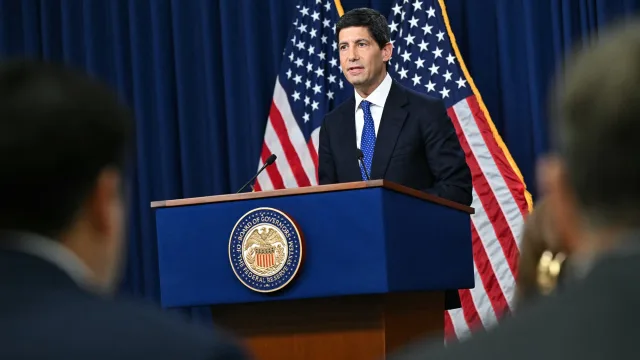
Bank of England holds interest rates at 3.75% in split vote
The Bank of England maintained the base rate in a 6-3 split vote, balancing rising energy costs and inflation against the risk of stifling economic recovery.
- Headline: Bank of England holds interest rates at 3.75% in split vote
- Dispatch Summary: The Bank of England maintained the base rate in a 6-3 split vote, balancing rising energy costs and inflation against the risk of stifling economic recovery.
- Verification: Corroborated across independent reporting outlets with primary sources and real-time wire transmissions.
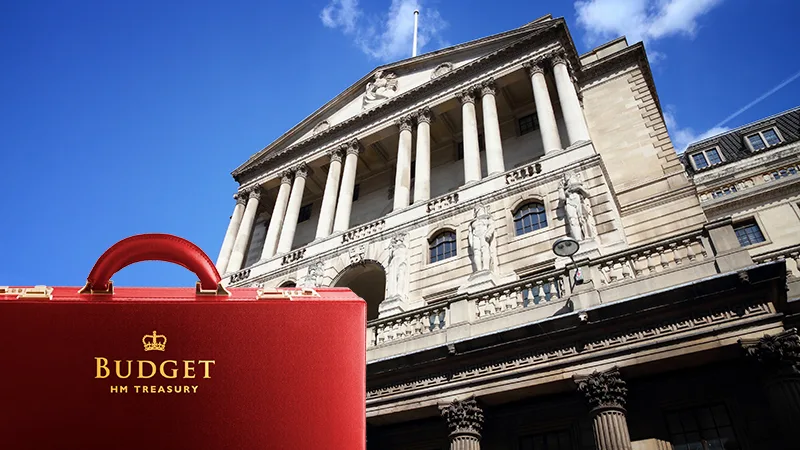
Split Vote Reflects Diverging Views on Inflation Risks
The Bank of England's Monetary Policy Committee (MPC) maintained the base rate at 3.75% on 17 September 2026, marking the sixth consecutive hold but with a 6-3 split in favor of inaction. Three members advocated a quarter-point increase to 4%, while six supported preserving the current level. This decision came as inflation rose to 3.1% in August, the highest since February 2026, driven by persistent energy price volatility. The MPC acknowledged that "the risk of material second-round effects in price and wage-setting is greater the longer higher energy prices persist," yet emphasized that "domestically generated inflation is contained."
Analysts noted the divergence reflected tensions between inflation control and economic stability. David Rees of Schroders argued that "monetary policy should be guided by the fundamentals of the UK economy rather than global optics," while Chris Cheverall of CMC Markets warned that "further rate hikes cannot be ruled out" given the "uncertain energy outlook." The split underscored the committee's struggle to balance inflationary pressures with the risk of stifling a fragile recovery.
| Detail | Information |
|---|---|
| Base rate | 3.75% |
| MPC vote | 6-3 to hold; 3 members favored 4% |
| Inflation (August 2026) | 3.1% |
| Brent crude price (14 September 2026) | $106 per barrel |
| UK gas price (14 September 2026) | 207 pence per therm |
Energy Volatility and Fiscal Uncertainty as Dual Challenges
The MPC's decision coincided with a sharp rise in energy prices, with Brent crude up 36% and UK gas prices surging 78% since July 2026. These increases, linked to the ongoing US-Iran conflict, have amplified inflation risks. However, the committee noted "little evidence of material second-round effects" in wages or broader price-setting, suggesting energy costs had not yet triggered sustained inflationary pressures.
Fiscal policy also loomed large. With the UK's October Budget approaching, officials warned that "a spending splurge could revive domestic price pressures," though gilt market volatility suggested fiscal restraint was more likely. Andrew Bailey, BoE governor, acknowledged that "a rise in interest rates before the end of the year could happen," but emphasized that "monetary policy is being set to ensure inflation comes down to 2% sustainably."
Estate agents and mortgage experts echoed concerns about the housing market's sensitivity to rate changes. Jeremy Leaf, a North London estate agent, stated that "a rise in interest rates is becoming increasingly likely and now sooner rather than later," while Amy Reynolds of Antony Roberts noted that "lenders haven’t waited for the Bank of England" and had already begun raising mortgage rates.
Global Context: BoE Stands Apart as Central Banks Tighten
The BoE's decision contrasted with recent actions by other major central banks. The Federal Reserve raised rates to 3.75-4% on 15 September, its first increase since 2023, while the European Central Bank hiked to 2.5%. The Bank of Japan was expected to follow suit, leaving the BoE as the only major central bank to maintain rates unchanged this week.
This divergence raised questions about the UK's economic trajectory. Neil Birrell of Premier Miton observed that "the Bank seems to be more relaxed on inflation risks than their international counterparts," though he cautioned that "the gilt market may be more susceptible to a move the other way." The BoE's cautious stance reflected its assessment of domestic conditions, including a "soft labour market" and "higher borrowing costs" that it believed would eventually temper inflation.
Frequently Asked Questions
Why did the Bank of England hold rates despite rising inflation?
The MPC cited "little evidence of material second-round effects" in price and wage-setting, along with a "soft labour market" and "higher borrowing costs" that it believes will reduce inflation over time. Officials also emphasized that "domestically generated inflation is contained," though risks remain tilted "to the upside."
What factors could prompt a rate hike in the coming months?
Prolonged energy price volatility, a potential fiscal expansion in the October Budget, and persistent inflation above the 2% target could all influence future decisions. The MPC has warned that "the longer higher energy prices persist, the bigger the impact it will have on inflation," and officials have not ruled out a hike before year-end.
The BoE's next meeting is scheduled for 5 November, but the outcome of the UK's Autumn Budget will be a critical test of its policy outlook. With energy prices and geopolitical tensions unresolved, the central bank faces a delicate balancing act between inflation control and economic stability, as markets brace for further volatility in the months ahead.
How significant is this wire dispatch?
Cast your anonymous vote to register reader consensus across journalism and intelligence sectors.
Dateline Wire is dedicated to independent, evidence-backed reporting. This briefing was synthesized from primary source reporting, corroborated across independent newsrooms, and verified against our Editorial Standards.