Rahul, Priyanka Gandhi named in FIR over Akashvani Bhavan entry protest
Delhi Police registered an FIR against Rahul Gandhi and Priyanka Gandhi Vadra following an eight-hour sit-in protest inside Akashvani Bhavan amid protests against the Election Commission.
- Headline: Rahul, Priyanka Gandhi named in FIR over Akashvani Bhavan entry protest
- Dispatch Summary: Delhi Police registered an FIR against Rahul Gandhi and Priyanka Gandhi Vadra following an eight-hour sit-in protest inside Akashvani Bhavan amid protests against the Election Commission.
- Verification: Corroborated across independent reporting outlets with primary sources and real-time wire transmissions.
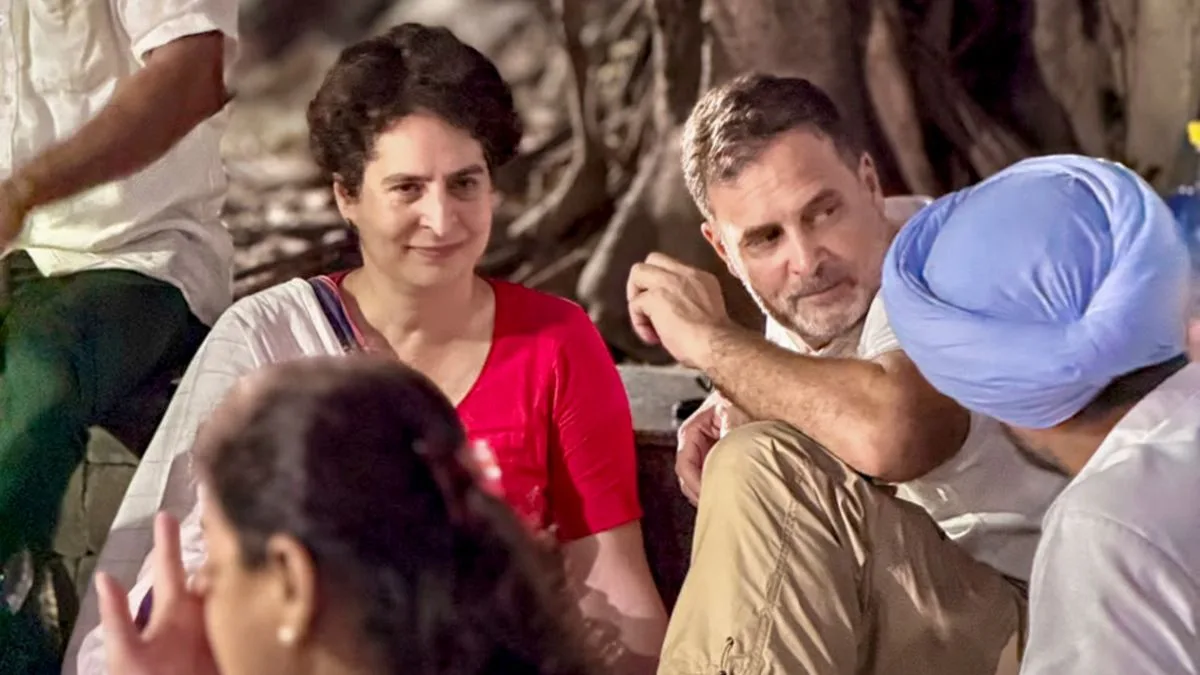
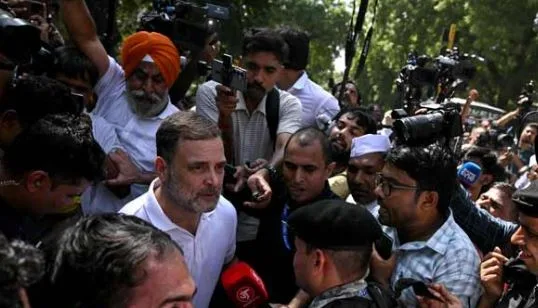
What happens when a national political march meets locked gates and barred doors? An eight-hour standoff inside a state broadcasting building on Tuesday ended with criminal charges, as Delhi Police registered an FIR against Congress leaders Rahul Gandhi and Priyanka Gandhi Vadra following their entry into Akashvani Bhavan during a high-stakes protest against the Election Commission of India.
The opposition INDIA bloc had planned a march from Parliament House toward Nirvachan Sadan, the election body headquarters, to demand the resignation of Chief Election Commissioner Gyanesh Kumar and protest alleged irregularities in the Special Intensive Revision of electoral rolls. According to Delhi Police, no official permission had been sought or granted for the march. Security forces heavily barricaded the route and stopped the protesters near the NITI Aayog area, roughly 200 to 300 metres from the commission's office. As police blocked the procession, Rahul Gandhi climbed atop barricades while opposition MPs raised slogans of Vote Chor, Gaddi Chhod
.
That political friction quickly escalated into a trespassing dispute. Amid the police standoff near the entrance, Rahul Gandhi and Priyanka Gandhi Vadra made their way toward Akashvani Bhavan on Parliament Street around noon, pushing past initial resistance from station staffers. They were joined inside by other opposition leaders, including K C Venugopal, Pawan Khera, Deepender Hooda, Charanjit Singh Channi, K Suresh, Amarinder Singh Raja Warring, Praniti Shinde, Varsha Gaekwad, Imran Pratapgarhi, and NCP SP MP Supriya Sule. The group staged a sit-in protest that lasted for more than eight hours, demanding a formal meeting with Election Commission officials to submit a memorandum concerning what Gandhi described as vote chori
.
Who was detained and what were the numbers?
The confrontation drew heavy security intervention as the evening wore on. Delhi Police stated that the protesters refused repeated demands to vacate the premises, insisting they would not move until an MP delegation was granted an audience with election commissioners. Police eventually intervened to maintain law and order and prevent the situation from deteriorating further.
Reports on the total number of detentions varied slightly between official accounts, reflecting the chaos of the clearance operation. Delhi Police figures cited approximately 260 total detainees, including 10 MPs, while other police updates and reports noted about 250 to 260 people detained, including roughly 50 MPs and 200 other participants. The detained leaders were hauled away from the protest site and taken to New Police Lines at Kingsway Camp before being released later that night.
The Election Commission maintained that no political party had formally sought an appointment with the poll panel before 4 pm on Tuesday, adding that it was informed by Delhi Police at around that time that a delegation led by Gandhi wanted to meet the commission. Outside institutional channels, the fallout rippled across political lines. Karnataka Chief Minister D.K. Shivakumar expressed sharp disapproval over the police action, stating, The way they are trying to delete votes in my state, I am ashamed. BJP should not go to this level.
Rahul Gandhi shared a video of his detention on social media with a severe warning. To save the traitors of democracy, the remnants of democracy have been dragged through the mud. There will be a reckoning - not a single traitor will be spared,
Gandhi wrote on X, after posting earlier in the day, Gyanesh it’s done bro. Time to resign.
What is the broader context behind the Special Intensive Revision row?
The political clash at Akashvani Bhavan did not emerge in a vacuum. It is the direct product of mounting opposition fury over the Special Intensive Revision exercise of electoral rolls, an administrative process that has served as a major point of contention since the nationwide rollout commenced following last year's Bihar assembly polls. Opposition parties argue that the revision conceals systematic vote deletion, while the Election Commission maintains its position on the integrity of the electoral-roll overhaul.
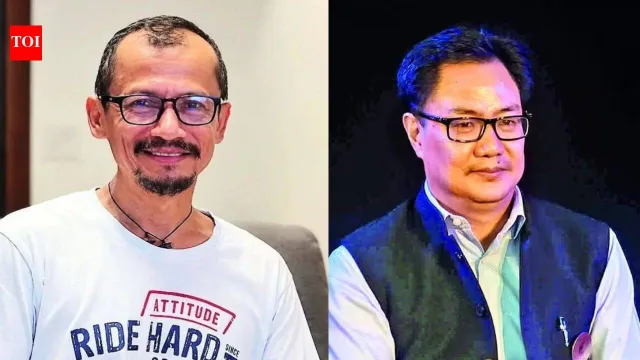
The dispute has also triggered protests beyond parliamentary circles. Student organisations and political pressure groups have mobilized in the capital. Notably, the Cockroach Janta Party announced a fresh agitation scheduled for October 10 at Jantar Mantar against the Chief Election Commissioner. CJP founder Abhijeet Dipke and co-convener Saurav outlined three non-negotiable demands for their upcoming protest:
- Gyanesh Kumar must resign, and criminal proceedings must be initiated against him.
- Freeze SIR, halt upcoming elections, restore the January 2025 voters list, and order an independent inquiry.
- Repeal the 2023 ECI appointments law and establish an independent, credible selection process.
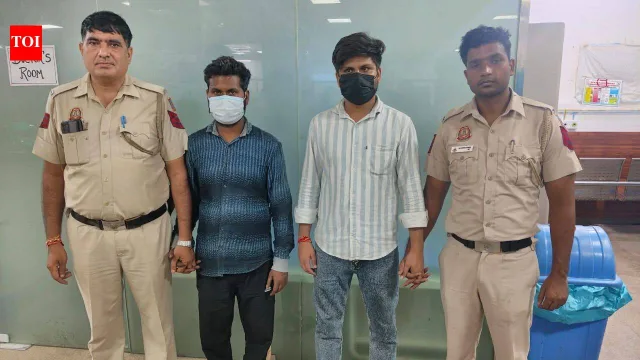
The legal pressure extends to student demonstrators as well. On Monday, Delhi Police arrested 17 students and a freelance journalist during a separate protest against the CEC. While four women were released on Monday night, a Patiala House Court ordered the release of five students—identified as Samarth Sinthegh, Rudra Pratap Singh, Anuj Bhagat, Aman Aggarwal, and Gajender Singh—on surety bonds of ₹15,000 each, with eight others released on personal bonds.
How does this legal battle affect public demonstrators and political participants?
Anyone engaging in protest activities near central Delhi installations or planning to join demonstrations such as the scheduled October 10 Jantar Mantar gathering can take specific steps to understand their legal footing:
- Confirm whether formal route permissions and assembly applications have been filed with local authorities through organizing groups before joining street marches.
- Monitor police notifications regarding station limits, barricade zones around Parliament Street, Nirvachan Sadan, and government offices like Akashvani Bhavan.
- Retain legal contact information for organizational defense teams, given that recent demonstrations have resulted in immediate preventive detentions transported to facilities like Kingsway Camp and subsequent magistrate court bond hearings.
- Verify compliance requirements for public assembly notifications, noting that groups like the Cockroach Janta Party have utilized formal intimations at stations like Parliament Street police station.
That leaves the political opposition facing a dual front: an immovable election administration defending its roll-revision protocols, and an expanding police dossier that now includes formal criminal charges of unauthorized entry against the leader of the opposition in the Lok Sabha and his congressional colleagues.
As the legal fallout from Tuesday's eight-hour sit-in takes shape, the Election Commission has maintained its stance on established procedures, while outside civil groups prepare for further demonstrations under the shadow of last week's arrests and Tuesday's FIR.