Federal Reserve Raises Interest Rates by Quarter Point Amid Persistent I…
The Federal Reserve has implemented its first interest rate hike since 2023, signaling a potential prolonged tightening cycle as inflation remains above target.
Fed Raises Rates Amid Inflation Concerns, Signals Further Tightening
The Federal Reserve raised its benchmark interest rate by a quarter percentage point to a range of 3.75% to 4% on Wednesday, marking its first rate increase since 2023. The decision, announced after a 12-0 vote by the Federal Open Market Committee (FOMC), came as inflation remained persistently above the central bank’s 2% target, exacerbated by rising energy prices and ongoing geopolitical tensions.
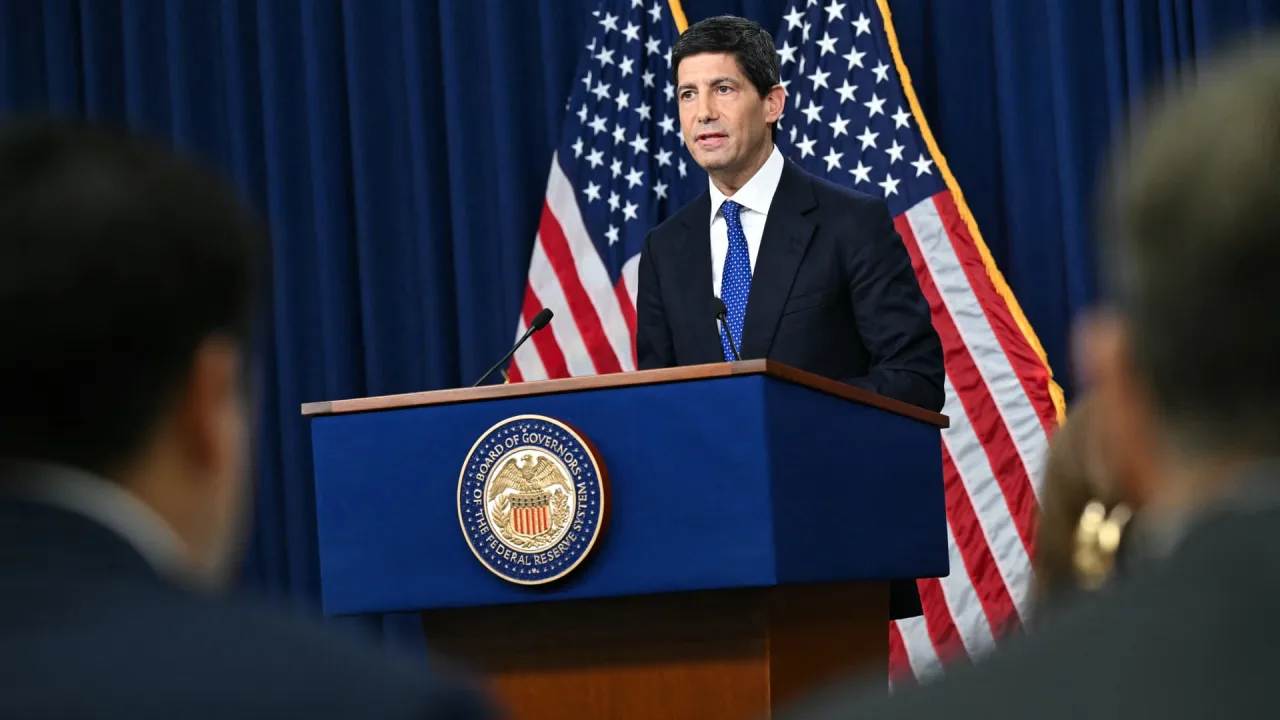
Fed Chair Kevin Warsh emphasized the central bank’s commitment to price stability, stating, “Inflation is too high and has been for too long.” His remarks followed a summer of elevated inflation readings, with core personal consumption expenditures (PCE) inflation at 3.3% annually as of July. The Fed’s latest projections show core PCE inflation expected to remain at 3.4% by year-end, up from 3.3% in June, reflecting persistent upward pressure from energy costs and AI-related capital spending.
| Detail | Information |
|---|---|
| Rate Hike | 0.25 percentage points |
| New Target Range | 3.75% to 4% |
| FOMC Vote | 12-0 in favor |
| Core PCE Inflation (2026 Projection) | 3.4% |
| Median Policy Rate (2026) | 4.1% |
Market Reactions: Mixed Initial Response, Later Declines
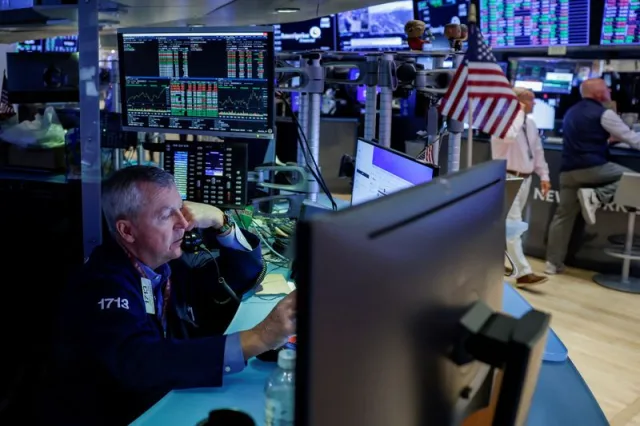
The rate hike initially spurred a modest rally in U.S. stock indices, with the S&P 500 and Nasdaq Composite rising 0.4% and 0.8%, respectively, in early trading. However, the optimism quickly waned as Warsh’s press conference signaled a prolonged tightening cycle. The Dow Jones Industrial Average plummeted 756 points, or 1.45%, while the S&P 500 and Nasdaq fell 0.81% and 0.31%, respectively, by late afternoon.
The 10-year Treasury yield, which had surged to a 19-year high of 5.041% earlier in the week, retreated to 4.947% after the Fed’s announcement. Meanwhile, gold prices fell over 1%, with spot gold dropping 1.2% to $4,240.1 per ounce. Analysts attributed the market volatility to concerns about the Fed’s willingness to maintain restrictive rates amid rising energy costs and geopolitical risks.
“The Fed’s hawkish tone and the dot plot suggesting further hikes have weighed on risk assets,” said Kay Haigh, global head of fixed income at Goldman Sachs. “Investors are now pricing in a December hike, but the path remains contingent on inflation data and energy prices.”
Economic Pressures: Energy Shocks and AI Investment
The Fed’s decision was driven by a combination of factors, including a rebound in oil prices linked to the U.S.-Iran conflict and sustained demand from AI infrastructure projects. Diesel prices hit record highs, with per-gallon costs exceeding $6, increasing transportation and production costs across industries. The war in the Middle East has also disrupted global energy markets, pushing the 10-year Treasury yield to its highest level since 2007.
Warsh acknowledged the Fed’s limited ability to influence individual prices like oil but stressed its role in preventing broader inflationary pressures. “We can’t affect any individual price, but we can ensure that changes in relative prices don’t have second-order effects on the economy,” he said. The central bank’s focus on “price stability” reflects its dual mandate to balance inflation control with full employment, though labor market strength has tempered concerns about a recession.
However, the Fed faces a delicate balancing act. While the labor market remains robust, persistent inflation and rising borrowing costs could dampen consumer and business spending. Economists like Michael Gapen of Morgan Stanley noted that disinflation has not accelerated enough to reassure policymakers. “The committee lacks confidence that inflation will return to 2% quickly,” he said.
Future Outlook: Potential for Additional Hikes, Uncertainty Lingers
The Fed’s statement left the door open for further rate increases, with 12 of 17 FOMC officials projecting at least one more hike by year-end. The median forecast for the federal funds rate in 2026 and 2027 is 4.1%, up from previous projections. However, the timing and magnitude of future moves will depend on inflation trends, energy prices, and the economic impact of AI-driven investment.
Analysts remain divided on the Fed’s strategy. While some, like Shawn DuBravac of the Global Electronics Association, argue that the hike is “modest” and unlikely to curb AI demand, others warn of risks from prolonged tightening. DataTrek’s Nicholas Colas cautioned that elevated oil prices and a potential extended hiking cycle could mirror the 1994 crisis, when aggressive rate hikes contributed to a market crash.
Meanwhile, political tensions persist. President Donald Trump has repeatedly criticized the Fed’s independence, threatening trade actions if rates are not cut. However, Warsh has maintained a firm stance, emphasizing the central bank’s commitment to its mandate. “The decision we made today was a sober, serious, and responsible one,” he said.
Frequently Asked Questions
What is the Federal Reserve’s current benchmark interest rate?
The Fed’s target range for the federal funds rate is now 3.75% to 4%, following the quarter-point hike announced on September 16, 2026.
Will the Fed raise rates again in 2026?
Most FOMC members project at least one more hike by year-end, with the median rate expected to reach 4.1% in 2026. However, the decision hinges on inflation data and energy price trends.
How will the rate hike affect consumers and businesses?
The increase will raise borrowing costs for mortgages, credit cards, and auto loans, while savings accounts may see higher returns. Rising energy prices and tighter monetary policy could also dampen consumer spending and business investment.
The Fed’s decision underscores its resolve to combat inflation, even as it navigates complex economic and geopolitical challenges. With the next policy meeting scheduled for November 2026, markets will closely monitor inflation reports and the trajectory of energy prices to gauge the central bank’s next move.
Dateline Wire is dedicated to independent, evidence-backed reporting. This briefing was synthesized from primary source reporting, corroborated across independent newsrooms, and verified against our Editorial Standards.