Christa Pike Awake And Speaking After Botched Execution, Lawyers Say
Christa Pike, who survived a botched lethal injection in Tennessee, is now conscious and speaking in intensive care as legal and political fallout grows.
Headline: Christa Pike Awake And Speaking After Botched Execution, Lawyers Say
Dispatch Summary: Christa Pike, who survived a botched lethal injection in Tennessee, is now conscious and speaking in intensive care as legal and political fallout grows.
Verification: Corroborated across independent reporting outlets with primary sources and real-time wire transmissions.
Christa Pike Conscious and Speaking in Hospital After Botched Execution
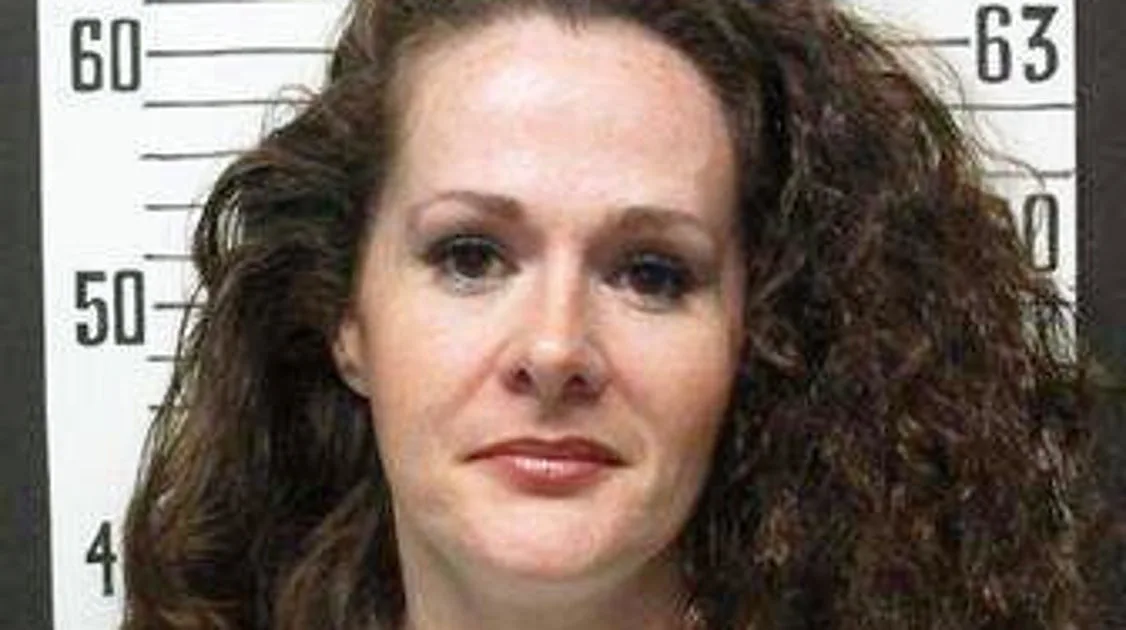
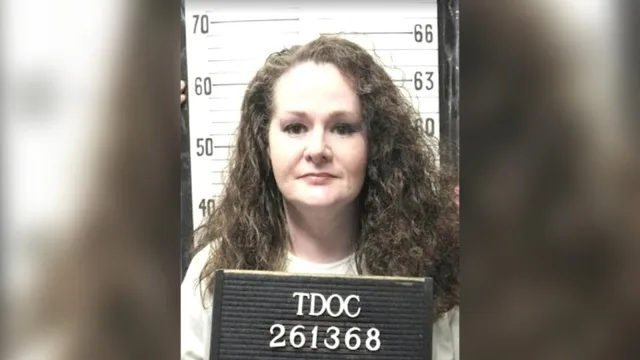
Christa Pike, the 50-year-old Tennessee death row inmate who survived a botched lethal injection, is now awake, conscious, and speaking in intensive care. Her legal team announced the development in a Tuesday statement, marking a sharp pivot from her condition just days prior when assistant federal defender Stephen Ferrell told CNN on Sunday that she remained on a ventilator and critically ill in the hospital.
Pike survived two doses of pentobarbital on September 30 at a Nashville prison. Her attorneys, Randy Spivey and Ferrell, described her current physical state:
Against all odds, Christa Pike is conscious, speaking, and continues to receive critical medical care. Despite the severe damage she endured to her arms, she is still handcuffed and shackled to the bed. Her recovery is medically unprecedented. Her prognosis remains unclear but, at a minimum, we expect a long recovery.
Video: Christa Pike conscious and speaking after botched execution, attorneys say — ABC News (YouTube)Christa Pike's Legal Team
Experts note that Pike is the only person known to have survived a complete execution attempt in United States history. Her legal team expressed gratitude to the first responders and the hospital medical team who treated Christa like a human and have provided exceptional care to her.
The timeline leading up to the procedure involved intense last-minute legal battles. Pike's execution was delayed for more than eight hours on September 30 while the U.S. Supreme Court considered, and ultimately overturned, a federal appeals court ruling to halt her lethal injection. Judges had been reviewing whether the jury that sentenced her should have considered sexual abuse she reported suffering as a child. Once the stay was cleared, the execution protocol proceeded, setting off a catastrophic failure inside the chamber.
What Happened Inside the Execution Chamber
The lethal injection procedure began on the evening of Wednesday, September 30. Witnesses reported the curtains shielding Pike opened at 7:46 pm and were pulled back three minutes later. Onlookers saw Pike gasping, groaning, and thrashing against her bedsheets, with her mouth falling open as she began to loudly snore. Spivey stated he counted seven needles in Pike's left arm, noting that one of which appeared to be bent when it was pulled from her.
A second dose of pentobarbital was administered by 8:26 pm. Pike could still be heard snoring behind the closed curtain until the microphone feed was cut at 8:53 pm, after which media witnesses were ordered to leave. An ambulance subsequently rushed her to a local hospital.
Dr. Joel Zivot, an Atlanta-based professor of anesthesiology and surgery who consulted as an expert for Pike's defense, explained that two doses of pentobarbital would normally prove lethal if properly circulated. Prior to the execution, her lawyers warned that her medical history and anatomy, including thrombocytosis and small veins, created a high risk of unnecessary pain. By the time of her hospital transfer, her arms were described by her lawyers as swollen, burned, and blistered from the failed procedure.
Institutional Fallout and Political Reactions
The unprecedented failure triggered immediate political and administrative upheaval across Tennessee. Gov. Bill Lee halted all remaining state executions for the year and ordered an independent, third-party review led by former U.S. Attorney Ed Stanton. Frank Strada, the head of Tennessee prisons, announced his resignation and will stand down this month, following an incident that marked the fifth botched execution under his leadership across two states since 2022.
The disaster drew wide condemnation from capital punishment opponents and elected officials alike. U.S. Sen. Marsha Blackburn called on the state to explore alternative execution methods to ensure capital punishment can continue. Meanwhile, Helen Prejean, a prominent Catholic nun and advocate for the abolition of the death penalty, condemned the state's actions to The Guardian:
This is the essence of cruelty. Take a conscious, imaginative human being, give her a date for her death, have her anticipate it over and over again, and then take her out and try and kill her. She was rendered defenceless as they deliberately attempted to kill her – what greater mental torture for a human being is there?
Sister Helen Prejean, via The Guardian
On the legal front, Pike's legal team filed an emergency court motion demanding the Tennessee Department of Correction preserve all evidence, including drug lot numbers and execution records. Chancery Court Judge I’Ashea Myles scheduled a Wednesday morning status conference to hear arguments regarding the evidence preservation. Pike's attorneys also renewed their plea to Gov. Bill Lee, asking him to commute her sentence to life imprisonment without the possibility of parole.
Legal Debates Over a Second Execution Attempt
The survival of the execution attempt has sparked sharp division among legal scholars regarding whether Tennessee possesses the authority to subject Pike to a second procedure.
Fordham Law Professor Deborah Denno argued that Pike maintains a strong double jeopardy claim, emphasizing that the state carried out every step of the intended process. They carried out every aspect of the execution. She didn’t die, but every process they intended, they did it, Denno told reporters, also suggesting Pike meets the high standard for cruel and unusual punishment.
Conversely, Seattle University Law Professor Michael Russo expressed doubt that the U.S. Supreme Court would block a subsequent attempt on double jeopardy grounds, stating that Pike's sentence was to be executed, not to endure a failed attempt, and pointing to historical precedent allowing retrials after equipment malfunctions.
Furthermore, constitutional protections under landmark cases such as Ford v. Wainwright, Panetti v. Quarterman, and Madison v. Alabama prohibit executing prisoners who lack the mental competency to understand their punishment. Medical experts emphasize that it remains weeks or months away before doctors can fully assess whether Pike sustained permanent cognitive impairment.
Origins on Death Row
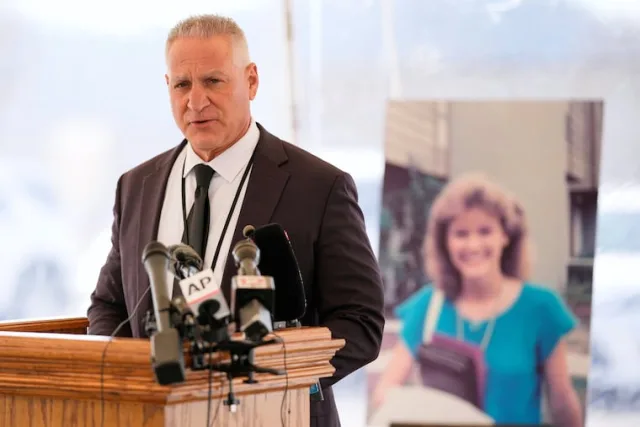
Pike's path to death row stems from a January 1995 murder in Knoxville, Tennessee. At age 18, Pike and her 17-year-old boyfriend, Tadaryl Shipp, met 19-year-old Colleen Slemmer at a job training camp for troubled teens. Prosecutors stated that Pike, worried Slemmer was trying to take Shipp away from her, lured the victim into a wooded area behind the agriculture campus steam plant at the University of Tennessee on January 12, 1995. Pike cut Slemmer’s stomach and throat with a box cutter before smashing her head with a rock. Shipp carved a pentagram into Slemmer’s chest, and Pike later showed a friend a fragment of Slemmer’s skull.
Shipp was convicted of first-degree murder in 1997 and given a life sentence with the possibility of parole. Two other co-defendants received lesser sentences, while Pike was sentenced to death in 1996, making her one of the youngest women sent to Tennessee's death row. Pike, who was diagnosed with bipolar disorder and post-traumatic stress disorder and spent nearly 30 years in solitary confinement on death row, has never denied her involvement.
I was a mentally ill 18-year-old kid. It took me numerous years to even realize the gravity of what I’d done. Even more to accept how many lives I affected. I took the life of someone’s child, sister, friend. It sickens me now to think I had the ability to commit such a crime, Pike stated in her clemency petition, which also detailed childhood abuse including multiple rapes by different men and beatings by relatives.
While the Slemmer family advocated for the death penalty due to the extreme violence of the crime, Pike's attorneys continue to press for commutation as their client begins her long hospital recovery.
Updated 1 time since publication; last update 7 October 2026, 02:22.
The News Desk handles breaking and developing stories for Dateline Wire. A development is published once several independent outlets carry it, early numbers are attributed to whoever reported them rather than stated as fact, and a developing story is updated in one report as facts firm up instead of being split across duplicate articles. Each report says what changed, who confirmed it and what is still unverified. Story tips: [email protected].