PM Modi Marks 25 Years in Office With Temple Visit and BJP Events
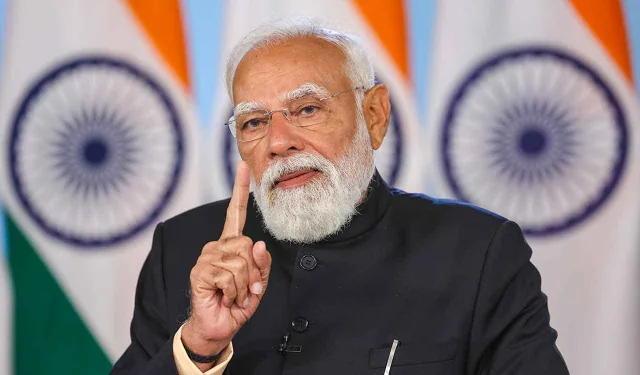
Prime Minister Narendra Modi celebrated 25 years in executive office with a visit to a Delhi temple and nationwide events organized by the BJP.
- Headline: PM Modi Marks 25 Years in Office With Temple Visit and BJP Events
- Dispatch Summary: Prime Minister Narendra Modi celebrated 25 years in executive office with a visit to a Delhi temple and nationwide events organized by the BJP.
- Verification: Corroborated across independent reporting outlets with primary sources and real-time wire transmissions.
Ordinary citizens across India woke up on Wednesday to nationwide celebrations, service activities, public events, Seva Yatras, and torch processions organized by the Bharatiya Janata Party and its supporters. The festivities mark a quarter-century at the pinnacle of executive power for Prime Minister Narendra Modi, who began his milestone day early with a quiet visit to the capital.
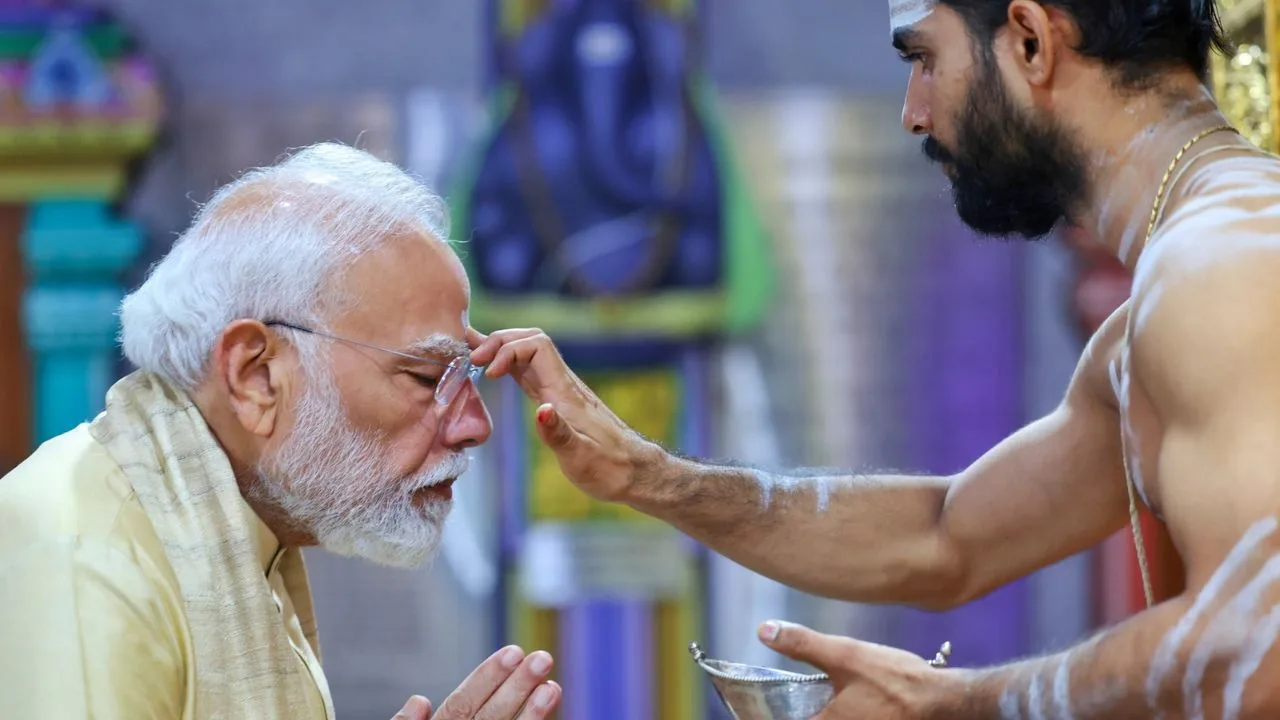
Modi marked 25 years as the head of a government by offering prayers and performing rituals dedicated to Lord Ganesha at the Shri Vinayak Mandir in Delhi’s Sarojini Nagar.
How a Gujarat Oath Shaped a Quarter-Century in Power
The central reality of Indian politics on Wednesday is the sheer durability of Modi's executive tenure. His journey at the helm of a government began on October 7, 2001, when he took oath as the Chief Minister of Gujarat. He remained in that post for more than 12 years before moving to national politics in 2014 after leading the BJP to victory in the Lok Sabha elections. He subsequently returned as Prime Minister after the 2019 and 2024 Lok Sabha elections, beginning his third consecutive term at the Centre in June 2024.
That trajectory transforms Wednesday's temple visit from a routine act of devotion into a calculated statement of continuity. By tying his quarter-century milestone back to his roots in Gandhinagar, Modi anchors his national dominance in a regional administrative record that predates his arrival in New Delhi by more than a decade.
Politically, the ruling apparatus has mobilized rapidly to amplify the milestone. The Union Cabinet adopted a resolution commemorating Modi's 25 years as the head of a government, highlighting his political journey from Gujarat to the Prime Minister's Office. Uttar Pradesh Chief Minister Yogi Adityanath congratulated the Prime Minister in a post on X, describing the tenure as a moment of immense joy
and praising his commitment to the principle of Nation First.
What Did the Prime Minister Say to the Nation?
Taking to social media on Wednesday morning, Modi reflected on his tenure by casting his political family as a literal one. In a widely circulated message on X, the Prime Minister detailed his morning devotions at the Delhi temple.
Today, I performed worship and rituals at the Shri Vinayak Temple in New Delhi. I prayed to Lord Shri Ganesha for the happiness, prosperity, and good health of my family members across the country. May the grace of Vighnaharta bring welfare to all, and may the nation continue to advance on the path of continuous progress.
Prime Minister Narendra Modi, via social media
That framing is intentional. By referring to citizens as family members across the country,
Modi leans into the personalized populist bond that has sustained his electoral coalitions across three national victories. The use of religious imagery—specifically invoking Vighnaharta, the remover of obstacles—serves to frame his government's administrative hurdles as spiritual tests overcome through continuous governance.
What Events Mark the Milestone Across the Country?
The celebrations extend far beyond symbolic statements in New Delhi. The ruling party has structured a multi-layered rollout of events designed to project grassroots engagement alongside executive achievement.
- October 7, 2001: Narendra Modi takes oath as the Chief Minister of Gujarat, beginning his executive career.
- May 2014: Modi transitions from state leadership to national politics, becoming Prime Minister after leading the BJP to a Lok Sabha victory.
- June 2024: Modi begins his third consecutive term as Prime Minister following the 2024 general elections.
- October 6, 2026: The Union Cabinet passes a resolution congratulating Modi on completing 25 years of continuous service as the head of a government.
- October 7, 2026: Modi visits the Shri Vinayak Mandir in Sarojini Nagar as nationwide Seva Yatras and torch processions culminate.
Among the most prominent operational features of the anniversary are two Seva Yatras linking Modi’s hometown of Vadnagar with his parliamentary constituency of Varanasi. The conclusion of these twin marches on Wednesday bridges the geographic span of his career, connecting the site of his earliest executive mandate with the spiritual capital that anchors his national authority.
Can the Opposition Counter a Narrative of Unbroken Rule?
Critics point out that celebrating continuous tenure risks obscuring the structural friction and institutional battles that have marked Modi's years in power. Yet on Wednesday, the opposition's ability to counter the ruling party's narrative was fractured by parallel developments playing out in the capital and the regions.
While BJP supporters marched in torch processions, Delhi Police received an official complaint from Akashvani Bhavan seeking the registration of a trespassing case against opposition members of Parliament. Those parliamentarians had staged a sit-in protest on government premises after entering through an unbarricaded gate while marching toward the Election Commission. Hours later, the protesting leaders were removed by police and taken to Kingsway Camp before being released.
At the same time, electoral defeats elsewhere blunted the opposition's momentum. In Assam, the Bharatiya Janata Party-led National Democratic Alliance secured a landslide victory in the Silchar Municipal Corporation elections, winning 34 out of 42 wards, while the Congress secured merely two seats. Assam Chief Minister Himanta Biswa Sarma seized on the ballot-paper polls to taunt rivals, noting that the Congress cannot blame electronic voting machines for its defeat.
That leaves the opposition scrambling for an effective counter-weight against a political machine that treats governance milestones as nationwide mobilization campaigns. The harder question for critics is how to puncture a narrative of endurance when the ruling party successfully links local welfare schemes, municipal victories, and religious symbolism into a single uninterrupted arc of executive success.
What comes next is the immediate operational fallout from the day's events, including whether Delhi Police file a formal First Information Report against the opposition MPs who entered Akashvani Bhavan, and how the BJP translates its Silchar municipal win into momentum for upcoming state electoral contests.