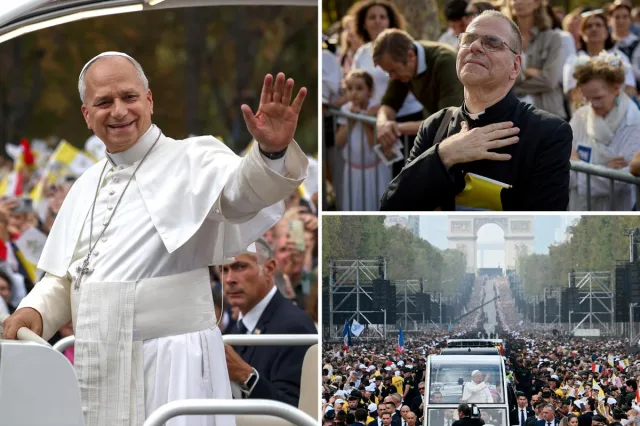
Pope Leo diagnosed with lung cancer and has part of right lung removed
Pope Leo XIV underwent successful surgery to remove the lower lobe of his right lung after being diagnosed with lung adenocarcinoma at Rome's Gemelli hospital.
- Headline: Pope Leo diagnosed with lung cancer and has part of right lung removed
- Dispatch Summary: Pope Leo XIV underwent successful surgery to remove the lower lobe of his right lung after being diagnosed with lung adenocarcinoma at Rome's Gemelli hospital.
- Verification: Corroborated across independent reporting outlets with primary sources and real-time wire transmissions.
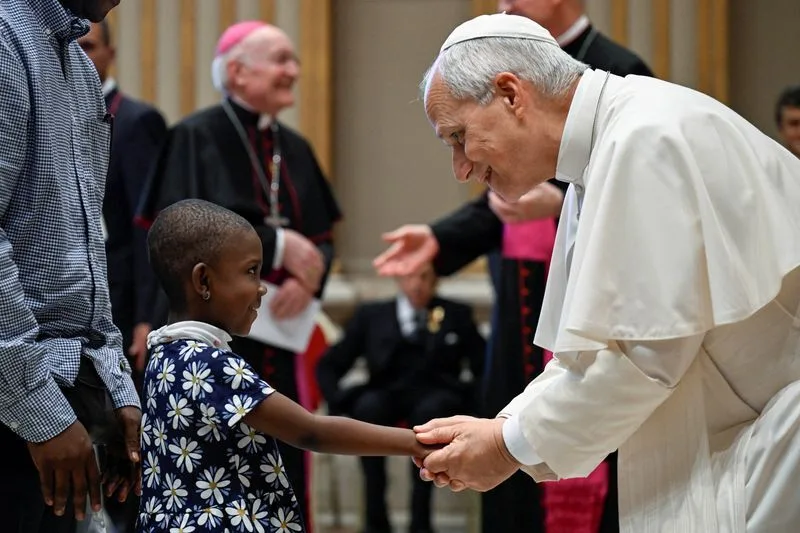
Surgeon Led Procedure as The Surgery Was Successful, and There Were No Complications
Pope Leo XIV was diagnosed with lung adenocarcinoma, a common form of lung cancer, after doctors removed the lower lobe of his right lung during surgery on Tuesday at Rome's Gemelli hospital. The procedure, which lasted approximately 90 minutes while the 71-year-old pontiff was in the operating room for about 3 hours, confirmed a diagnosis that had been suspected by preoperative tests. The Vatican issued a medical bulletin stating that the operation was completed successfully, on schedule, and as planned. To ensure a radical resection, the lower lobe of the right lung was removed using a video-assisted technique,
the Vatican noted, adding that intraoperative histological examination verified the malignant nature of the growth.
Following the procedure, the Pope awoke normally and, after a brief period of observation, was taken back to his room on the hospital's 10th floor. He is staying in a nearby room rather than the designated papal apartment because the latter is currently undergoing renovations. Earlier in the day, Leo had walked into the hospital through the main entrance and waved to dozens of well-wishers. A medical team led by Gemelli's chief thoracic surgeon, Dr. Stefano Margaritora, alongside Dr. Luigi Carbone, performed the operation following the discovery of the asymptomatic nodule during regular health checks.
That leaves the medical team with an early-stage finding that was caught before symptoms appeared. The Pope has offered a rare level of transparency regarding the first publicly disclosed major health issue of his 17-month papacy, having revealed the nodule's discovery himself during his Sunday noon prayer. Oncology experts outside the Vatican have pointed out that catching such a growth early offers a strong baseline for recovery. In the immediate post-operative setting, no news can be good news,
said Dr. Stephen Liu, a lung cancer expert at Georgetown's Lombardi Comprehensive Cancer Center, noting that the clean completion of the procedure suggests no operating room surprises. Final pathology results can take a few days.
Other specialists familiar with Gemelli's capabilities weighed in on the methods available in modern thoracic care. Dr. Lorenzo Spaggiari, director of thoracic surgery at the European Institute of Oncology in Milan, who was not involved in the Pope's care, explained that advanced techniques such as robotic assistance and high-resolution bronchoscopy have transformed how small nodules are handled. These are things that can be treated very well, if the words he used reflect the clinical situation,
Spaggiari said, adding that he considers the early detection a stroke of good fortune. I think he has had a bit of luck. They found something that was asymptomatic — a lung nodule, possibly a tumor. He might call it something else; we call it luck.
Spaggiari noted that if draining lymph nodes turn out to be negative, placing the case at stage one, the outlook remains very positive and no further treatment beyond surgery should be necessary.
How Did the Pope Arrive at This Moment?
The path to Tuesday's operation began when routine checks uncovered the small, localized nodule measuring less than 3 centimeters. The Vatican moved quickly once the finding was confirmed, canceling all of Leo's audiences through Oct. 20 to clear the way for his recovery and a projected weeklong hospital stay. The sudden medical intervention has disrupted the normal rhythm of the Holy See, forcing officials to adjust schedules while the American pontiff rests. Dr. Margaritora and his team executed the resection plan precisely as scheduled, utilizing minimally invasive methods to target the adenocarcinoma.
The speed of the decision surprised observers, yet it aligns with the Pope's known determination to maintain his commitments. Tokyo Cardinal Kikuchi Tsutomu, who met with Leo on Monday, explained the urgency behind the timeline. He has decided to undergo surgery soon in order to not change his plans for future overseas trips, so there is no need to worry, as it is not an emergency,
Kikuchi said. The upcoming travel schedule includes an ambitious November trip to Latin America.
That ambitious itinerary spans Nov. 6-17 and ranks as the longest journey of his papacy. It calls for Leo to cover just over 31,000 kilometers across a dozen flights and two helicopter rides, including a significant altitude change in Peru. Medical guidance from institutions like Milan's European Institute of Oncology generally advises patients to avoid flying for three weeks following such surgery. This restriction places the planned Latin America tour inside a narrow window that depends entirely on a smooth recovery. The itinerary holds special personal significance because it features a return to Peru, where Leo previously served as a missionary.
Leo's history with Peru stretches back decades to a formative health crisis as a young priest. Arriving in Chulucanas in 1985, he contracted typhoid fever and required hospitalization, an experience he described in an interview for the 2025 biography Pope Leo XIV: The Biography. Recalling the pain of the illness in the book, he said he prayed to God to let him die rather than endure the horrible fever. I was hooked up to an IV, and I said, 'If this is your sense of humor, Lord, I think you could do a little better.'
He recovered, and the cathartic episode cemented his decision to stay in Peru rather than return to comfortable life in Rome. I never looked back,
he noted of that pivotal juncture.
What Are the Immediate Effects and Who Is Impacted?
The sudden cancer diagnosis and subsequent lung surgery have sent ripples through the global Catholic community, altering daily operations at the Vatican and drawing anxious responses from believers worldwide. The Vatican press office has promised further updates as pathology reports return, while the immediate cancellation of public audiences through Oct. 20 leaves thousands of pilgrims and visitors adjusting their plans.
- Vatican officials and cardinals, who faced a sudden scheduling crisis with zero advance warning
- Global Catholics and pilgrims in Rome, many of whom gathered outside Gemelli hospital or watched from St Peter's Square
- Well-wishers and hospital staff who greeted the Pope upon his arrival
- The medical team at Gemelli Hospital led by Dr. Stefano Margaritora
- International travelers and hosts in Uruguay, Argentina, and Peru awaiting the November papal visit
That brings the focus back to the physical reality of a 71-year-old leader confronting a major oncological procedure. Known for staying in good physical shape through weekly tennis games and swimming, Leo faces a mandatory recovery period that tests both his personal resilience and the administrative stability of the Holy See. With the lower lobe of his right lung successfully removed and no immediate complications reported, attention turns to the forthcoming pathology findings and the strict post-operative timeline.