Activist Greta Thunberg joins French student protests
Swedish activist Greta Thunberg joined French high school students protesting deteriorating education conditions and teacher shortages as nationwide school closures continued.
- Headline: Activist Greta Thunberg joins French student protests
- Dispatch Summary: Swedish activist Greta Thunberg joined French high school students protesting deteriorating education conditions and teacher shortages as nationwide school closures continued.
- Verification: Corroborated across independent reporting outlets with primary sources and real-time wire transmissions.
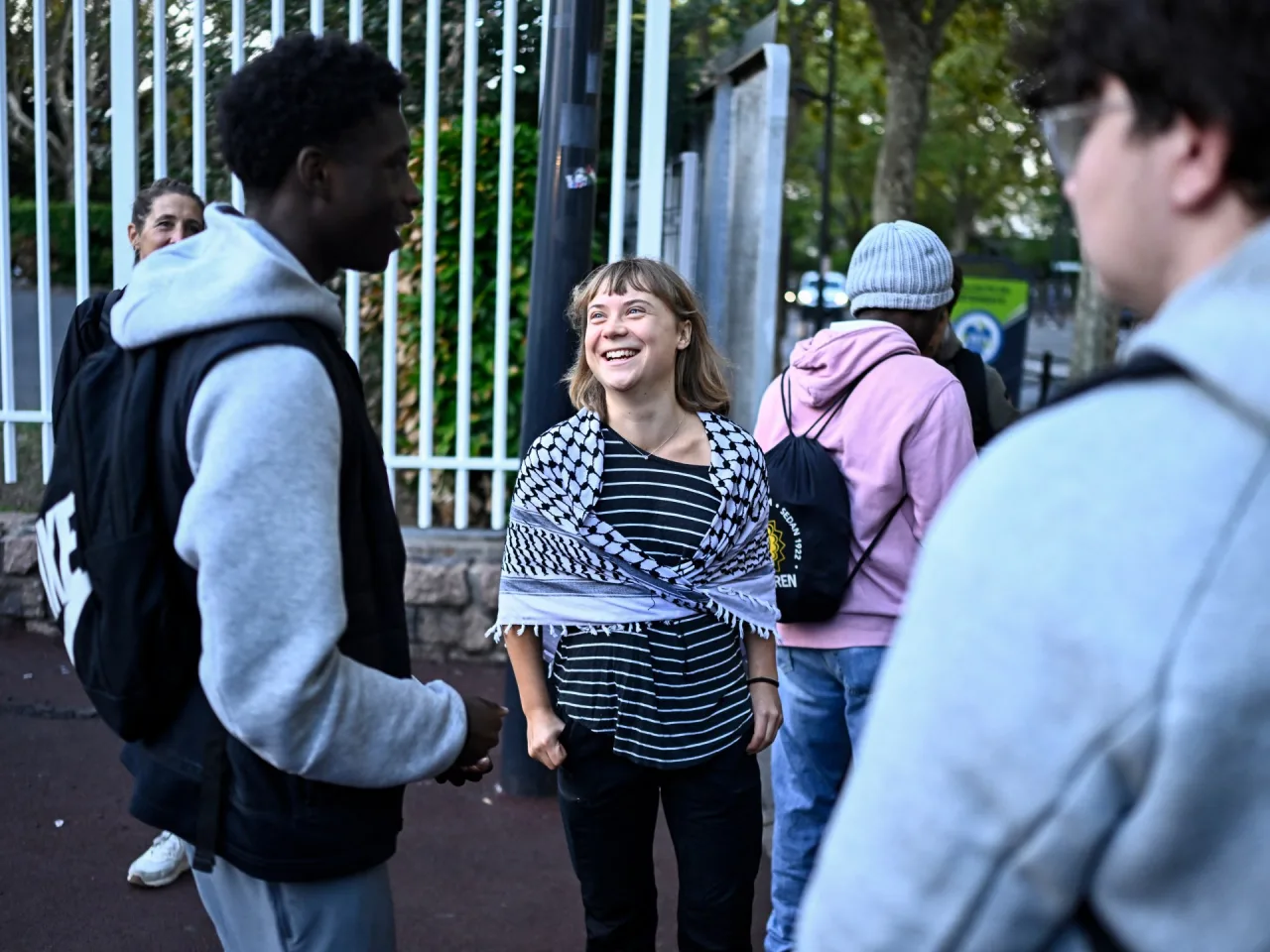
Swedish climate activist Greta Thunberg joined French high school students on Tuesday, standing alongside teenagers in the Parisian suburb of Saint-Denis to protest against deteriorating education conditions, crumbling school buildings, and teacher shortages. Thunberg, 23, arrived at the Lycée Paul Éluard in the heart of the movement. Young people are not being included in the conversation. Our future is being robbed away from us,
she told the AFP news agency. Her appearance coincided with a fifth round of nationwide mobilization that saw about 200 schools completely closed across France, according to Education Minister Édouard Geffray.
The protests began late last month as pupils demanded better study conditions, increased education funding, and opposition to the Parcoursup university admissions platform. Students have piled up bins and erected security barriers outside hundreds of educational facilities. Marches have spread through cities including Lyon, Nantes, Rennes, and Strasbourg, with the university student union, l’Union, posting on X: They’re not listening to us, so we’re going to them.
Paris-Pantheon-Assas University moved classes online after blockades affected its Assas and Vaugirard campuses. Teachers' unions including FSU-SNUIPP and SNES-FSU have joined the mobilization, citing shared demands over working conditions and pay.
That leaves the government caught between urgent public investment demands and pressure to reduce a ballooning national deficit. Education Minister Geffray stated on France Inter that the closure of roughly 200 establishments was fewer than last week
and noted that 3,000 substitute teachers are being deployed to tackle staff shortages, while a consultation platform for high school students has received 86,000 contributions. Yet the Ministry of National Education reported that eight teaching staff were injured on Monday alone, mostly in the Paris region, Bordeaux, and Lyon. Nationwide, Ministry of Justice figures show that more than 6,800 people, overwhelmingly minors, have been taken into police custody since the movement began, with about 1,500 people being prosecuted.
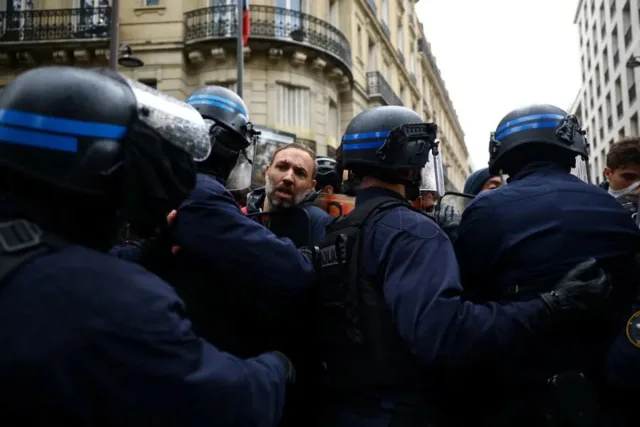
The demonstrations have been marked by confrontations. Outside the Lycée Paul Éluard, about 20 lawyers wearing their robes formed a human chain to protect pupils following numerous allegations of police brutality. Thunberg denounced an extremely violent
police force confronting young people demonstrating for the bare minimum.
This shows everything about the police and who they really protect. Law enforcement is supposed to protect young people,
she said. Rights groups and students have accused authorities of a disproportionate use of force, with a police watchdog investigation into 24 allegations of brutality against demonstrators.
President Emmanuel Macron urged demonstrators to exercise restraint, telling reporters at a car show on Monday that These are issues that deserve time, consultations, discussion and respect.
Meanwhile, political rivals are positioning themselves. Far-right frontrunner Marine Le Pen has called for parents to foot repair bills for damaged schools, while radical left opponent Jean-Luc Mélenchon has praised the protesters as incredible
and denounced police brutality. Tuesday’s demonstrations were backed by unions and the left-wing opposition party France Unbowed, with marches heading toward Les Invalides ahead of wider public rallies against the rising cost of living planned for Saturday.
The broader question remains whether the government can defuse the unrest before the two-week half-term school holidays begin this weekend, or if the movement will rebound with renewed momentum. With thousands of minors detained and education infrastructure under strain, how the administration balances fiscal discipline with structural reform remains a central challenge.