Nuremberg Airport reopens after emergency landing escorted by fighter jets
Nuremberg Airport operations resumed after a Corendon Airlines flight transmitted a 7500 hijacking code caused by a radio malfunction, triggering a military intercept and airport lockdown.
- Headline: Nuremberg Airport reopens after emergency landing escorted by fighter jets
- Dispatch Summary: Nuremberg Airport operations resumed after a Corendon Airlines flight transmitted a 7500 hijacking code caused by a radio malfunction, triggering a military intercept and airport lockdown.
- Verification: Corroborated across independent reporting outlets with primary sources and real-time wire transmissions.
Flight operations at Nuremberg Airport resumed on Tuesday following an unconfirmed in-flight emergency that triggered a strict airport lockdown and the deployment of German Air Force Eurofighter jets. Behind the swift reopening lay a cockpit transmission of squawk code 7500 — the international signal for a hijacking — combined with radio silence that security forces could not ignore.
Why did the cockpit trigger a hijacking alert?
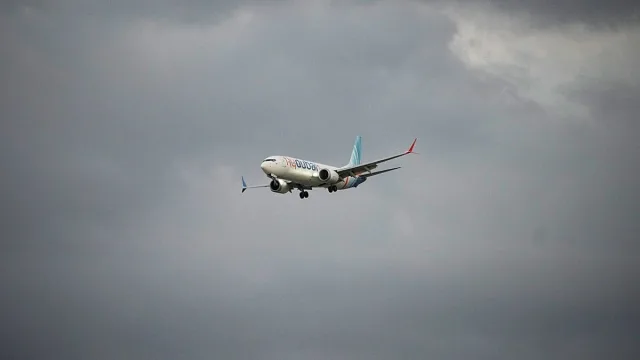
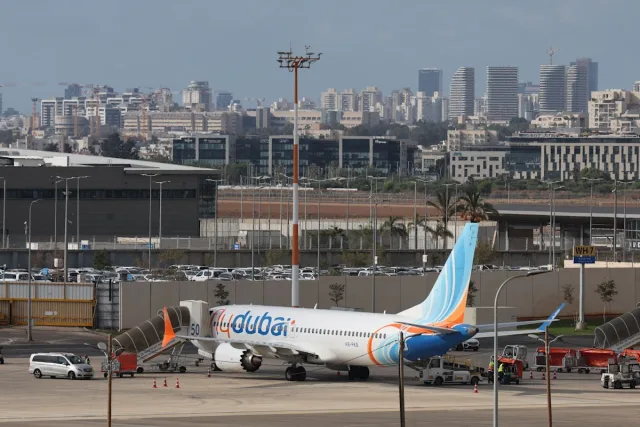
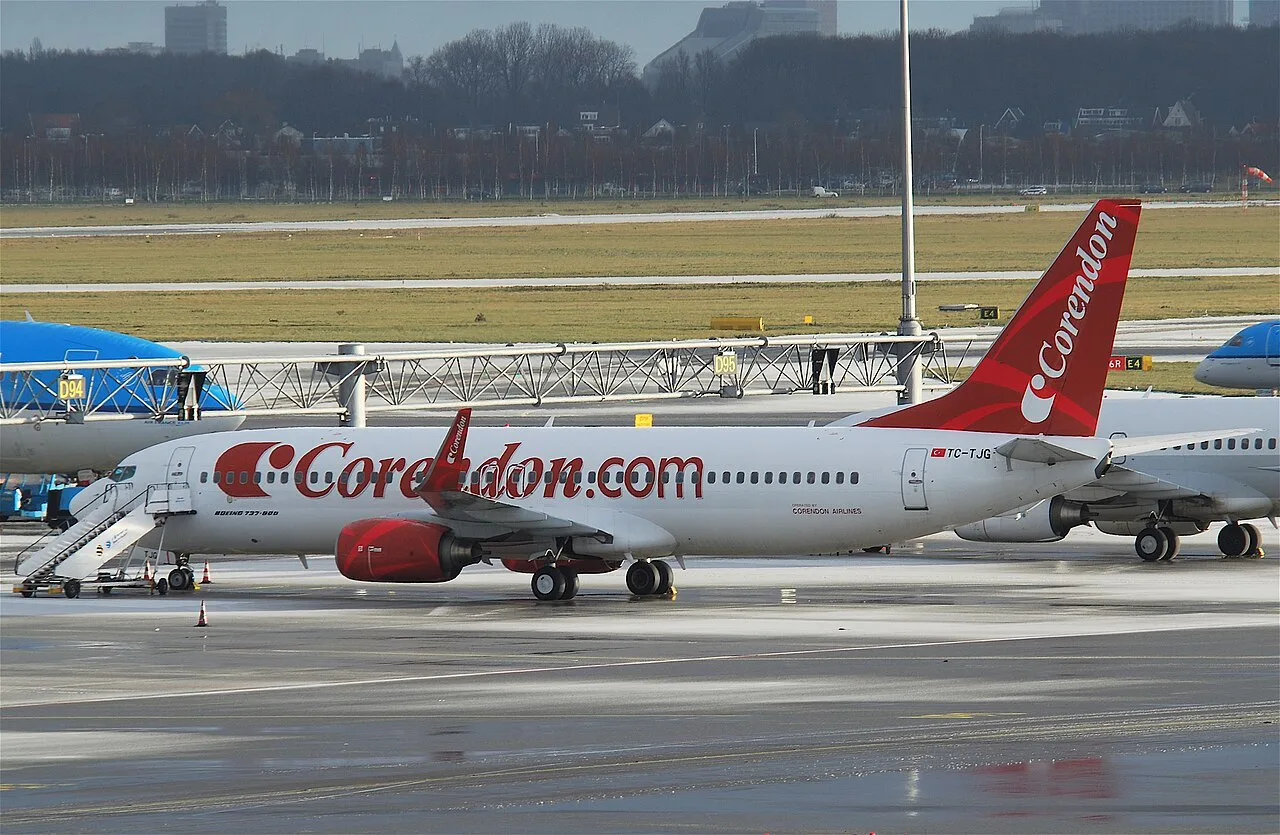
The security alert began when Corendon Airlines flight XR456, traveling from the Greek island of Corfu, transmitted the code 7500 while flying through Croatian airspace. According to Mittelfranken Police on X, the pilot could no longer be reached by radio during the transmission, prompting authorities to treat the Boeing 737-800 as a suspected hijacking.
German Air Force Eurofighter jets from Tactical Squadron 74, stationed around the clock in Neuburg an der Donau, Bavaria, were scrambled as part of an alert squadron to intercept and accompany the aircraft. Flight-tracking data showed the plane landing safely at Albrecht Dürer Airport at approximately 12:16 p.m. local time.
Despite the severe military response, Corendon Airlines later stated that the emergency code was transmitted due to a brief malfunction in the radio communication system.
The airline emphasized that no emergency situation occurred and that at no point were the passengers, flight crew or aircraft in any danger,
adding that the flight landed safely as planned.
What happened on the ground after landing?
Following the safe landing at 12:16 p.m., airport authorities and local police enacted strict security protocols. Special response units were deployed, the airport was cordoned off, and passengers remained on board the aircraft while officers conducted checks. A police spokesperson noted, We are checking to make sure everything is in order on and inside the plane.
Shortly after inspections concluded, police gave the all-clear. The passengers are still on board,
a police spokesperson stated. Everything is fine on the plane. The passengers are fine, and the pilots are fine.
Police later confirmed via X that On-site inspections have determined that there is no danger.
Incoming flights scheduled for Nuremberg were temporarily diverted during the lockdown. An airport spokesperson stated that six flights were delayed, while inbound aircraft were diverted to alternative hubs including Munich, Frankfurt, Stuttgart, Cologne, and Prague. Passengers traveling on regional connections, such as Ryanair services between London Stansted and Nuremberg, faced schedule adjustments. Ryanair flight FR7633 was delayed from its scheduled 12:30 p.m. departure to Stansted, while inbound flight FR7632 was scheduled to arrive at 4:15 p.m.
| Inbound Hub / Alternative | Flight Action Taken | Source Report |
|---|---|---|
| Munich, Frankfurt, Stuttgart | Incoming flights temporarily diverted | AirLive |
| Cologne, Prague | Two incoming aircraft diverted as precautionary measure | Bluewin |
| London Stansted | Ryanair flight FR7633 delayed; FR7632 scheduled to arrive | Echo News |
Are the morning drone sightings connected to the emergency?
The midday emergency compounded an already disrupted morning at Albrecht-Dürer Airport. Between 2:00 a.m. and 4:00 a.m. on Tuesday, flight traffic experienced brief interruptions after three pilots independently reported seeing an unidentified object resembling a drone during take-off or landing procedures. The Nuremberg Border Police Inspectorate, in coordination with airport management and German Air Traffic Control, launched search operations involving a police helicopter and drone-detection equipment. However, police spokesperson Michael Petzold stated that The measures carried out, which included among other things a police helicopter, did not lead to the verification of the reported object.
Authorities have not formally linked the early morning drone sightings to the midday flight intercept. However, the incidents arrive amid heightened tensions across Germany regarding infrastructure security. In August, an explosives-laden drone was discovered at Leipzig Airport, and a separate drone incident disrupted flights at Hanover Airport. Following the Leipzig event, Interior Minister Alexander Dobrindt warned of a new dimension of threat
involving potential hybrid attack scenarios, which German officials have largely attributed to Russia, though Moscow has denied the allegations. The Der Spiegel weekly also reported that an internal police report on recent airspace breaches concluded the possibility of hybrid activity cannot be excluded.
Normal operations at the airport are expected to resume progressively as security clearances are finalized.