Dame Esther Rantzen, Childline founder and TV presenter, dies aged 86
The iconic TV presenter and champion for the vulnerable has passed away at her New Forest home. She leaves behind a lasting legacy through Childline and The Silver Line.
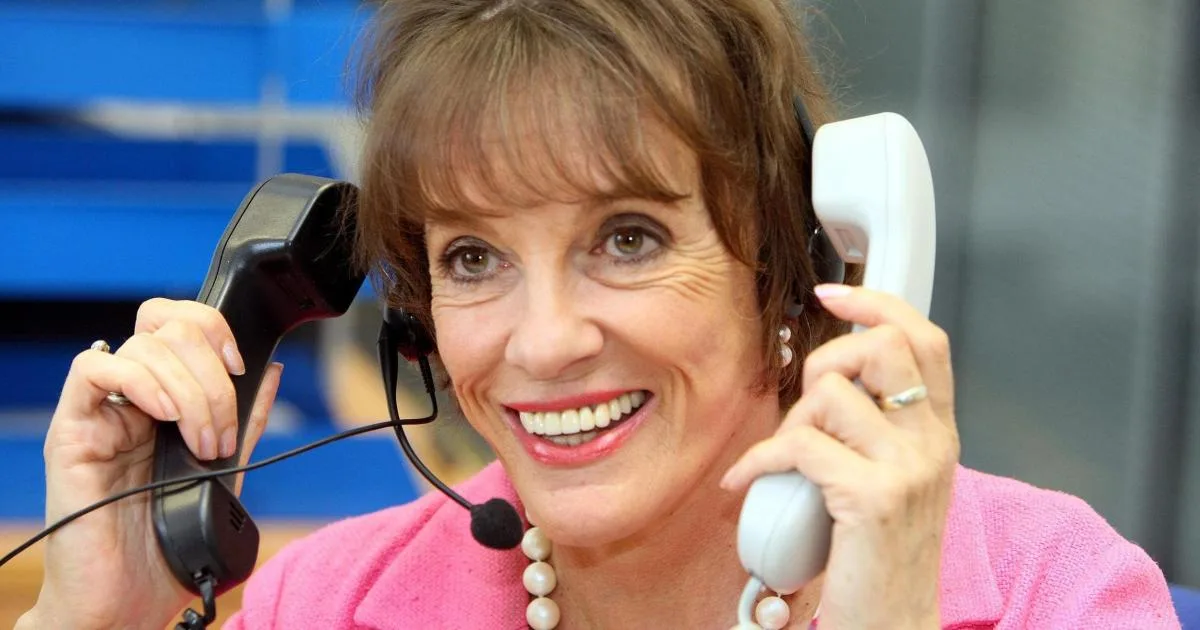
Dame Esther Rantzen, the pioneering TV presenter and founder of Childline, has died at the age of 86 after a prolonged battle with stage four lung cancer. Her death, announced on September 30, 2026, marks the end of a life dedicated to social causes, media innovation, and championing the vulnerable. Born Esther Louise Rantzen on June 22, 1940, in Berkhamsted, Hertfordshire, she rose to prominence as the face of the BBC’s *That’s Life!*, a show that redefined television by blending consumer advocacy with humor and heart.
Rantzen’s career on *That’s Life!* spanned 21 years, from 1973 to 1994, during which she launched Childline and championed campaigns for children, older people, and assisted dying. The program, which regularly attracted 20 million viewers, became a cultural touchstone, known for its mix of investigative journalism, quirky segments, and unflinching coverage of social issues. A pivotal moment came in 1986, when a segment on child abuse led to the creation of Childline, a 24-hour helpline for children in distress. “I knew in that moment that working to help protect abused children was more important to me than any of my previous work,” she later reflected.
Childline, which merged with the NSPCC in 2005, became a lifeline for millions of young people, offering confidential support and advocacy. Rantzen’s influence extended beyond the screen: she also founded The Silver Line in 2012, a helpline for older people combating loneliness, inspired by her own grief after the death of her husband, Desmond Wilcox, in 2000. She was made a dame in 2015 for her services to children and older people.
Rantzen’s battle with lung cancer, diagnosed in January 2023, brought renewed focus to her advocacy for assisted dying. She publicly supported legalizing medically assisted death, stating, “I want to protect other families from the same agonizing experience.” In December 2023, she revealed she had joined Dignitas, the Swiss assisted dying clinic, but later said she was “too physically fragile to make the journey.” In a statement given to the Press Association earlier this month, she urged lawmakers to “change and change quickly,” as she renewed her plea ahead of the latest debate on the Terminally Ill Adults (End of Life) Bill, which failed to pass through the Commons.
Her final years were marked by a blend of resilience and vulnerability. In 2025, her daughter revealed that a “miracle drug” had stopped working, and by 2026, she had abandoned her plans to end her life in Switzerland. “When I was strong enough to make the flight, my life was not unbearably painful,” she explained. “By the time it became unbearable, I was too physically fragile.” Her family paid tribute, describing her as “the most wonderful mother” and “cherished grandmother,” whose “endless capacity for joy” left an indelible mark. “She was our sunshine,” they said, adding that her legacy would endure through Childline and The Silver Line.
Rantzen’s career was not without controversy. Her relationship with documentary maker Desmond Wilcox, who was married to her friend Patsy, led to a high-profile scandal in the 1970s. The couple married in 1977, and their three children, Miriam, Rebecca, and Joshua, became central to her life. Despite the challenges, she remained a trailblazer, later entering politics in 2009 as an independent candidate for Luton South, though she narrowly missed victory.
Her influence extended to popular culture, with appearances on *Strictly Come Dancing*, *First Dates*, and *I’m a Celebrity… Get Me Out of Here!*. She also produced programs like *Hearts of Gold*, which celebrated unsung heroes, and *The Big Time*, which launched the career of Sheena Easton. Her 1994 talk show, *Esther*, earned two Bafta nominations, cementing her status as a broadcasting icon.
Rantzen’s personal struggles, including sexual abuse as a teenager and her later battle with cancer, shaped her empathy for the marginalized. She once said, “I need to be needed. It’s what makes you get up in the morning.” This ethos drove her to advocate for children, older people, and those facing terminal illnesses. In December 2024, she expressed “great relief” after MPs backed proposals to legalise assisted dying in England and Wales, though the bill ultimately stalled in the House of Lords. In an interview in November 2025, she said, “As long as others in the future will be able to ask for help to die as they choose, I will die happy.”
Her death coincided with a significant moment in the assisted dying debate. In September 2026, the House of Commons voted against a bill to legalize the practice, a decision she called “a tragic day.” Despite this, her advocacy left a lasting impact, with many citing her courage in discussing end-of-life choices. Prime Minister Andy Burnham praised her “characteristic courage and openness” in discussing her illness, which prompted national reflection on end-of-life care.
Friends and colleagues remembered her as a “brave and brilliant” crusader who “changed countless lives.” BBC director-general Matt Brittin called her a “legend of British broadcasting” whose contribution to public life was “immeasurable.” Kim Leadbeater, the Labour MP who sponsored the assisted dying bill, described her as a “wonderful mix of strength and feistiness, but also really deep compassion and kindness.”
Rantzen’s passing leaves a void in the worlds of broadcasting and charity, but her legacy endures in the lives she touched. As her family and colleagues remember, her “endless capacity for joy” and unwavering commitment to justice will continue to inspire. The future of the assisted dying campaign, however, remains uncertain, with her final days underscoring the urgency of the debate she championed.
Updated 1 time since publication; last update 15 November 2026, 04:34.